How to Choose a PCBA Manufacturer for OEM & ODM Projects

How to Choose a PCBA Manufacturer for OEM & ODM Projects

What Is the Strategic Value of OEM and ODM PCBA Partnerships?

When you build new hardware, picking the right factory team sets the tone for your whole product run. Choosing how much work to keep inside your own office versus handing off to outside pros changes how your supply chain flows.

Defining OEM vs. ODM in Electronics Manufacturing Services (EMS)

An OEM PCBA factory builds circuit boards based strictly on your exact files. You send over the Gerber layouts and the bill of materials, and they put the pieces together. An ODM PCBA partner steps in much sooner to help design the core layout and offer engineering advice from day one.

Strategic Advantages of Outsourcing PCBA

Sending production out saves you from spending big money on heavy pick-and-place machines and renting massive assembly floors. It plugs you right into global supply networks so you can ship products out the door much faster. Buying all that gear yourself eats up too much cash, which makes outside manufacturing a smart bet.
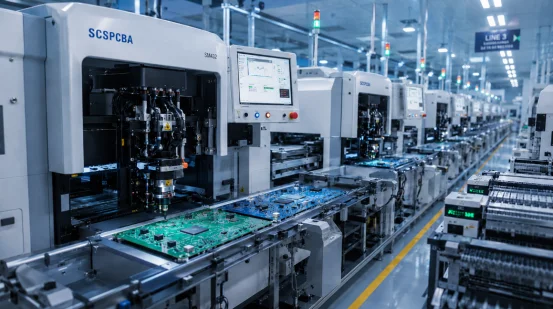
 

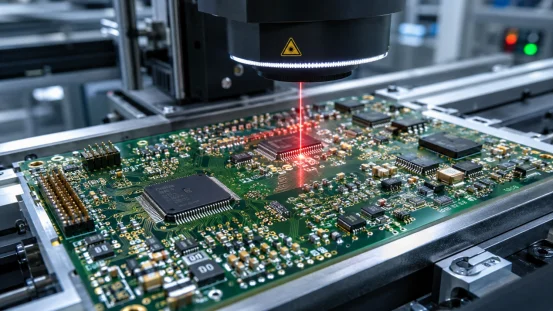
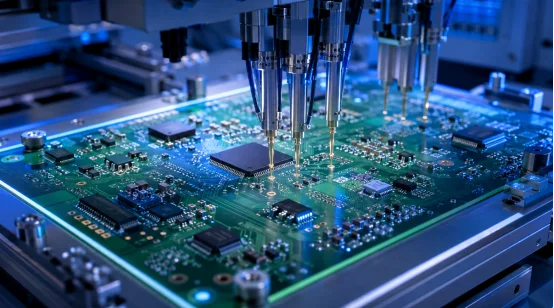
Automated SMT assembly line in PCBA manufacturing plant

Core Manufacturing Capabilities and Technical Competence

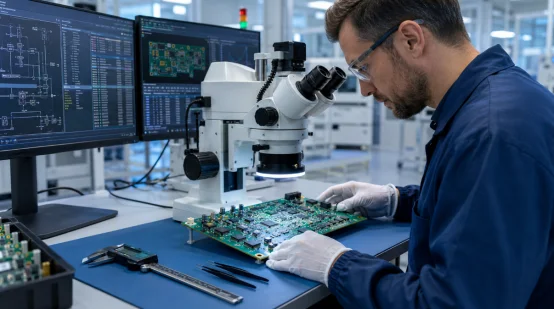
A clean lobby looks nice, but real engineering skill tells you if your circuit boards will survive daily use. You need to check their actual machine lines and daily processes.

End-to-End Process Chain Integration

The best partner handles the whole job under one roof. This means they take care of bare board fabrication, surface mount technology (SMT) runs, through-hole insertion, and final box builds all in one spot. Splitting these steps across different vendors just leads to wasted time and miscommunication.

High-Precision Automation and Equipment Configuration

Check what kind of placement gear they run on the floor. Quality SMT lines should easily handle tiny 01005 parts and tight BGA chips. If they also build complex multilayer boards and flexible circuits, you know they have solid technical depth.

Stringent Quality Assurance and Compliance Standards

Checking quality is not just a quick glance right before a box gets taped up. It means keeping an eye on every single step so bad parts get caught early.

Multi-Tiered Inspection Methodologies

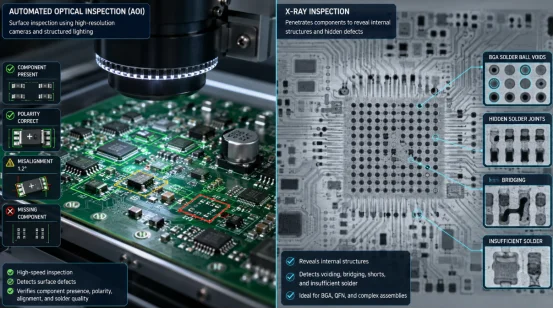
Serious mass production relies on heavy machine testing. Shops use 3D solder paste inspection right away to catch print errors, optical cameras to spot shifted parts, and X-Ray units to check hidden BGA joints. Electrical and functional tests make sure the board works before it ships.

Industry-Specific Certifications

Always verify their shop paperwork. A standard ISO 9001 badge is a good baseline. If your hardware goes into cars or medical devices, you must look for factories holding ISO 13485 and IATF 16949 certificates. IPC-A-610 rules guide how solder joints should look across the whole industry.

Supply Chain Resilience and Component Sourcing Management

You cannot finish a build if key microchips are stuck overseas or suddenly out of stock. Strong supply chains keep your schedule on track.

Turnkey PCBA Solutions vs. Consigned Modalities

Buying your own unique chips makes sense if you use rare parts. However, using turnkey PCBA solutions lets the team buy everything for you. They source parts worldwide, check the BOM, and run strict incoming tests to keep fake parts out.

Traceability and Digital Execution

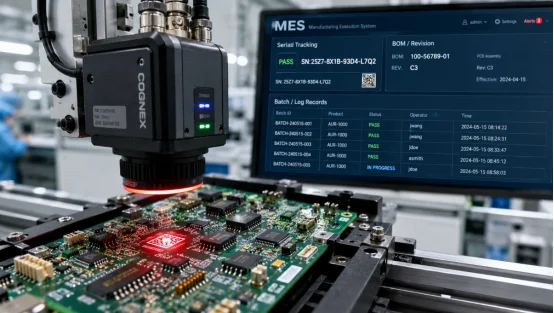
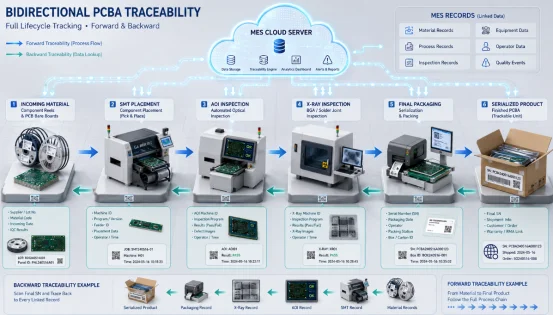
Modern plants use digital software to track every single resistor on the line. If a batch of chips acts up later, system tracking helps trace exactly which boards got those bad parts.

Engineering Support and Design for Manufacturability (DFM)

A layout might look great on your computer screen, but give headaches on the assembly line. Good engineering teams catch those physical traps early.

Pre-Production Analytical Review

A design check looks for spacing errors and signal noise before anything hits the production line. Catching a hot running chip placed next to a weak sensor saves you from massive redesign costs later.

New Product Introduction (NPI) and Prototyping

Building a few test samples proves your layout works, but NPI gets it ready for big runs. The shop needs to transition smoothly from tiny test batches into full volume without dropping quality.

Advanced Digitalization and Global Delivery Infrastructure

Old-school quoting via email slows projects down. Modern hardware teams need fast data and flexible shipping hubs.

AI-Driven Quotation and Procurement Systems

Waiting days for a price quote hurts your timeline. Look for sites with AI smart online PCBA quotation tools. These systems read your design files in minutes to give you clear pricing right away.

Strategic Multi-Base Manufacturing Layout

Depending on one single factory spot brings real risks. A global multi-base PCBA manufacturing setup balances out labor costs and keeps shipping safe if local supply chains lock up. Having plants in different regions gives you a handy safety net.
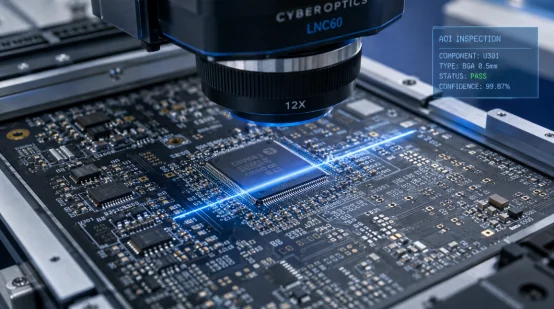
Automated optical inspection AOI of PCBA components

Finding the Right Partner for Your Electronics Manufacturing Needs

When picking a full-service production partner, finding a mix of heavy machine power and smart digital tools matters. One example of this setup is SCSPCBA, a trusted shop running factories in China and Vietnam. They build everything from simple boards to complex 30-layer designs alongside micro-part SMT placement and box builds. Their setup stands out because they use an AI quoting tool that reads your BOM and Gerber files instantly, skipping the old email wait.

They hold strict paperwork like IATF 16949 and ISO 13485, backed by full digital tracking. If you want an OEM and ODM partner built for small tests and big runs alike, this setup gives you steady results.

FAQ

Q1: What is the difference between turnkey and consigned PCBA?
A: Turnkey PCBA means the shop buys all parts and builds the board. Consigned PCBA means you ship your own parts to the factory for them to solder.

Q2: Why is a DFM review necessary before production?
A: DFM checks catch layout bugs and spacing traps early. Fixing those items before production starts saves you from bad batches.

Q3: What quality certifications should a medical device PCBA manufacturer hold?
A: Medical boards require shops to hold ISO 13485 certification. This proves they follow strict safety and tracking rules.

Q4: How does AI smart quotation improve the ordering process?
A: AI quote tools scan your design files in minutes to spit out clear pricing. This cuts out slow email chains and speeds up your launch.

Q5: What equipment is needed to mount ultra-small components like 01005?
A: Placing tiny 01005 parts needs fast placement machines with sharp vision cameras and high accuracy. It also requires 3D paste inspection to check print quality.
What Is Turnkey PCBA Manufacturing Complete Process Guide

What Is Turnkey PCBA Manufacturing? Complete Process Guide

If you have ever built an electronic product from scratch, you know supply chains get incredibly messy. You order bare boards from one shop. Then, you buy chips from several distributors and ship it all to an assembly plant. This causes huge headaches.

Turnkey manufacturing fixes this issue. It drops every step into the hands of one trusted partner.

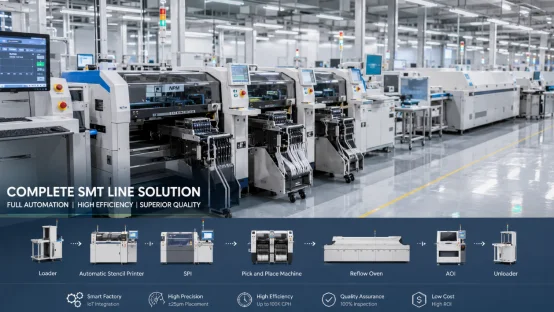
Full automated SMT assembly line solution for PCBA

What Is the Definition and Core Concept of Turnkey Assembly?

Turnkey PCBA manufacturing acts as an all-in-one production setup. You just hand over design files, like your Gerber data and a Bill of Materials (BOM). The contract manufacturer handles the rest.

They build the bare boards and buy every component. Next, the crew solders the parts, runs quality checks, and packs the units. You get a finished circuit board, ready to install.

Turnkey vs. Partial Turnkey vs. Consigned PCBA

Different hardware builds need different supply chain setups. In a full one-stop PCB assembly service, the factory takes care of bare board fabrication, component purchasing, SMT placement, and final testing.

In a partial turnkey setup, you supply a few rare microcontrollers or custom programmed chips, while the factory buys all the standard resistors, capacitors, and connectors. With consigned or kitted assembly, you must buy and ship every single part to the factory yourself, leaving them with only the soldering job.

The Complete End-to-End Turnkey PCBA Process Chain

A true turnkey build is a step-by-step manufacturing run where nothing falls through the cracks. Each stage feeds directly into the next to keep the assembly line moving without unexpected stops.

Engineering Review and Design for Manufacturability

Before any metal gets cut or paste gets spread, engineers look over your design files. A thorough Design for Manufacturability (DFM) check spots tight trace clearances, poor thermal pad layouts, and wrong component footprints early on. Catching these bugs on a computer screen saves you from scrapped boards and delayed product drops later.

Bare PCB Fabrication

After the files clear the design check, bare board fabrication kicks off. The plant builds exactly what your project needs. They make standard double-sided boards or heavy copper power boards.

They also handle flexible circuits and multilayer boards with 30 layers or more. High-density interconnect (HDI) boards use laser-drilled microvias. This helps cram tight routing into small gadgets like wearables and smart sensors.

Component Sourcing and BOM Procurement

Management The purchasing team gets to work buying parts from trusted distributors. They match part numbers against your BOM and check lead times. If a chip faces a factory shortage, they find pin-to-pin replacements.

Every batch of parts goes through Incoming Quality Control (IQC). Staff inspect the packaging and check physical pin shapes. This step keeps fake or broken components off the line.

SMT Mounting and DIP Assembly

Next up is the actual physical build. High-speed Surface Mount Technology (SMT) machines push solder paste through a stencil. Then, they drop tiny components onto the board with high accuracy. Modern lines easily handle tiny 01005 parts.

They also manage tight ball grid arrays (BGAs) at a 0.3mm pitch. The boards run through the reflow oven. After that, they move to through-hole DIP insertion. Finally, crews use selective wave soldering for bigger parts like headers and transformers.

Multi-Tiered Inspection and Testing Protocols

Quality checks happen at every single step. The factory uses 3D Solder Paste Inspection (SPI). This tool checks the paste height and volume before any parts go down. Automated Optical Inspection (AOI) scans the board to catch missing or crooked parts. Meanwhile, X-Ray machines peer through BGA solder balls.

They spot hidden air bubbles and solder bridges. Finally, In-Circuit Testing (ICT) and Functional Testing (FCT) power up the board. This verifies its real-world electrical behavior.

Box Build Integration and Global Delivery

Turnkey service rarely stops at just the bare circuit board. If your product requires it, the crew installs wire harnesses. They can snap the board into a custom plastic or metal case. Workers also apply protective conformal coating and stick labels on the box. Once everything is packed, the factory ships the finished product. It goes straight to your warehouse or distribution hub.

What Are the Strategic Business Advantages of Turnkey PCBA Solutions?

Managing dozens of electronic component vendors drains time and energy. Handing this work to a turnkey partner lets your internal team focus strictly on core product development and marketing.

Accelerated Time-to-Market and Rapid Prototyping

Turnkey manufacturing cuts down the days lost while shipping parts between separate companies. A single project manager coordinates board fabrication, component arrivals, and line scheduling. This smooth handover lets you move from a rapid prototype test into high-volume production without hitting supply bottlenecks.

Cost Savings and Supply Chain Simplification

Factories buy parts in large volumes, which gives them better pricing from component distributors than a single hardware startup could ever get. You also cut out extra shipping bills and eliminate the cost of holding extra raw component inventory in your own facility.

Single-Source Accountability and Unified Quality Standards

When an assembled board fails, split-vendor models lead to finger-pointing between the board maker and the assembly shop. With turnkey manufacturing, one shop takes full responsibility.

They build under strict quality rules like ISO 9001, ISO 13485 for medical hardware, and IATF 16949 for automotive systems. Digital Manufacturing Execution Systems (MES) log serial numbers for every board, giving you complete traceability from raw chip to final test.

Laser inspection of components on assembled PCBA

Modern Turnkey PCBA: Digitalization and Multi-Base Agility

Modern electronics manufacturing moves fast. Digital tools and flexible factory setups have turned traditional contract assembly into a much smarter, data-driven workflow.

AI Smart Online Quotation and Automated BOM Recognition

Waiting days for an email quote slows down your development cycle. Modern turnkey platforms use smart tools to read your Gerber files and BOM data in minutes. The system matches component part numbers, checks current stock, and gives you instant, clear pricing so you can approve builds right away.

Multi-Base Production Flexibility

Relying on a single manufacturing shop exposes your project to regional trade issues and local supply disruptions. Modern providers use multi-base factory setups. Running high-mix prototype builds and complex engineering in specialized centers while shifting mass production to cost-optimized regions like Vietnam keeps your delivery timelines secure.

Finding an Integrated Partner for Your Production Needs

When selecting a turnkey partner, having true full-process capability makes all the difference. A clear example of this integrated model is SCSPCBA, which operates multiple manufacturing sites across China and Vietnam to support projects from rapid prototyping to mass delivery. Their lines run 13 automated SMT setups and 6 DIP lines, handling everything from 1 to 30+ layer rigid-flex and HDI boards down to 01005 micro-component placement with high precision.

To make ordering simple, they utilize an AI smart online quotation platform that parses BOMs and Gerber files automatically, giving you quick price calculations without the usual email wait. Their facilities maintain strict certifications including ISO 9001, IATF 16949 for automotive electronics, and ISO 13485 for medical devices. With full MES two-way tracking, complete DFM review support, and box build integration, their setup gives hardware teams a dependable path to bring complex electronic devices to market smoothly.

FAQ

Q1: What is the main difference between full turnkey and partial turnkey PCBA?
A: Full turnkey means the shop buys every part. They also build the bare boards, run the assembly, and test the gear. With partial turnkey, you ship them your custom pieces. The factory then buys whatever is left to finish the build.

Q2: How does DFM analysis save money during turnkey manufacturing?
A: DFM checks catch layout bugs. They spot spacing errors and poor pad shapes before production starts. Catching these traps early stops wasted material. It cuts down repair bills and keeps your timeline on track.

Q3: Why is component traceability important in turnkey PCBA projects?
A: Tracking setups match part batch numbers to finished circuit boards. Sometimes a single chip fails in the field. When that happens, you can pinpoint that exact bad batch. You skip the headache of recalling every unit made.

Q4: What testing methods are standard in a turnkey PCBA process?
A: A solid turnkey run uses 3D SPI to check solder paste. It also relies on AOI to verify part placement and X-Ray for hidden BGA joints. Finally, crews run electrical checks like ICT and functional testing (FCT).

Q5: How does AI quotation software speed up turnkey project launches?
A: AI quote platforms automatically read uploaded Gerber files and BOM lists to match components and calculate manufacturing costs in minutes. This eliminates long email chains and gets your order into production much faster.

What Does PCBA Mean PCB vs PCBA Explained for Beginners

What Does PCBA Mean? PCB vs PCBA Explained for Beginners

Are you just starting to learn about building electronics? If so, you might first wonder what PCBA means. PCBA stands for printed circuit board assembly. Basically, it means a plain PCB that has electronic parts put on and soldered down. People also use this word to talk about the actual building work. This work changes a blank board into a working circuit.

This difference is a big deal when you ask for a price. Making the board, putting parts on it, buying those parts, and testing are all different steps. A good PCBA service will handle all these steps for you at once.

Bare PCB next to an assembled PCBA

What Does PCBA Mean?

People use this word in two main ways. You will see it on drawings, price lists, and inside factories. Knowing the right meaning helps you understand what the builder will actually give you.

What Does PCBA Stand for?

PCBA stands for Printed Circuit Board Assembly. A bare PCB has little copper lines, pads, and tiny holes. Workers then add things like resistors, capacitors, ICs, and connectors. After they solder these parts down, the board turns into a printed circuit board assembly. So, if a friend asks what is PCBA, the easy answer is this. It is the finished board that does its planned job.

Is PCBA a Product or a Process?

It can actually mean both things. Engineers usually call the finished board a PCBA. Factory workers might use the same word for the building steps. Either way, PCB assembly includes placing parts, soldering, and checking the board. It also involves testing to see if it works right.

What Is the Difference between PCB and PCBA?

The best way to show the difference in PCB vs PCBA is simple. Just look to see if parts are on it. A PCB is only the blank frame with metal paths. A PCBA adds the real pieces and solder joints. This lets the circuit actually work.

Item PCB PCBA
Meaning Printed Circuit Board Printed Circuit Board Assembly
Components Normally bare Components installed
Main Work Fabrication Assembly and testing
Typical Processes Drilling, plating, imaging SMT, THT, soldering, inspection
Result Circuit platform Functional electronic assembly

So, PCB vs PCBA is not just a different name. A blank board does nothing on its own. Put the right parts on it, test it, and you get a printed circuit board assembly.

What Components Are Found on a PCBA?

Most PCBAs mix active parts, passive parts, and metal connectors. You can find the exact list of pieces in the BOM.

Active and Passive Components

Active parts can be ICs, MCUs, CPUs, FPGAs, memory, MOSFETs, and power devices. They also include RF devices. On the other hand, passive parts are things like resistors, capacitors, inductors, ferrite beads, and filters.

Connectors and Functional Modules

A PCB assembly might also hold pin headers, USB or Type-C ports, and RF connectors. It can have antennas, sensors, display screens, power modules, or wireless chips. The BOM lists exact part numbers and amounts. It tells workers where parts go. Having clean, clear data helps the factory build everything correctly.

What Does the PCBA Manufacturing Process Include?

The PCBA manufacturing process starts way before machines even move. Every part must match the BOM exactly. Workers check all new materials. The factory files must match the final design perfectly. After that, the steps depend on using SMT, THT, or both ways.

Sourcing, Solder Paste, and SMT

For SMT PCB assembly, workers print thick solder paste onto the board pads. SPI checks the paste amount. It also checks the spot and bridging risks. Next, fast machines put the SMDs down. These parts include BGA, CSP, and QFN packages. Then, an oven heats the board. This step is called reflow soldering. It melts the paste to form strong joints.

Through-Hole and Mixed Assembly

Through-hole assembly drops part wires through tiny drilled holes. Then, they get soldered on the back side. People use this mostly for large connectors and switches. Many products use mixed assembly today. SMT takes care of the small parts. DIP or THT handles the bigger pieces. Real factory work is often a bit messy compared to a neat book chart.

How Does PCBA Testing Work?

PCBA testing answers two big questions. Was the board built right? Does it actually work? The testing steps should match the parts used and the product risk.

SPI, AOI, and X-Ray

SPI checks the sticky solder paste first. AOI spots missing parts or bad placement. It finds backwards parts and bad solder spots. X-Ray is great for seeing hidden joints. It looks under BGA, CSP, and QFN packages.

ICT, FCT, and Reliability Tests

ICT checks for electrical shorts and tests part values. FCT turns the board on. It checks if the real functions work well. Depending on the product, you might run burn-in tests. You might also run heat, wetness, or heavy shaking tests.

Automated SMT pick-and-place machine assembling a PCB

What Files Are Needed for PCB Assembly?

A factory cannot build a good board using just a picture. They need a file package. This tells them exactly what to make, place, and test.

Gerber, BOM, and Placement Data

Gerber files show the PCB layers and build shapes. The BOM lists every single part. Pick-and-place data tells the SMT machines where parts go. You might also need drawings and test rules. Always keep these files updated together. A mixed-up BOM and file set can cost you a lot of money!

Where Are PCBAs Used?

Printed circuit board assembly is used almost everywhere. You see it in home gadgets, factory machines, car electronics, and doctor tools. It is in security systems and AI computers. Examples include PLC control boards, ECUs, and BMS boards. A small toy needs tight SMT PCB assembly. But car products need stronger parts and deeper testing to last a long time.

Where Does PCBA Fit in Electronics Manufacturing?

The simple steps are: PCB design → PCB fabrication → component sourcing → PCB assembly → PCBA testing → Box Build → finished product.

This shows the PCBA meaning clearly. Box Build adds wires, cases, screens, and final tests.

What Does a Capable PCBA Partner Look Like?

Once you know what is PCBA, finding a good factory is easier. A great partner links design, building, and buying parts smoothly.

SCSPCBA handles PCB fabrication, component sourcing, SMT and DIP assembly. They do BGA/CSP/QFN steps and selective soldering. They also run SPI, AOI, X-Ray, ICT, and FCT checks. They track parts from the start all the way to shipping. They can make tiny batches or huge orders easily.

FAQ

Q1: What Does PCBA Mean?
A: If you ask what does PCBA mean, PCBA stands for Printed Circuit Board Assembly. It is a plain PCB that now holds electronic parts soldered on.

Q2: What Is PCBA?
A: A PCBA is a finished circuit board. It has all the pieces needed to work. In a factory setting, what is PCBA can also mean the building steps.

Q3: What Is the Difference between PCB and PCBA?
A: The big difference in PCB vs PCBA is the parts. A PCB is just the bare board. A PCBA is the full assembly with parts added on.

Q4: What Is SMT PCB Assembly?
A: SMT PCB assembly puts surface-mount devices right on the board pads. It uses sticky solder paste, fast machines, and hot ovens.

Q5: Why Is PCBA Testing Important?
A: PCBA testing catches bad solder joints or broken parts early. It finds issues before the board goes into the final product. Common tests are AOI, X-Ray, ICT, and FCT.

How to Choose a One-Stop PCBA Supplier Turnkey Sourcing Guide

How to Choose a One-Stop PCBA Supplier: Turnkey Sourcing Guide

Choosing a PCBA partner is rarely just a price comparison. You are handing one supplier your PCB data, BOM, component risk, assembly quality, test results, and often the final delivery schedule. If your sourcing brief says “choose one-stop PCBA supplier,” start by asking who actually controls those steps. A low assembly price means little if material substitutions, hidden subcontracting, or weak revision control create problems later.

A capable one-stop PCBA service should connect PCB fabrication, component sourcing, assembly, testing, and optional Box Build in one controlled flow. You should also see how engineering changes, materials, inspections, and production records move through that flow.

Automated SMT pick and place machine assembling PCB board

Verify What One-Stop PCBA Really Covers

Do not accept “turnkey” as a complete answer. Ask the supplier to map your project from Gerber and BOM release to shipment. A real one-stop service should make ownership clear at each stage, including any work performed outside the main site.

Check the Manufacturing Boundary

Confirm who makes the PCB, who buys components, who runs SMT and THT assembly, and who performs testing. If your product needs cable installation, enclosure assembly, labeling, programming, aging tests, or finished-product testing, confirm those steps too. These are common Box Build tasks, but not every assembly supplier handles them in-house.

Check Prototype-to-Production Continuity

Ask whether the approved BOM, stencil data, process settings, test fixtures, work instructions, and defect history carry into pilot and volume production. This matters when a 20-piece build later becomes 2,000 or 20,000 units.

Evaluate the Engineering Interface before Production

Before releasing a PO, find out how technical questions are handled and who has authority to stop production when the data is unclear.

Review DFM, DFT, and Revision Control

The supplier should review manufacturability and testability before assembly. Typical checks include PCB layout risks, soldering concerns, component orientation, test-point access, and fixture needs. Also ask how Gerber files, BOM revisions, drawings, firmware, and test instructions are versioned.

For ECO or ECN changes, the key question is simple: can old material, work in progress, and new revisions be separated without guesswork? No substitute part should enter production without the approval process you agreed on.

Audit Component Sourcing and Traceability

Component problems can stop a line long before SMT begins. That is why component sourcing and BOM management deserve the same attention as placement accuracy.

Check IQC and Alternative-Part Approval

A useful IQC process checks component model, packaging condition, BOM match, and key incoming materials. For shortages, ask how alternatives are proposed and approved. A recommendation is not permission to substitute.

Traceability should connect supplier origin, procurement channel, lot or date information, inspection records, production batch, and shipment. MES-based tracking can also bind materials and product serial numbers, making a suspect batch much easier to locate.

Match Assembly and Testing to Your Board

Factory tours can be impressive, but your board does not care how large the building is. It cares whether the process fits its packages, solder joints, test points, and production volume.

Match SMT and THT Capability

Check the smallest passive parts, fine-pitch ICs, BGA or QFN packages, double-sided reflow needs, DIP insertion, and selective or wave soldering. For mixed-technology industrial boards, THT capability can matter just as much as SMT accuracy.

Match the Test Plan

Testing and inspection should follow the risk of the assembly. SPI checks solder paste before reflow. AOI catches visible placement and solder defects. X-Ray is useful for hidden joints such as BGA and QFN. ICT can check opens, shorts, and electrical values, while FCT verifies whether the board works in a real operating sequence.

Not every board needs every test. Ask the supplier to explain why each inspection is included and what happens when it fails.

Look beyond Certificates when Qualifying a Supplier

Quality certificates matter, especially for regulated or high-reliability projects, but records tell you how the factory behaves on a normal Tuesday afternoon.

Look for FAI before volume release, IPQC during production, outgoing checks before shipment, calibration records, nonconformance handling, and corrective-action evidence. Systems such as ISO 9001, ISO 13485, IATF 16949, IPC-A-610, RoHS, and REACH should match your product and the actual site doing the work.

If you are searching “reliable PCBA manufacturer China,” do not stop at a certificate list. Verify the manufacturing site, process records, sourcing controls, test capability, and traceability on a real order.

Use a Pilot Build before Final Approval

A pilot run is one of the best ways to choose one-stop PCBA supplier partners without betting the full production schedule. It shows how the supplier behaves when the files are imperfect, one component is short, or a test result needs engineering review. Those moments can reveal more than a polished audit presentation.

Review DFM feedback, quotation accuracy, material handling, FAI results, yield, defect response, test records, packaging, and delivery. Then ask whether the same controls can scale to your forecast volume.

Use a PCB Assembly Supplier Checklist

A practical PCB assembly supplier checklist keeps sourcing and engineering teams on the same page. Score each candidate on service ownership, DFM/DFT, revision control, ECO handling, BOM sourcing, IQC, substitution approval, SMT/THT fit, AOI/X-Ray, ICT/FCT, traceability, FAI, quote clarity, communication, capacity, and delivery.

Also compare quotations on the same cost basis. Separate PCB cost, components, assembly, tooling, fixtures, programming, testing, packaging, NRE, and logistics. A quote that hides these items is difficult to compare and even harder to manage after an ECO.

One-stop PCBA workflow from component sourcing to box build

What Does a Well-Matched One-Stop Partner Look Like?

Once the checklist is complete, the strongest candidate is usually the one that can show connected controls rather than isolated capabilities. That is where SCSPCBA is relevant as a comparison point. Its published one-stop PCBA scope covers PCB fabrication, component procurement, SMT and DIP assembly, functional testing, and final packaging, with Box Build available for enclosure, cable, programming, testing, and packaging work.

Its manufacturing information also describes DFM support during prototype development, BOM verification and alternative-part recommendations, IQC, SPI, AOI, X-Ray, ICT, FCT, aging tests, and MES-based material and product traceability. The real question is whether those steps can be applied to your files, your test plan, and your production volume. Online PCB, PCBA, BOM, and Box Build quotation paths can also help you compare scope before production.

FAQ

Q1: What should you check first when choosing a one-stop PCBA supplier?
A: Start with service ownership. Confirm who controls PCB fabrication, component sourcing, assembly, testing, Box Build, and engineering changes. Then check whether the supplier can trace materials and production records through shipment.

Q2: How do you find a reliable PCBA manufacturer in China?
A: If you search “reliable PCBA manufacturer China,” use the results only as a starting list. Verify the actual factory, quality records, engineering response, component controls, test coverage, pilot-build performance, and volume capability.

Q3: What should a PCB assembly supplier checklist include?
A: A PCB assembly supplier checklist should cover DFM/DFT, BOM control, IQC, substitutions, SMT/THT capability, inspection, ICT/FCT, FAI, traceability, revision control, quote transparency, communication, capacity, and delivery.

Q4: Which PCBA tests should you require?
A: It depends on the board. SPI and AOI suit many SMT assemblies. BGA and QFN boards often need X-Ray. ICT makes sense when electrical access and volume justify fixtures. FCT is important when finished board behavior must be verified.

Q5: Should you choose the lowest PCBA quotation?
A: Not by default. Compare the same cost items and the same service scope. A slightly higher quote may cost less overall if it includes better material control, fewer hidden fees, suitable testing, and a smoother move into mass production.

PCBA First Article Inspection Pre-Production Quality Guide

PCBA First Article Inspection: Pre-Production Quality Guide

A working prototype is not the same as a production-ready assembly. Before a batch starts, you need proof that the actual board matches the approved revision, BOM, placement data, polarity, soldering expectations, and test requirements. That is the point of first article inspection PCBA control.

A PCBA first article gives you a physical reference before the line repeats the build. In a sound PCBA inspection before mass production process, the board is checked against documented requirements, not appearance alone.

Engineer performing PCBA first article inspection

What Is a PCBA First Article Inspection?

A PCBA first article inspection is a production release check used to confirm that the first assembled board meets design requirements. It comes before mass production, while in-process inspection controls the running line and outgoing inspection checks boards before shipment. These are different gates in the PCBA quality control process.

Why This Check Matters

NPI guidance gives a blunt example: a 1% yield loss on 100,000 boards means 1,000 nonconforming boards. Finding a wrong part or reversed component on the first build is much easier than sorting a full lot later. For a first article inspection PCBA review, the key question is simple: is this the assembly you want reproduced?

What Documents Should Be Checked Before First Article Inspection?

A reliable first article inspection before mass production starts with controlled production data. Engineering review should cover the PCB design files, BOM, assembly drawings, testability, and approved material alternatives.

Revision, BOM, and Placement Data

Check the current Gerber and assembly revision, BOM, part numbers, package, quantity, and pick and place data. Coordinate files define component location and orientation, so a version mismatch can put a correct part in the wrong place.

Approved substitutions need special attention. A recommended alternative is not automatically an approved substitute. The build should follow the agreed BOM, change record, or approval process. Incoming inspection should also verify component models against the BOM.

What Should Be Checked on the PCBA First Article?

Once the paperwork matches, inspect the real board. The PCBA first article turns design data into something you can compare, test, record, and approve.

Components, Orientation, and Soldering

Check component identity, package, reference location, placement offset, and missing parts. PCBA polarity inspection should cover polarized devices such as diodes, LEDs, electrolytic capacitors, ICs, and connectors.

Then perform PCBA solder joint inspection for visible defects. AOI can detect missing or shifted components, reversed parts, insufficient solder, bridging, cold joints, solder balls, and tombstoning. It is useful, but it cannot see every joint.

When Is PCBA X-Ray Inspection Needed?

Hidden solder joints need a different method. PCBA X-ray inspection is relevant for BGA, CSP, and QFN, where optical inspection cannot see the solder connection underneath.

Match X-Ray Scope to Product Risk

X-ray can reveal internal solder ball condition, voiding, and bridging. That does not mean every board needs 100% X-ray. The scope should follow package type, product risk, quality plan, and customer requirements.

A supplier with PCBA testing and inspection capabilities can combine AOI and X-ray with electrical testing instead of relying on one method for every defect.

What PCBA Functional Testing Should Be Completed?

A board can look perfect and still fail electrically. PCBA functional testing should follow the agreed test requirements for the product rather than a generic checklist.

ICT and FCT Serve Different Purposes

ICT can check circuit level connectivity and component related conditions where the design and test points support it. FCT checks whether the assembled board performs its intended functions under the defined test setup. Test point accessibility and coverage should be considered during design review.

The ICT, FCT, burn-in, or environmental test scope is project specific. Fixtures, programs, acceptance limits, and report requirements should be agreed before release. A one-stop PCBA service can help when sourcing, assembly, inspection, and testing follow one controlled data set.

How Does Prototype to Mass Production Inspection Work?

A prototype mainly proves that the design can work. A prototype to mass production inspection process asks a harder question: can the same design be built repeatedly with controlled materials, process settings, inspection rules, and traceable results?

Build a Production Baseline

NPI verification can cover solder paste printing, placement accuracy, reflow profile, AOI settings, test coverage, material readiness, and traceability. Its outputs can become process standards, inspection standards, work instructions, and quality control plans.

This matters for PCBA mass production approval. The first article should not be released just because it powers on. Correct revisions, accepted materials, placement, polarity, required X-ray results, ICT or FCT results, and open deviations should all be reviewed.

What Happens If the PCBA First Article Has a Deviation?

A deviation should enter the agreed PCBA quality control process, not disappear in an informal production floor decision. Good records make later troubleshooting much faster.

Record, Correct, and Recheck

Record what failed, the affected component or function, the expected condition, the actual result, and relevant board or lot identity. Correct the issue, then repeat the affected inspection or test.

Traceability systems can connect material batches, production time, equipment, serial identity, and test data. NPI guidance also calls for written records of changes, defects, and verification activity before the next stage proceeds.

Customer approval may be required for the PCBA first article, but the exact form, approval authority, and timing depend on the project. There is no credible universal first article lead time.

PCBA AOI and X-ray inspection comparison

What Should You Confirm Before Mass Production Release?

Before giving PCBA mass production approval, you need evidence that the approved product definition has transferred correctly to the line. This is the real purpose of first article inspection before mass production.

A Practical Release Check

Confirm the correct revision, BOM match, approved substitutions, component identity, orientation, placement, visible solder quality, hidden joint checks where required, and required ICT or FCT results. Deviations should be closed or formally accepted, and approval records should be complete.

That is what turns prototype to mass production inspection into a controlled release process rather than a simple sample check.

What Manufacturing Capabilities Support a Reliable First Article Review?

A first article process works best when assembly, inspection, testing, and traceability follow the same project data. A checklist only works if the factory can carry out the required checks.

SCSPCBA supports PCB and PCBA projects from prototype through mass production, with SMT and DIP assembly plus AOI, X-ray, ICT, FCT, and other verification options. Its quality framework includes incoming inspection, in-process control, first article confirmation, outgoing quality checks, and MES based traceability.

The SCSPCBA manufacturing platform also combines component sourcing, engineering support, PCBA assembly, testing, and box build services. For a buyer, the useful question is whether revision, material, inspection, test, and production records stay connected as the project scales.

FAQ

Q1: What is PCBA first article inspection?
A: It is a pre-production check used to confirm that the first assembled PCBA matches approved design, material, assembly, and test requirements before batch release.

Q2: What should be checked on a PCBA first article?
A: Check revision, BOM, component identity, placement, polarity, visible solder joints, hidden joints where required, and the agreed electrical or functional test results.

Q3: When is PCBA X-ray inspection required?
A: It is commonly used when important solder joints are hidden under packages such as BGA, CSP, or QFN. The exact scope depends on project risk and inspection requirements.

Q4: Is PCBA functional testing required before mass production?
A: It depends on the product and agreed quality plan. ICT, FCT, burn-in, or other tests should follow customer and project requirements rather than one universal rule.

Q5: Why is prototype to mass production inspection important?
A: It confirms that a working prototype has become a repeatable manufacturing process with controlled materials, inspection criteria, test methods, records, and release conditions.

PCBA Traceability Guide Records, MES & Audit Checklist

PCBA Traceability Guide: Records, MES & Audit Checklist

A returned board arrives with a serial label. The supplier can find the shipment date, yet cannot show which component lot went into the board or which test result cleared it. That is where PCBA traceability either proves its value or falls apart.

Useful electronics manufacturing traceability connects materials, production steps, serial numbers or batches, inspection results, changes, and shipment records. A long spreadsheet is not enough. You need records that lead to each other, quickly and in both directions.

PCBA barcode scanning with MES tracking

What Does PCBA Traceability Need to Connect?

A good traceability chain begins before assembly and continues after the finished boards leave the factory. Each link should identify what entered production, what happened on the line, and which products may share the same risk.

Material Identity and BOM Revision

Start with the approved BOM. BOM revision control should show the released version, approved substitutes, authorization status, and production orders that used it. This matters when two nearly identical components have different voltage ratings or temperature grades.

Material lot traceability should cover the PCB, electronic components, and relevant auxiliary materials. Incoming records may include the manufacturer part number, supplier, lot or date code, packaging condition, model verification, and inspection status. If one reel later becomes suspect, the supplier should be able to identify every affected board.

The actual route should show whether the board completed solder paste printing, placement, reflow, inspection, insertion, testing, repair, and final release as required.

PCBA batch traceability links boards produced under shared conditions. PCB assembly serial number tracking goes further by connecting one finished unit to its material and process history. Both can be useful. The right depth depends on product risk, volume, customer requirements, and system setup.

Shipment records close the chain. You should be able to move from a shipped serial number back to production, or from a material lot forward to shipped products.

Which Records Should You Request from a Supplier?

A factory tour shows equipment. Records show what happened to your order. Ask for a completed example from a controlled build, with sensitive customer details removed if needed.

Production, Inspection, and Test Records

Incoming inspection should cover PCBs, components, auxiliary materials, BOM checks, and key material sampling. Production records may show the process route, equipment, time, operator, and status where the project calls for them.

PCBA test records should match the agreed quality plan. Depending on the board, these may include solder paste inspection, automated optical inspection, X-ray inspection, in-circuit testing, functional testing, aging tests, and outgoing checks. A one-stop PCBA service can connect sourcing, assembly, testing, and final delivery, but you still need to define the required coverage.

A test result in a database looks reassuring. It says little if the wrong test was run.

Nonconformance, Rework, and Change Records

When a board fails, its record should show the defect, disposition, repair action, secondary inspection, approval, and release status. This closes the loop and prevents repaired boards from quietly rejoining good stock.

Manufacturing change history should cover BOM changes, material substitutions, route changes, test-limit updates, and other approved deviations. Check who authorized the change, when it took effect, and which batches were affected.

How Do Barcodes and MES Support PCB Assembly?

Barcodes and manufacturing software reduce manual gaps, but only when data and scanning rules are maintained. They help connect events. They do not decide whether the process itself is suitable.

What the System Can Record

In an MES PCB assembly workflow, material scanning can help prevent the wrong part from entering production. The system may collect equipment data, monitor production status, bind product serial numbers, and record movement through defined operations.

The knowledge base also describes bidirectional tracing from raw materials to finished products. That means you can start with a finished board and find its material history, or start with a suspect material lot and locate affected products. When an abnormal batch appears, this can shorten containment work considerably.

What Barcodes Cannot Prove

Barcode tracking in PCB assembly gives an item a machine-readable identity. Barcodes commonly support component tracking, work in process tracking, and inventory control. They cannot confirm that the BOM data is correct, the scanner rule is active, or the inspection plan covers the main failure risks.

The same limit applies to MES. A system record cannot replace calibrated equipment, trained operators, approved process documents, or suitable acceptance criteria.

How Should You Audit PCBA Traceability?

A practical PCBA supplier audit should test retrieval, not just ask whether an MES exists. Pick real records and follow them across the manufacturing chain.

Run a Live Retrieval Test

Choose one serial number or batch. Ask the supplier to retrieve its BOM revision, material lots, process route, inspection results, test data, rework history, and shipment record.

Then reverse the test. Select one component lot and ask which work orders, finished boards, and shipments used it. This small exercise often reveals more than a polished presentation. Watch for missing links, manual searches, and conflicting revision data.

Check Permissions and Record Retention

Ask who can change BOM information, material status, routes, test limits, and disposition results. The system should record the user, time, reason, approval, and affected production range where those controls are configured.

Do not assume a fixed retention period. Ask what the supplier keeps for your project, how records are backed up, how fast they can be retrieved, and which contractual or quality requirements set the retention period.

Bidirectional PCBA traceability process diagram

A Practical Traceability Path from Material to Shipment

Once the audit questions are clear, supplier capability becomes easier to judge. SCSPCBA integrates MES into its production process for material scanning error prevention, equipment data collection, production status monitoring, serial number binding, and bidirectional tracing from raw materials to finished products.

Its documented quality flow covers incoming inspection, solder paste inspection, optical inspection, X-ray, in-circuit testing, functional testing, aging tests, and outgoing checks according to project needs. SCSPCBA also supports PCB fabrication, component sourcing, SMT and DIP assembly, testing, box build, and delivery.

This connected scope can reduce record gaps between separate suppliers. Still, you should confirm the enabled data fields, inspection coverage, and retrieval rules for the actual order.

FAQ

Q1: What Records Are Needed for PCBA Traceability?
A: You should request material identity, BOM revision, process route, serial or batch links, inspection results, test data, nonconformance history, changes, and shipment records.

Q2: Can MES Trace a Failed PCBA Back to a Material Lot?
A: Yes, when the material lot was correctly scanned or recorded and linked to the production batch or product serial number.

Q3: Are Barcodes Enough for PCBA Traceability?
A: No. Barcodes identify items, but traceability also needs accurate master data, process records, inspection results, and controlled links between them.

Q4: How Long Should PCBA Records Be Retained?
A: The period depends on the product, contract, customer requirements, applicable regulations, and quality system. Confirm it for each project.

Q5: What Should You Test during a Supplier Audit?
A: Trace one finished serial number backward and one material lot forward, then check retrieval speed, record completeness, permissions, changes, and abnormal-batch containment.

SMT vs. THT for PCB Assembly Key Differences & Selection Guide

SMT vs. THT for PCB Assembly: Key Differences & Selection Guide


SMT vs THT components on PCB

When you are quoting a PCB assembly job, the real question is usually not which method is “better.” It is which one fits your component mix, board layout, and test plan.

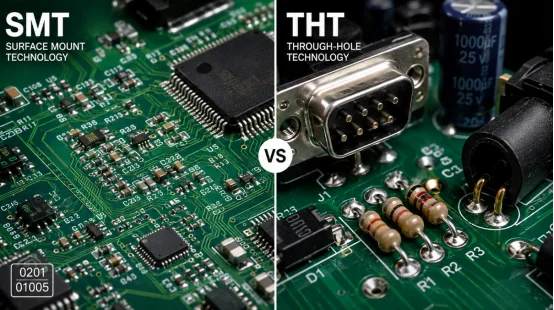
SMT vs. THT assembly is mostly about where the part sits and how it gets soldered. SMT puts parts on the surface. THT puts leads through holes. That simple split changes density, inspection, soldering flow, and even how you should write the RFQ.

What Do SMT And THT Mean?

SMT and THT solve different problems on the same board. SMT, or surface mount technology, places SMD parts directly on the PCB surface. SCSPCBA describes it as a standard choice for compact boards, including fine-pitch and small parts such as 01005 and 0201.

THT, or through-hole technology, uses drilled holes and component leads that pass through the board. That gives the joint more mechanical support. It is the usual fit for connectors, switches, and parts that take stress.

Surface Mount Technology (SMT)

SMT starts with solder paste on the pads, usually through a stencil. Parts are placed, then the board goes through reflow soldering. The process is fast and highly automated. It also supports component placement on both sides of the board, which is why it shows up so often in dense designs. For you, the practical point is simple. If space is tight, SMT usually gives you more room to work with.

Through-Hole Technology (THT)

THT uses pre-drilled holes, then insertion and soldering. SCSPCBA groups it with DIP assembly and through-hole assembly, and notes that it is often used for parts that need stronger mechanical attachment or higher current handling. It also fits older or mixed BOMs that still carry leaded parts. In real production, that usually means connectors, power devices, and a few parts that just do not belong on the surface.

Mixed Technology PCB Assembly

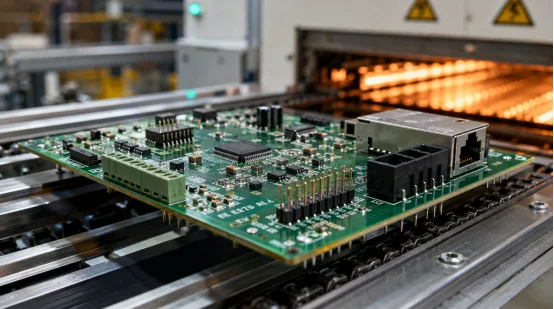
Mixed technology PCB assembly combines both methods on one board. That is common when a design needs SMT for density and THT for strength. The flow is usually SMT first, then through-hole insertion, then wave soldering, selective soldering, or hand soldering for the remaining joints. That is where project planning matters. A mixed board can be clean and efficient, but only if the process order is set early.

How Do They Differ In Real Production?

The differences show up fast once the board leaves the CAD file. SMT usually wins on density and automation. THT usually wins on mechanical hold and simple visual access.

Neither point is abstract once you are dealing with a production run and a schedule. The board has to be built, checked, and shipped. That is the part people miss when they only talk about component style.

Board Density And Component Type

SMT makes it easier to pack parts tightly and build smaller boards. It is also the better fit for modern high-density layouts. THT takes more space because the holes themselves consume area.

If your design has fine pitch parts, small passives, or both sides populated, SMT is usually the cleaner path. If the BOM includes bulky connectors or parts that will be pulled, plugged, or handled often, THT is the safer physical fit.

Mechanical Connection And Access

THT gives you a stronger mechanical bond because the leads pass through the board and are soldered in place. That matters for parts exposed to force. SMT is different. It is lighter and more compact, but the joint is built for surface attachment. Inspection can also feel different. THT joints are easier to see with the naked eye. SMT often depends more on AOI, X-Ray for hidden joints, and clean process control.

Inspection And Rework Visibility

SMT and THT do not ask for the same inspection mix. SMT usually needs solder paste control, placement checks, and post-reflow inspection. THT brings its own checks, especially if you are dealing with mixed lines or hand insertion.

SCSPCBA also calls out AOI, SPI, X-Ray, ICT, FCT, and first article inspection as part of the broader quality flow. That is not just shop-floor detail. It is where batch risk gets caught early.

What Does The Production Flow Look Like?

The process is different enough that you should think about it before you release the files. SMT usually means paste, placement, and reflow. THT means hole prep, insertion, and soldering. Mixed builds combine both, so the order and the soldering method matter. If the process map is vague, the quote will be vague too.

SMT Process

SMT usually begins with solder paste printing on a stencil. Parts are placed by machine, then the board goes through reflow soldering. SCSPCBA also mentions SPI before soldering and AOI after placement and reflow. That is the normal rhythm for a modern SMT line. It is quick, repeatable, and suited to volume work.

THT Process

THT starts with insertion into drilled holes. After that, the board may go through wave soldering, selective soldering, or hand soldering, depending on the part mix. Wave soldering fits many through-hole parts. Selective soldering is useful when only certain joints need heat. That is often the cleaner choice in mixed assemblies where not every hole should see the same soldering step.

Mixed Technology Flow

Mixed technology usually means SMT first, then THT. That sequence keeps the surface-mount side stable before the through-hole side is finished. It also gives you a better shot at controlling hidden risk on the mixed line. If the board carries both fine-pitch SMT and leaded parts, the process order is not a small detail. It is the difference between a smooth build and a messy one.

What Should You Put In Your RFQ?

If you want a useful quote, give the assembler enough detail to see the process, not just the BOM. State the component types, lead style, and which parts are SMT, THT, or mixed. Call out any hand soldering, fixture, or test requirement. If the board has connectors, power parts, or odd mechanical loads, say so early. That saves back-and-forth later.

For design handoff, a DFM review helps catch pad, hole, and soldering issues before the job starts. A first article inspection is just as useful when you want the first board checked against the BOM and placement data before the full run. For test-heavy builds, line up Testing & Inspection with the quote, not after it.

Mixed technology PCB entering reflow oven

How Do You Choose The Right Mix?

Use the board, not the label, as the guide. If the design is dense, compact, and mostly surface parts, SMT is usually the first pick. If the BOM includes connectors, heavy leads, or parts that need a firmer hold, THT belongs in the plan. If both are true, mixed technology PCB assembly is the practical answer. That is normal, not awkward.

When The Job Needs Both Sides Done Well?

That is where a one-stop PCB assembly setup helps. SCSPCBA combines SMT assembly, DIP and through-hole assembly, mixed technology builds, double-sided reflow soldering, selective wave soldering, AOI, X-Ray, ICT, FCT, and MES traceability.

It also supports DFM review and first article inspection, which matters when the board has both fine-pitch SMT and leaded parts. In a mixed build, the process chain matters more than any single machine. See the PCBA service and the homepage for the broader service setup.

FAQ

Q1: Is SMT always better than THT?
A: No. SMT is better for density and automation, while THT is better for parts that need stronger mechanical support.

Q2: When should you choose mixed technology PCB assembly?
A: Choose it when one BOM needs both surface parts and leaded parts. That is common on connector-heavy or mechanically stressed boards.

Q3: What soldering method is used for THT?
A: Wave soldering is common, and selective soldering is often used when only part of the board needs soldering.

Q4: What should you send in an RFQ for PCB assembly?
A: Send the BOM, assembly file, component types, insertion needs, hand soldering needs, fixture needs, and test requirements.

Q5: What inspection steps matter most in SMT vs. THT assembly?
A: SMT usually depends on SPI, AOI, and sometimes X-Ray. THT often depends on visual checks, functional test, and first article inspection.

PCBA DFM Check Guide & PCB Assembly DFM Checklist

PCBA DFM Check Guide & PCB Assembly DFM Checklist

A PCBA DFM check helps you catch design details that may cause trouble during fabrication, assembly, inspection, or testing. The goal is not a defect-free promise. It is to reduce avoidable questions before production starts.

A practical PCB assembly DFM checklist should look beyond trace spacing. Footprints, polarity, component clearance, hidden joints, test access, and file revisions all matter. For a design for manufacturing PCBA project, settle them before production release.


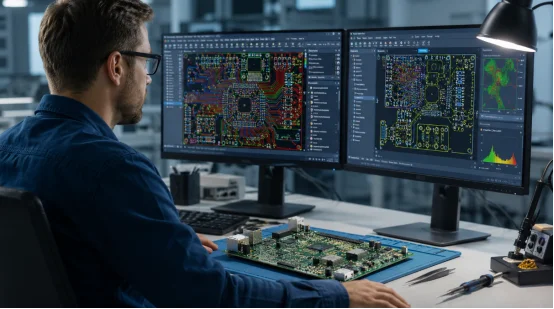
Engineer performing a PCBA DFM check using PCB layout software on dual monitors

What Is a PCBA DFM Check?

A PCBA DFM check is a manufacturing-focused review of the design and production data. It asks whether the board can be fabricated, assembled, inspected, and tested using the agreed process. Project specifications still control the final decision.

DFM Is Not the Same as DRC

DRC checks whether the PCB layout follows defined spacing, size, and electrical or physical rules. DFM goes further into drilling, solder mask, component access, placement, soldering, and testability. A layout can pass DRC and still create an assembly problem.

Files Needed for a PCB Assembly DFM Checklist

The review is only as good as the data you send. A clean file set gives engineering and production the same reference. Mixed revisions cause trouble fast: the Gerber may show one version while the BOM shows another.

Keep Production Data on One Revision

Prepare Gerber files, NC drill data, BOM, Pick-and-Place data, assembly drawings, fabrication notes, and test information when needed. The placement file should carry X/Y coordinates, rotation, and board side. The assembly drawing should make polarity and no-fit positions clear.

This guide to files needed for an accurate PCBA quote explains which data belongs in the RFQ and which data matters before production.

PCB Fabrication DFM Checks

Fabrication review starts with the board itself. There is no useful universal limit for every project, so line width, spacing, hole size, copper, and related limits should be checked against the build specification and current manufacturing capability.

Check Stack-Up and Board Data

Confirm layer count, stack-up, material, copper weight, board thickness, and controlled impedance where required. High-speed or RF designs may need closer coordination between dielectric thickness and copper geometry.

Also flag HDI, blind or buried vias, Rigid-Flex sections, or unusual board shapes in the fabrication notes.

Check Holes, Solder Mask, and Surface Finish

Review finished holes, PTH and NPTH definitions, slots, vias, solder mask openings, and silkscreen placement. Surface finish should match the project requirement. A polarity mark hidden under a component is technically present, but not very helpful on the production floor.

PCB Assembly DFM Checklist for Component Placement

Assembly is where small library mistakes become physical problems. This part of the PCB assembly DFM checklist should compare design data with the actual component packages and the process used to place and solder them.

Verify Footprints, Polarity, and Component Clearance

The land pattern, often called the footprint, must match the component lead arrangement. Check pad size, pitch, row spacing, and body dimensions, especially when a library part came from an older design.

Compare polarity and orientation across the BOM, Pick-and-Place file, silkscreen, and assembly drawing. Diodes, LEDs, electrolytic capacitors, ICs, and connectors deserve extra attention.

Also check component clearance near other parts, board edges, tall components, and connectors. Leave access for inspection and rework. A connector rotated 180 degrees may still fit on the board. The cable usually tells a different story.

Review Hidden Joints and Mixed Assembly

BGA, CSP, and QFN packages have hidden solder joints, so inspection planning belongs in DFM. X-Ray inspection can check conditions ordinary optical inspection cannot see.

For mixed builds, review the sequence for SMT, THT, double-sided reflow, and selective wave soldering. See the available SMT and DIP assembly processes when checking whether the proposed sequence fits the build.

Design for Manufacturing PCBA and DFT Requirements

A design for manufacturing PCBA review should also ask whether the finished assembly can be tested efficiently. A board that assembles cleanly but gives the fixture nowhere to probe can still delay production.

Check Test Points, ICT, and FCT Access

Confirm accessible test points for power, ground, programming, communication interfaces, and critical signals as required by the test strategy. ICT uses probe access to isolate assembly faults, while FCT powers the PCBA and checks functional behavior.

If ICT or FCT is required, confirm fixture needs, test files, programming files, expected results, and pass/fail criteria before release. Fixture development should be agreed by the project team, not assumed.

Automated optical inspection and testing of a PCBA circuit board

Pre-Production PCBA DFM Check Checklist

Before version freeze, use the PCBA DFM check as a final cross-functional pass. The goal is simple: make open engineering questions visible and owned.

  • PCB: stack-up, material, copper, traces, spacing, holes, solder mask, and finish
  • Assembly: footprints, polarity, component clearance, BGA/QFN access, and SMT/THT sequence
  • DFT: test points, ICT/FCT fixture access, programming, test files, and acceptance criteria
  • Data control: Gerber, BOM, placement, drawings, and test documents on the same revision

How to Close DFM Issues Before Production

A useful DFM process ends with decisions, not comments left in an email chain. Each issue should identify the affected location, manufacturing concern, and required action. The team can revise the design, accept a manufacturing recommendation, clarify the specification, or keep the original design by formal confirmation.

Freeze the Approved Revision

After changes, update every related production file. Do not replace the Gerber and forget the BOM or placement data. Once all engineering questions are closed, freeze the approved revision and release that exact file set. Revision control is boring right up until two versions reach the line.

PCBA DFM Check vs First Article Inspection

A PCBA DFM check happens before production release. First Article Inspection happens after the first article is built and checks whether it meets design requirements before larger-volume production continues.

DFM reduces avoidable design and process uncertainty. FAI verifies the actual first build. For a new design or meaningful revision, they work best as complementary controls.

Building a More Production-Ready Review Process

A DFM report becomes more useful when the supplier can connect design feedback with the process that will build and test the board. SCSPCBA supports DFM Analysis, Design Review, PCB Layout Support, Manufacturing Optimization, and Prototype Verification. Its process coverage includes SMT, DIP, BGA/CSP/QFN assembly, double-sided reflow, selective wave soldering, SPI, AOI, X-Ray, ICT, and FCT. MES-based production traceability also connects production and inspection records.

A footprint comment, a hidden-joint inspection plan, and an ICT fixture question all affect the same release. When a project also needs PCB fabrication, sourcing, assembly, testing, and later integration, the one-stop PCBA service provides that broader manufacturing path.

FAQ

Q1: What is a PCBA DFM check?
A: A PCBA DFM check reviews fabrication, assembly, inspection, and test-related design details before production release. Its purpose is to reduce avoidable manufacturing questions and rework risk.

Q2: What is included in a PCB assembly DFM checklist?
A: A PCB assembly DFM checklist typically covers board data, holes, solder mask, footprints, polarity, component clearance, BGA/QFN packages, SMT/THT sequence, test points, ICT/FCT access, and revision control.

Q3: What does design for manufacturing PCBA mean?
A: Design for manufacturing PCBA means checking whether PCB and assembly data fit the intended fabrication, placement, soldering, inspection, and testing processes before production starts.

Q4: Is a PCBA DFM check the same as DRC?
A: No. DRC checks layout rules and constraints. DFM reviews whether the design can move through real manufacturing and assembly processes with the agreed project requirements.

Q5: Does a PCBA DFM check guarantee defect-free production?
A: No. DFM can reduce foreseeable manufacturing, assembly, and test risks, but it cannot remove every possible defect. Prototype verification, First Article Inspection, in-process controls, and final testing still have separate roles.

PCBA Cost Breakdown How to Compare PCB Assembly Quotes

PCBA Cost Breakdown: How to Compare PCB Assembly Quotes

You may receive three quotes for the same board and see three very different totals. That does not mean one supplier is expensive or another is a bargain. A fair PCB assembly quote comparison starts by checking whether each supplier priced the same revision, quantity, materials, sourcing duty, test scope, and delivery point.

To compare PCBA quotes well, compare responsibility before price. A low number loses its appeal when test fixtures, substitute approvals, freight, or unused component stock appear later.

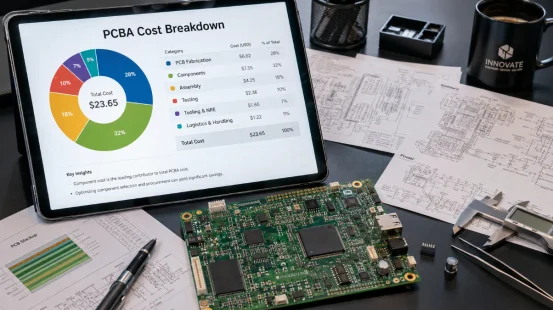
Tablet showing a PCBA cost breakdown chart next to an assembled circuit board and schematics

Why Do PCBA Quotes Vary?

The main reason why PCBA quotes vary is simple: suppliers may price different versions of the same job. One may include bare boards, parts, assembly, and functional testing. Another may include placement only. The totals look comparable, but they are not.

Different Technical Assumptions

Check the PCB material, layer count, finished thickness, copper weight, surface finish, impedance requirements, via structure, panel format, and electrical test. A change from standard FR-4 to high-Tg or high-frequency material can alter fabrication work. Double-sided assembly, BGA packages, fine-pitch parts, selective soldering, and mixed SMT/THT production also change the process route.

Different BOM and Service Scope

Every supplier needs the same BOM revision, manufacturer part numbers, quantities, reference designators, and approved alternatives. BOM and supply chain management also covers lifecycle checks, shortage risks, incoming inspection, and traceability. A tiny resistor reel can hold up a whole build. It sounds minor, but it happens.

How Should You Normalize Quotes Before Comparing Them?

Before asking how to compare PCBA quotes, set one RFQ baseline. Without it, even a detailed spreadsheet can mislead you.

Match the Files, Quantity, and Revision

Send every supplier the same Gerber files, NC drill data, BOM, pick-and-place file, assembly drawing, test instructions, firmware requirements, and packaging notes. State both revisions on the RFQ. Use the same prototype, pilot, or production quantity, plus the same shipment schedule.

Match the Test and Delivery Basis

Define whether the quote includes SPI, AOI, X-ray, ICT, FCT, burn-in, programming, and final inspection. “Testing included” is too vague. Confirm test coverage, fixture ownership, pass criteria, report format, and failed-board handling. Apply the same rule to the ship-to address, packaging, Incoterm, and freight.

What Should a PCBA Cost Breakdown Include?

A useful PCBA cost breakdown separates each cost basket so you can spot exclusions and compare like with like. It should show which fees repeat.

Compare Six Cost Baskets

Review PCB fabrication, components, assembly, NRE and tooling, testing, and packaging or logistics. PCB assembly cost can rise with placement count, unique part count, board sides, hand soldering, through-hole work, fine-pitch packages, and special cleaning or coating.

Testing deserves its own line. AOI checks placement, polarity, and visible solder defects. X-ray examines hidden joints under BGA and QFN packages. ICT checks electrical connectivity and component values, while FCT powers the assembly and checks real functions. Ask which testing and inspection steps are included. Do not assume all four are standard.

Separate One-Time and Recurring Fees

NRE may cover engineering review, machine programming, an SMT stencil, test software, and ICT or FCT fixtures. Ask whether each charge is one-time, who owns the tooling, and whether it can support repeat orders. Calculate first-build and repeat-order cost separately. That is the practical value of a PCB assembly cost breakdown.

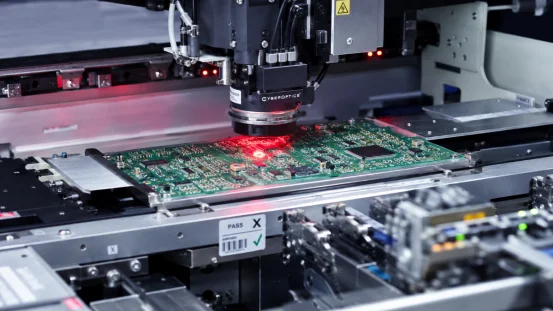
Automated AOI machine inspecting a printed circuit board assembly with a red laser scanner

How Do Sourcing Models Change the Comparison?

A turnkey PCB assembly quote carries more supplier responsibility than a consigned assembly quote. Comparing only the totals hides the buyer-side work.

Full Turnkey, Partial Turnkey, and Consigned

In full turnkey, the supplier can handle PCB fabrication, component sourcing, assembly, inspection, testing, and packaging. Partial turnkey splits component responsibility. In consigned production, you provide most or all materials.

A full turnkey vs partial turnkey vs consigned PCBA comparison should include purchasing time, inbound freight, kitting, shortage replacement, inventory control, and excess stock. To compare turnkey and consigned PCB assembly quotes fairly, add those buyer-side costs to the consigned option.

Check Material and Change Rules

Ask who approves substitute parts, who owns unused materials, and what happens when a component becomes unavailable. Written approval should come before an alternative part is purchased or fitted. Confirm what triggers a requote, such as a BOM revision, PCB change, new test method, quantity, or delivery point.

Which Hidden Costs and Risks Need a Second Look?

Hidden costs in PCBA quotes usually come from missing definitions rather than secret fees. A quote can be honest and still be incomplete.

Review Exclusions and Risk Signals

Look again when the quote has no revision, one combined total, only “testing,” or blank freight and material terms. Also check rework, retest, scrap, programming, moisture-sensitive packaging, export cartons, and fixture maintenance.

Lead time needs a start point. Does the clock begin after the purchase order, payment, final file approval, DFM closure, component availability, or receipt of consigned materials? That one sentence can change a launch plan.

How Can You Use a PCBA Quotation Checklist?

A PCBA quote comparison checklist turns a stack of PDFs into a decision record. It helps purchasing and engineering review the same facts.

Your PCBA quotation checklist should cover the quoted revision, quantity, PCB specifications, BOM responsibility, approved alternatives, assembly process, NRE, fixtures, test scope, packaging, Incoterm, lead-time start point, excess materials, and change-control terms. Keep the checklist with the approved RFQ and final as-built BOM.

What Does a Quote-Ready Manufacturing Partner Add?

Once the quote basis is clean, supplier capability becomes easier to judge. A suitable partner should connect fabrication, sourcing, assembly, inspection, and final delivery without blurring the cost boundaries.

SCSPCBA supports a one-stop PCBA service covering PCB fabrication, BOM and component sourcing, SMT, DIP and mixed assembly, plus AOI, X-ray, ICT, FCT, aging tests, packaging, and box build work. Its documented process also includes DFM review, incoming inspection, first-article checks, and material traceability.

These capabilities help separate costs for board fabrication, procurement, assembly, testing, and final integration. You still need a clear RFQ, of course. The process works best when you provide the exact files, quantity, test requirements, and delivery location before you request a PCBA quote.

FAQ

Q1: What Is Included in a PCBA Quote?
A: It may include PCB fabrication, components, assembly, NRE, tooling, testing, packaging, and logistics. Confirm every included and excluded item.

Q2: Why Is the Lowest PCB Assembly Cost Not Always Best?
A: A lower total may exclude testing, fixtures, freight, sourcing work, or material risk. Compare the complete scope.

Q3: What Is the Best Way to Compare PCBA Quotes?
A: Use the same revision, quantity, specifications, BOM, test plan, sourcing model, and delivery basis for every supplier.

Q4: What Are Common Hidden Costs in PCBA Quotes?
A: Common items include NRE, stencils, fixtures, programming, component overage, rework, retesting, packaging, and freight.

Q5: What Should a PCBA Quotation Checklist Include?
A: Include technical inputs, sourcing responsibility, assembly steps, test coverage, one-time fees, logistics, material ownership, and change-control rules.

Turnkey vs. Consigned PCB Assembly Reduce Procurement Risk

Turnkey vs. Consigned PCB Assembly: Reduce Procurement Risk

A low assembly price can look attractive until one reel is missing, a customer-owned IC arrives without a part label, or both parties order the same components. Choosing between turnkey vs consigned PCB assembly is mainly about assigning responsibility before purchasing begins.

The three common PCBA sourcing models are turnkey, consigned, and partial turnkey PCBA. Your best choice depends on the inventory you already own, the parts you need to control, and the amount of sourcing work your team can handle.

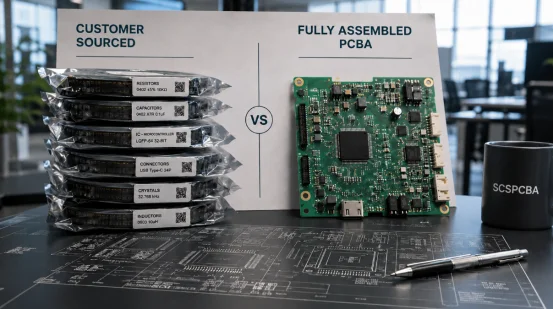
Visual comparison between customer-sourced component reels and a fully assembled PCBA

What Is the Difference Between Turnkey and Consigned PCB Assembly?

The key difference is simple. Who buys the components? That decision affects inventory ownership, incoming material checks, shortage handling, shipping, and day-to-day communication.

Turnkey PCB Assembly

With turnkey PCB assembly, you provide the manufacturing package and project requirements. The supplier handles component sourcing, PCB fabrication, assembly, inspection, testing, and any other agreed services.

This model gives you one main contact for the build. It often suits small engineering teams, new product projects, and buyers who do not want to coordinate a bare-board supplier, several component vendors, and an assembly factory separately.

Your quote package should still be complete. Gerber files, a BOM, pick-and-place data, assembly drawings, quantities, and test instructions help the supplier price the actual work. Missing data still causes questions, even in a full turnkey project.

Consigned PCB Assembly

In consigned PCB assembly, you purchase and ship the designated parts to the assembly provider. You keep direct control over approved manufacturers, specified part numbers, programmed devices, and customer-owned stock.

That control comes with extra work. You need to confirm that all customer-supplied components match the BOM revision, arrive in usable packaging, and cover the required build quantity. One missing connector can hold up an otherwise complete SMT kit. It happens more often than buyers expect.

Partial Turnkey PCBA

Partial turnkey PCBA divides purchasing responsibility. You supply selected parts, while the assembly provider purchases the remaining BOM lines.

This model works well when you already own critical ICs or must control a few specified components. The provider can source standard resistors, capacitors, and other agreed parts. You retain control where it matters without managing every line on the BOM.

How Do the Three Sourcing Models Divide Responsibility?

A responsibility table makes turnkey vs consigned PCB assembly easier to compare. Still, the final quotation and approved BOM should define the actual arrangement. Labels alone are not enough.

Responsibility Turnkey Partial Turnkey Consigned
Component purchasing Assembly provider Shared by BOM line Customer
Inventory control Provider for sourced parts Shared Customer
Supplied-material list Usually not needed Required for supplied parts Required
Shortage response Provider for sourced parts Assigned by BOM line Customer
Material shipping Provider Shared Customer
Main communication load More centralized Moderate Higher

Turnkey PCB assembly usually creates a more centralized workflow. Consigned PCB assembly gives you closer material control, but your team must track purchasing, shipment status, shortages, and unused stock.

Incoming inspection does not erase those responsibility boundaries. A factory may check the component model, appearance, package condition, and BOM match when material arrives. That check cannot correct an outdated BOM or identify an unmarked bag of loose parts.

Which PCBA Sourcing Model Fits Your Project?

Each option solves a different purchasing problem. Start with your actual stock and internal workload, then look at control requirements.

Choose Turnkey When You Want One Main Contact

Turnkey suits projects where you want the supplier to coordinate PCB production, BOM procurement, assembly, and agreed testing. It can reduce separate handoffs and the emails that come with them.

It is also practical when your team has strong product engineering skills but limited time for component purchasing. You still approve the technical requirements. The supplier manages the agreed sourcing tasks through a one-stop PCBA service.

Choose Consigned When You Control the Full Kit

Choose consigned work when you already own the required inventory or have purchasing rules that require direct control over every part. Your team should be ready to manage packing, shipment timing, replenishment, and material records.

Consignment can also suit programmed components or project-specific parts that cannot be purchased as ordinary BOM items. Before shipping, check whether reels, trays, tubes, or cut tape meet the assembly provider’s handling requirements.

Choose Partial Turnkey When Only Some Parts Need Control

Partial turnkey PCBA often fits the middle ground. You might supply an allocated processor and a programmed memory device while the supplier purchases common passive parts.

The split must be exact. Mark every purchasable BOM line as Customer or PCBA Provider. Do not leave blank cells and hope the buyer knows what they mean.

Worker scanning a component reel barcode against a digital BOM list in a PCBA receiving area

What Should a Supplied-by-Customer List Include?

A highlighted BOM row is easy to miss. A separate supplied-by-customer field gives purchasing, receiving, and production teams the same information.

For each customer-supplied component, include:

  • BOM line and reference designators
  • Manufacturer and exact MPN
  • Description, value, package, and quantity per board
  • Build quantity and total quantity shipped
  • Reel, tray, tube, or cut-tape format
  • Programming status and firmware revision, when applicable
  • Special handling requirements
  • Planned shipping date and tracking number
  • Owner for shortages and alternative approvals
  • Instructions for unused material

The packing list should repeat the project reference, MPN, quantity, package type, and carton number. If five boxes arrive, identify what is inside each box. Receiving staff should not have to open every carton to find one reel.

How Can Partial Turnkey Prevent Duplicate Purchasing?

Shared procurement works only when each BOM line has one purchasing owner. This is the working rule behind partial turnkey PCBA.

Freeze the BOM revision used for quotation. Assign each line to the customer or the PCBA provider. Mark DNP and DNI parts separately, record approved alternatives, and confirm shipment timing before purchase orders are released.

Keep one exception list for shortages, damaged material, substitutions, and quantity changes. A short shared list may look almost too basic, but it prevents two buyers from ordering the same expensive IC while neither buys the missing connector.

What Should You Confirm Before Requesting a Quote?

Before requesting pricing, confirm the sourcing model, assembly quantity, material ownership, testing scope, and response process for shortages. For consigned or hybrid projects, attach the supplied-material schedule and packing requirements.

Revision control matters too. Gerber files, the BOM, placement data, assembly drawings, and programming instructions should describe the same build. The SCSPCBA website supports online Gerber and BOM submission, but clean source data still decides how accurately a project can be reviewed.

How Can One Manufacturing Workflow Reduce Sourcing Gaps?

A sourcing model works better when receiving checks and production records follow the same responsibility plan. SCSPCBA supports turnkey, consigned, and partial-turnkey projects within its PCB, PCBA, and EMS service scope.

Its process can connect BOM procurement, PCB fabrication, SMT and DIP assembly, testing, and box build work. Incoming materials may pass component-model verification, visual checks, packaging-integrity inspection, BOM comparison, and sampling checks for key materials. This is relevant to customer-supplied components because receiving discrepancies can be recorded before those parts enter production.

You can submit Gerber data, the current BOM, quantities, sourcing allocation, and applicable test requirements through the One-Stop PCBA Service. The quotation should then state which party owns each purchasing and material task.

FAQ

Q1: What is the main difference between turnkey and consigned PCB assembly?
A: Turnkey PCB assembly places agreed component purchasing with the assembly provider. Consigned PCB assembly requires you to supply the designated materials and manage their readiness.

Q2: What is partial turnkey PCBA?
A: Partial turnkey PCBA means you supply selected BOM items while the assembly provider sources the rest.

Q3: Which model works when you already own critical components?
A: Consigned or partial-turnkey assembly may fit. The choice depends on whether you want to supply the full kit or only selected parts.

Q4: Who handles shortages in a partial-turnkey project?
A: The party assigned to purchase the affected BOM line should lead the response. Record this assignment before purchasing starts.

Q5: How do you avoid buying the same component twice?
A: Use one controlled BOM revision, assign one purchasing owner to every line, and confirm the allocation before either party releases orders.