What Is Turnkey PCBA Manufacturing? Complete Process Guide
If you have ever built an electronic product from scratch, you know supply chains get incredibly messy. You order bare boards from one shop. Then, you buy chips from several distributors and ship it all to an assembly plant. This causes huge headaches.
Turnkey manufacturing fixes this issue. It drops every step into the hands of one trusted partner.
What Is the Definition and Core Concept of Turnkey Assembly?
Turnkey PCBA manufacturing acts as an all-in-one production setup. You just hand over design files, like your Gerber data and a Bill of Materials (BOM). The contract manufacturer handles the rest.
They build the bare boards and buy every component. Next, the crew solders the parts, runs quality checks, and packs the units. You get a finished circuit board, ready to install.
Turnkey vs. Partial Turnkey vs. Consigned PCBA
Different hardware builds need different supply chain setups. In a full one-stop PCB assembly service, the factory takes care of bare board fabrication, component purchasing, SMT placement, and final testing.
In a partial turnkey setup, you supply a few rare microcontrollers or custom programmed chips, while the factory buys all the standard resistors, capacitors, and connectors. With consigned or kitted assembly, you must buy and ship every single part to the factory yourself, leaving them with only the soldering job.
The Complete End-to-End Turnkey PCBA Process Chain
A true turnkey build is a step-by-step manufacturing run where nothing falls through the cracks. Each stage feeds directly into the next to keep the assembly line moving without unexpected stops.
Engineering Review and Design for Manufacturability
Before any metal gets cut or paste gets spread, engineers look over your design files. A thorough Design for Manufacturability (DFM) check spots tight trace clearances, poor thermal pad layouts, and wrong component footprints early on. Catching these bugs on a computer screen saves you from scrapped boards and delayed product drops later.
Bare PCB Fabrication
After the files clear the design check, bare board fabrication kicks off. The plant builds exactly what your project needs. They make standard double-sided boards or heavy copper power boards.
They also handle flexible circuits and multilayer boards with 30 layers or more. High-density interconnect (HDI) boards use laser-drilled microvias. This helps cram tight routing into small gadgets like wearables and smart sensors.
Component Sourcing and BOM Procurement
Management The purchasing team gets to work buying parts from trusted distributors. They match part numbers against your BOM and check lead times. If a chip faces a factory shortage, they find pin-to-pin replacements.
Every batch of parts goes through Incoming Quality Control (IQC). Staff inspect the packaging and check physical pin shapes. This step keeps fake or broken components off the line.
SMT Mounting and DIP Assembly
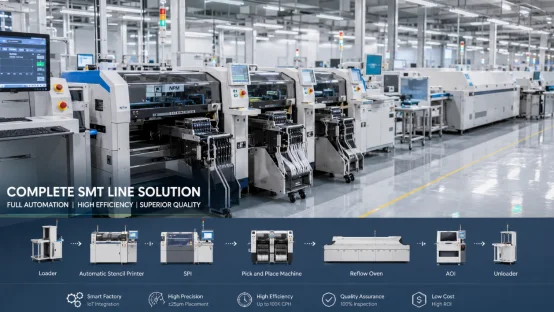
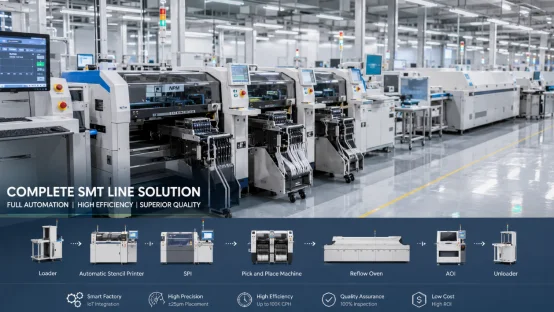
Next up is the actual physical build. High-speed Surface Mount Technology (SMT) machines push solder paste through a stencil. Then, they drop tiny components onto the board with high accuracy. Modern lines easily handle tiny 01005 parts.
They also manage tight ball grid arrays (BGAs) at a 0.3mm pitch. The boards run through the reflow oven. After that, they move to through-hole DIP insertion. Finally, crews use selective wave soldering for bigger parts like headers and transformers.
Multi-Tiered Inspection and Testing Protocols
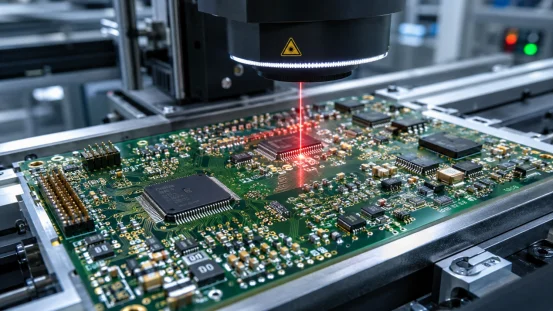
Quality checks happen at every single step. The factory uses 3D Solder Paste Inspection (SPI). This tool checks the paste height and volume before any parts go down. Automated Optical Inspection (AOI) scans the board to catch missing or crooked parts. Meanwhile, X-Ray machines peer through BGA solder balls.
They spot hidden air bubbles and solder bridges. Finally, In-Circuit Testing (ICT) and Functional Testing (FCT) power up the board. This verifies its real-world electrical behavior.
Box Build Integration and Global Delivery
Turnkey service rarely stops at just the bare circuit board. If your product requires it, the crew installs wire harnesses. They can snap the board into a custom plastic or metal case. Workers also apply protective conformal coating and stick labels on the box. Once everything is packed, the factory ships the finished product. It goes straight to your warehouse or distribution hub.
What Are the Strategic Business Advantages of Turnkey PCBA Solutions?
Managing dozens of electronic component vendors drains time and energy. Handing this work to a turnkey partner lets your internal team focus strictly on core product development and marketing.
Accelerated Time-to-Market and Rapid Prototyping
Turnkey manufacturing cuts down the days lost while shipping parts between separate companies. A single project manager coordinates board fabrication, component arrivals, and line scheduling. This smooth handover lets you move from a rapid prototype test into high-volume production without hitting supply bottlenecks.
Cost Savings and Supply Chain Simplification
Factories buy parts in large volumes, which gives them better pricing from component distributors than a single hardware startup could ever get. You also cut out extra shipping bills and eliminate the cost of holding extra raw component inventory in your own facility.
Single-Source Accountability and Unified Quality Standards
When an assembled board fails, split-vendor models lead to finger-pointing between the board maker and the assembly shop. With turnkey manufacturing, one shop takes full responsibility.
They build under strict quality rules like ISO 9001, ISO 13485 for medical hardware, and IATF 16949 for automotive systems. Digital Manufacturing Execution Systems (MES) log serial numbers for every board, giving you complete traceability from raw chip to final test.
Modern Turnkey PCBA: Digitalization and Multi-Base Agility
Modern electronics manufacturing moves fast. Digital tools and flexible factory setups have turned traditional contract assembly into a much smarter, data-driven workflow.
AI Smart Online Quotation and Automated BOM Recognition
Waiting days for an email quote slows down your development cycle. Modern turnkey platforms use smart tools to read your Gerber files and BOM data in minutes. The system matches component part numbers, checks current stock, and gives you instant, clear pricing so you can approve builds right away.
Multi-Base Production Flexibility
Relying on a single manufacturing shop exposes your project to regional trade issues and local supply disruptions. Modern providers use multi-base factory setups. Running high-mix prototype builds and complex engineering in specialized centers while shifting mass production to cost-optimized regions like Vietnam keeps your delivery timelines secure.
Finding an Integrated Partner for Your Production Needs
When selecting a turnkey partner, having true full-process capability makes all the difference. A clear example of this integrated model is SCSPCBA, which operates multiple manufacturing sites across China and Vietnam to support projects from rapid prototyping to mass delivery. Their lines run 13 automated SMT setups and 6 DIP lines, handling everything from 1 to 30+ layer rigid-flex and HDI boards down to 01005 micro-component placement with high precision.
To make ordering simple, they utilize an AI smart online quotation platform that parses BOMs and Gerber files automatically, giving you quick price calculations without the usual email wait. Their facilities maintain strict certifications including ISO 9001, IATF 16949 for automotive electronics, and ISO 13485 for medical devices. With full MES two-way tracking, complete DFM review support, and box build integration, their setup gives hardware teams a dependable path to bring complex electronic devices to market smoothly.
FAQ
Q1: What is the main difference between full turnkey and partial turnkey PCBA?
A: Full turnkey means the shop buys every part. They also build the bare boards, run the assembly, and test the gear. With partial turnkey, you ship them your custom pieces. The factory then buys whatever is left to finish the build.
Q2: How does DFM analysis save money during turnkey manufacturing?
A: DFM checks catch layout bugs. They spot spacing errors and poor pad shapes before production starts. Catching these traps early stops wasted material. It cuts down repair bills and keeps your timeline on track.
Q3: Why is component traceability important in turnkey PCBA projects?
A: Tracking setups match part batch numbers to finished circuit boards. Sometimes a single chip fails in the field. When that happens, you can pinpoint that exact bad batch. You skip the headache of recalling every unit made.
Q4: What testing methods are standard in a turnkey PCBA process?
A: A solid turnkey run uses 3D SPI to check solder paste. It also relies on AOI to verify part placement and X-Ray for hidden BGA joints. Finally, crews run electrical checks like ICT and functional testing (FCT).
Q5: How does AI quotation software speed up turnkey project launches?
A: AI quote platforms automatically read uploaded Gerber files and BOM lists to match components and calculate manufacturing costs in minutes. This eliminates long email chains and gets your order into production much faster.






Leave a Reply
Want to join the discussion?Feel free to contribute!