How SMT Assembly Works in PCBA Manufacturing Full Guide

How SMT Assembly Works in PCBA Manufacturing: Full Guide

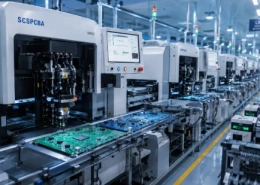
A plain PCB will not work alone. You must place the parts, solder them tightly, and test everything. This is where SMT assembly steps into the PCBA manufacturing process. Basically, how SMT assembly works involves spreading paste, putting parts in the right spot, baking them, and checking for mistakes.

A modern SMT assembly line easily handles tiny 01005 and 0201 parts. It also works fine with BGA, CSP, and QFN packages. The SMT manufacturing process is really fast and repeats well. However, moving fast alone won’t make a solid, reliable board.
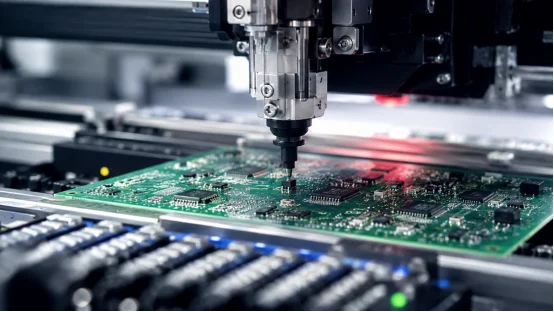
 

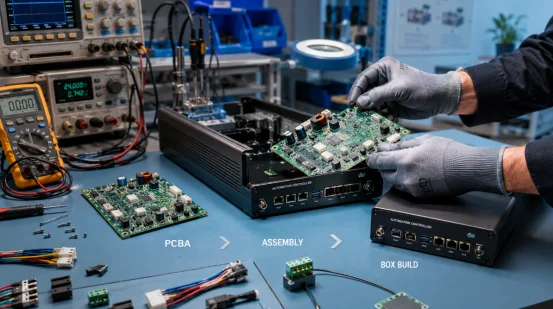
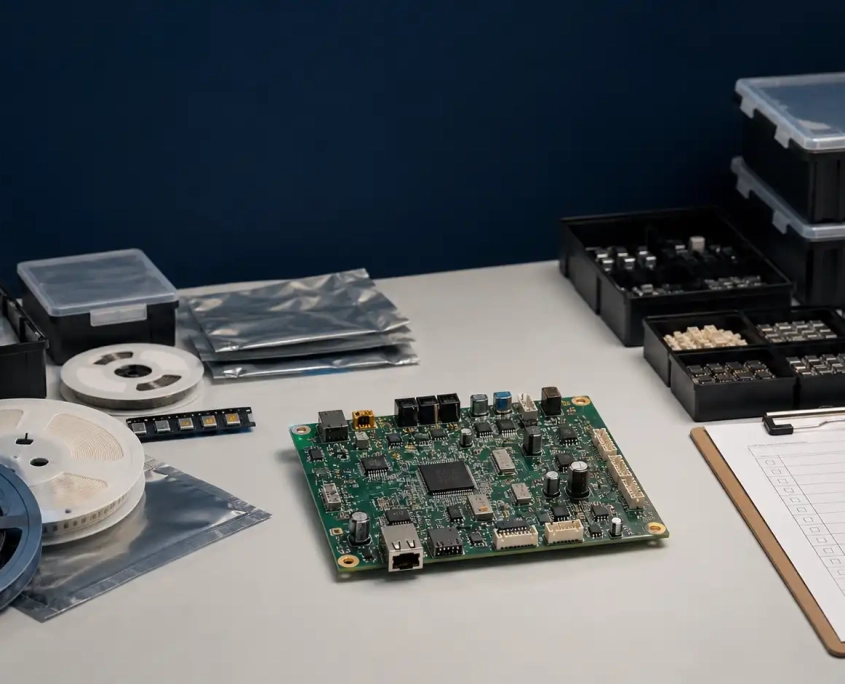
Automated SMT machine placing components on a PCB

What Is SMT Assembly in PCBA Manufacturing?

Surface mount technology assembly drops parts directly onto PCB pads. You do not push wire leads into deep holes. This SMT process in PCB assembly is great for crowded boards. It also helps robots build things automatically. The bigger PCB assembly process might also add pushing pins through holes, coding chips, and testing the final item.

SMT, SMD, PCB, and PCBA Explained

An SMD is just the part itself. SMT is the way you stick it on. A PCB is a blank board with nothing on it. A PCBA is the completely finished board. So, PCB fabrication and PCBA manufacturing actually mean two different jobs.

SMT vs THT

Picking between SMT vs THT depends on part size, power flow, and physical pushing. In a surface mount vs through-hole comparison, SMT packs more parts into a small space. It also puts them down much faster. Through-hole assembly holds big connectors, heavy transformers, and power parts much tighter. Lots of everyday gadgets use both methods to stay strong.

What Happens Before the SMT Assembly Process Starts?

Most bad mistakes start before you even turn on the machines. You need clear files and right pad sizes. You also need your parts ready and pointing the correct way. Getting this right saves a lot of time compared to fixing broken boards later.

Production Files and Engineering Review

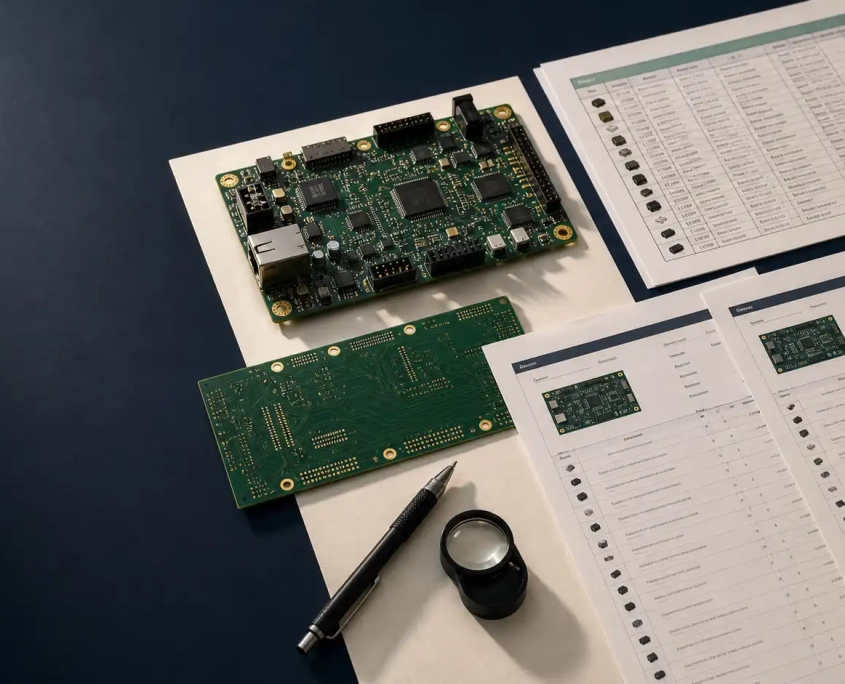
Your file pack usually holds Gerber files, a BOM, and a pick-and-place list. It also has build drawings and test notes. The coordinate file tells the robot exactly where PCB component placement should happen. An SMT DFM review checks the pads, marks, spacing, and stencil holes. PCBA design for manufacturability makes sure cameras and test probes can easily reach important spots. BOM verification checks the part numbers, types, total counts, and backup choices.

Material Preparation

The first check looks at the PCB finish. Workers look at the component model, wrapping, and BOM matching. Parts that hate water might need safe storage or a trip to the oven. Solder paste must warm up to room temperature. Workers check the parts feeders, and strict anti-static (ESD) rules always apply.

How Does the SMT Assembly Process Work?

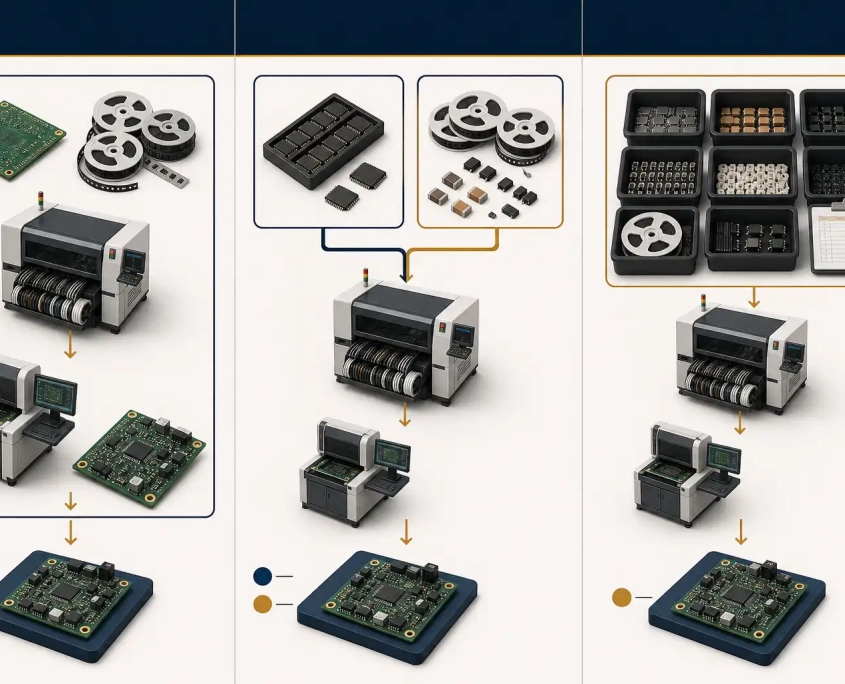
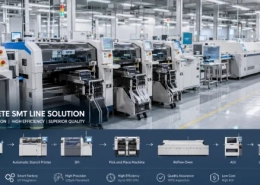
The normal path goes like this. You print the solder paste, then check the paste. Next, you place parts and bake the board. After that, you run an AOI inspection, and sometimes an X-ray inspection. Finally, you do electrical and functional testing. Each stop catches a different kind of error.

Step 1: Solder Paste Printing

A metal stencil sits flat over the PCB. A wiper pushes paste right through the holes onto the pads. The stencil thickness and hole shape matter a lot. Paste health and pushing pressure also control the paste drop. Bad solder paste printing causes open gaps. It can also bridge pads together or make parts stand up wrongly.

Step 2: Solder Paste Inspection

A 3D solder paste inspection machine looks at the paste. It measures the height, size, and amount. It also checks for bad shifts and bridging risks before any parts go on. Finding a bad print right now is cheap. You just wash the board off and try again. Because of this, SPI and AOI inspection do two very different jobs.

Step 3: SMT Pick and Place Process

In the SMT pick and place process, tape feeders feed the parts. Little nozzles pick them up. Smart cameras look at the part’s shape and turn it the right way. Board marks fix any tiny position errors. Super-fast machines drop down the simple parts. Meanwhile, flexible machines place the complex ICs and plugs.

Step 4: SMT Reflow Soldering Process

The SMT reflow soldering process runs the board into a long oven. The oven zones preheat, soak, reflow, and cool the board down. During the reflow soldering process, the flux wakes up. The solder melts smoothly, and then the joints get hard. The heat setting must match the board’s weight and part limits. Too little heat makes weak, cold joints. Too much heat can fry the parts or bend the PCB.

Step 5: AOI and BGA X-Ray Inspection

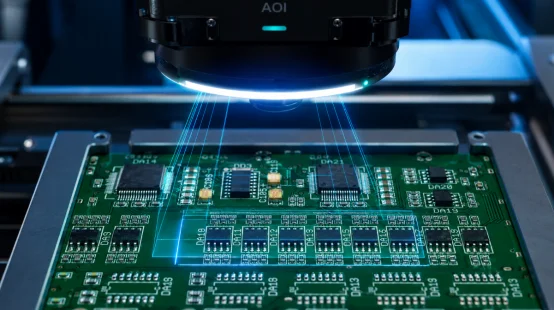
After baking, AOI inspection searches for missing parts. It looks for bad spots, wrong directions, short circuits, and loose metal balls. BGA X-ray inspection looks straight through the chips. It finds bad ball lines, air bubbles, missing solder, and hidden shorts under BGA, CSP, or QFN packages. Good BGA assembly inspection is super important. A board might look perfect on the outside but still have broken joints hidden inside.

Step 6: First Article and Final Testing

SMT first article inspection compares the very first board to the BOM. It checks the drawings and rules. A boss must pass this first article inspection before the factory makes huge batches. PCB assembly testing includes ICT, flying probe checks, and coding the chips. It also involves functional circuit testing or heat checks. Electrical and functional testing proves the board actually does what you want.

How Is SMT Quality Controlled?

SMT quality control is like a row of locked gates. It shouldn’t just be one final look at the end. PCBA quality control starts with the raw parts. It keeps going through the printing, placing, baking, testing, and fixing stages.

Inspection, Traceability, and Standards

SPI looks at the paste. AOI spots visible errors. X-ray inspection finds hidden faults. ICT catches broken lines and bad parts. Functional testing acts like a real user. MES traceability ties a board’s serial number to its exact parts, machines, tests, and repair logs. Rules usually follow IPC-A-610, ISO 9001, IATF 16949, ISO 13485, and RoHS requirements. Your test plan should fit your product risk level. A cheap toy board and a car brake board need very different testing steps.
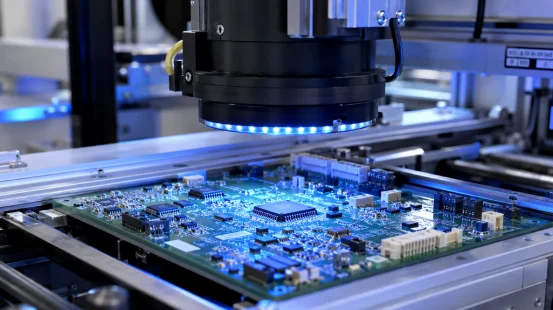
AOI machine scanning a circuit board with blue light

When Do You Need Double-Sided or Mixed Technology Assembly?

Not every PCBA takes a simple path. Crowded spaces, unique parts, and heavy physical stress might add a second trip through the oven. Sometimes, you have to add a through-hole stage.

Double-Sided SMT Assembly

For double-sided SMT assembly, the first side gets paste, parts, and baked. Next, workers flip the board over. The second side goes through the exact same steps. You really have to watch the part weight here. Heating things twice can be risky.

Mixed Technology Assembly

Mixed technology assembly mixes SMT with older through-hole pieces. A normal path finishes the SMT assembly first. Then, workers push in big parts for wave or selective soldering. This works great for boards packed with tiny ICs alongside big plugs or heavy power parts.

What Should You Look for in an SMT Assembly Manufacturer?

A good SMT assembly manufacturer will check your data first. They manage parts safely and place tiny items perfectly. They set up steady heat profiles and share their test reports. Ask them about their smallest part sizes and placement accuracy. Also, ask about BGA capability, tracking, and test tools. See if their SMT assembly services can grow from a few test boards to big orders easily.

Turnkey PCBA assembly groups the bare board making, part buying, putting together, testing, and packing all in one place. It helps a lot when you want a single team to handle the whole job.

Why Does SCSPCBA Fit Complex PCBA Projects?

SCSPCBA links PCB fabrication, part buying, SMT and DIP assembly, and testing. They even handle box build work in one chain. Their documented skills include 01005 and 0201 placement. They boast ±0.025 mm placement accuracy. They handle 0.3 mm and above BGA pitch easily. You also get double-sided reflow and selective wave soldering. Quality checks use 3D SPI, AOI, X-ray, ICT, FCT, aging tests, and MES traceability.

This setup really helps when a test project turns into full repeat production. It is great for boards mixing tiny chips with huge plugs. Their file checks and BOM help solve early worries. You know your design will work and the parts are easily found.

FAQ

Q1: What is the SMT assembly process?
A: It covers printing solder paste, SPI, placing parts, and reflow soldering. You also use AOI, optional X-rays, and electrical testing to build a surface-mount PCBA.

Q2: What files are required for SMT assembly?
A: You generally hand over Gerber files, a BOM, pick-and-place lists, assembly drawings, and your test rules.

Q3: Why is BGA X-ray inspection required?
A: BGA joints hide deep under the chip. Regular cameras cannot see open gaps, shorts, bubbles, or crooked balls there.

Q4: Can SMT and through-hole components be used together?
A: Yes, they can. Mixed technology assembly uses SMT for the small bits and through-hole styles for parts needing a strong grip.

Q5: How do you choose an SMT assembly manufacturer?
A: Check how they review files and place parts. Look at their test machines, tracking, and if they can easily scale up from a test batch to huge orders.
PCB vs PCBA Key Differences & Which One Do You Need

PCB vs PCBA: Key Differences & Which One Do You Need?

You send a board layout to a vendor, get a quote, and realize assembly is absent. This happens when buyers treat PCB and PCBA as the identical item. They are two phases of one project. However, the purchasing scope differs completely.

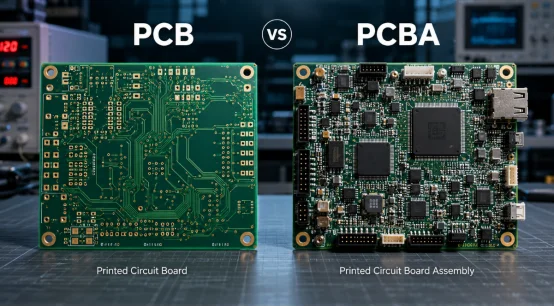
In a PCB vs PCBA comparison, a Printed Circuit Board is the raw base. It holds copper tracks, pads, holes, and insulation. Meanwhile, a Printed Circuit Board Assembly features parts soldered directly onto that base. The difference between PCB and PCBA alters your files and cost. It also shifts delivery schedules, testing, and fault responsibility. If you need one supplier for both, SCSPCBA supports jobs from prototype boards to assembled electronics and box build.


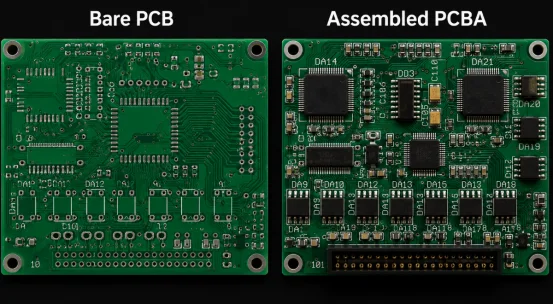
Side-by-side comparison between a bare PCB and a populated PCBA

What Are PCB and PCBA?

The fastest way to settle the PCBA vs PCB question is defining what actually arrives at your door. A board might look complete with solder mask and gold pads. Yet, it remains only a bare PCB. Function starts after parts are mounted.

What Is a PCB?

A PCB provides firm structural support. It also creates electrical pathways. PCB fabrication takes several steps. These include imaging, etching, and lamination. Next comes drilling and copper plating. Solder mask application, surface finishing, and bare-board electrical testing follow. Standard builds feature multilayer, HDI, and high-frequency styles. Flexible, rigid-flex, aluminum, heavy-copper, and prototype boards remain frequent.

Production handles 1 to over 30 layers. Board thickness spans 0.4 mm to 2.4 mm. Available finishes include HASL, ENIG, OSP, immersion silver, and immersion tin. Your specific design, material choice, and copper weight set realistic limits. Impedance requirements and overall production volume matter greatly.

What Is a PCBA?

A PCBA begins with a blank board. Next, workers attach resistors, capacitors, and ICs. Connectors and sensors follow. PCB assembly utilizes SMT assembly for surface-mounted items. Meanwhile, through-hole assembly handles leaded parts. Mixed layouts demand both. BGA, CSP, or QFN soldering often apply too.

PCBA manufacturing also covers inspection and testing. The result is a circuit that can perform its intended job in industrial controls, medical devices, automotive electronics, IoT hardware, AI computing equipment, security systems, or consumer products.

How Does PCB vs PCBA Affect Cost and Lead Time?

Price is often the first concern, but the cheaper line item is not always the cheaper project. PCB and PCBA quotes cover different work, so compare scope before comparing totals.

PCB Cost and Timing

A bare board quote covers material and PCB fabrication. Layer count, dimensions, copper thickness, smallest hole, trace spacing, surface finish, controlled impedance, panel use, order quantity, and delivery speed all affect price. Gerber files and a clear fabrication drawing are usually enough to start a review.

PCBA Cost and Timing

PCB assembly cost includes the bare board, component sourcing, placement, soldering, setup, inspection, and any required test fixtures. The Bill of Materials (BOM) can drive more cost than the board itself. A hard-to-find chip may also control PCBA lead time, even when the factory has open capacity.

For a useful quote, submit manufacturer part numbers, package details, approved substitutes, quantities, and test needs. That small bit of paperwork saves a surprising amount of email later.

Should You Choose a PCB or PCBA?

Your answer depends on what your team can do after delivery. Choosing PCB or PCBA is less about product size and more about assembly resources, risk, and the stage of development.

For Early Prototypes

Choose a bare PCB when you plan to solder parts in-house or only need to check board dimensions, stack-up, impedance, or fit. Choose prototype PCB assembly when you need to power the circuit and test real behavior. A functional prototype is usually a PCBA, even if only five boards are built.

For Low and High Volumes

Low-volume PCB assembly suits engineering trials, pilot runs, and products with uneven demand. High-volume PCB assembly adds stronger reasons for automated placement, stable process controls, traceability, and repeatable testing.

Supply models matter too. With consigned PCB assembly, you provide the parts. Partial turnkey PCBA splits purchasing between you and the factory. Turnkey PCBA assembly places the board, parts, assembly, and testing under one supplier. If purchasing already takes too much of your week, turnkey work is often the cleaner route.

What Files and Tests Does a PCBA Need?

Missing production data causes more trouble than most board buyers expect. A complete package lets the engineering team check manufacturability before material reaches the line.

Production Files

Provide Gerber files, drill data, the Bill of Materials (BOM), centroid or pick-and-place data, an assembly drawing, polarity marks, and any programming file. Add test steps and acceptance limits when the circuit has a specific load, timing, communication, or safety requirement.

Inspection and Test Coverage

PCBA testing may include solder paste inspection, Automated Optical Inspection, X-ray for hidden BGA or CSP joints, In-Circuit Testing, and functional testing. PCB functional testing checks whether the assembled board performs the required task, while burn-in or environmental checks may suit higher-risk products.

Incoming checks also matter. Component model verification, packaging inspection, BOM comparison, and material sampling catch mistakes before SMT placement. MES tracking can bind material records, process data, and product serial numbers, which helps trace a suspect batch without searching through scattered spreadsheets.

Technician assembling a PCBA into a metal enclosure for box build

When Do You Need Box Build Assembly?

A working PCBA may still be far from a shippable product. If your deliverable needs a housing, cable harness, display, label, firmware, final test, or packaging, ask about Box Build assembly. These electronic manufacturing services move the job past board-level work and into complete product assembly.

This is also where one-stop PCB assembly can reduce handoffs. The same production plan can cover PCB manufacturing, component sourcing, PCBA testing, enclosure work, aging tests, finished-product checks, and packing.

Why Consider SCSPCBA for PCB and PCBA Production?

When you need a PCB and PCBA manufacturer, the useful question is how much of the build it can keep under one quality system. SCSPCBA combines PCB production, component purchasing, SMT and DIP lines, functional testing, and Box Build assembly. Its documented capabilities include 13 SMT lines and 6 DIP lines, placement of 01005 and 0201 components, BGA and mixed-technology work, plus SPI, AOI, X-ray, ICT, and FCT inspection.

The supplier supports prototype, low-volume, and mass-production projects across manufacturing sites in China and Vietnam. Its one-stop PCBA service includes consigned, partial turnkey, and full turnkey routes, so you can keep control of critical parts or hand over the full supply chain. Online Gerber and BOM recognition also shortens the early quoting steps. For buyers comparing PCB assembly services, that mix of board production, assembly, testing, and traceability keeps the responsibility clear.

FAQ

Q1: What Is the Difference Between PCB and PCBA?
A: A PCB is a bare circuit board. A PCBA has electronic parts installed and soldered, so it can perform the designed function.

Q2: Is a PCBA the Same as a PCB?
A: No. The PCB is the base board used to make the PCBA. The phrase bare PCB vs assembled PCB describes the same distinction in practical buying terms.

Q3: Should You Order a Bare PCB or PCBA for a Prototype?
A: Order a bare PCB for fit checks or in-house assembly. Order PCBA when you need a working circuit for electrical or functional tests.

Q4: What Is Turnkey PCBA Assembly?
A: The supplier handles PCB production, component purchasing, assembly, inspection, and agreed testing. You provide the production files and approve the parts list.

Q5: How Long Does PCB Assembly Take?
A: Timing depends on board complexity, part availability, quantity, assembly method, and test scope. Parts with long procurement times often set the schedule.

PCB vs PCBA: Key Differences in Design, Assembly & Cost


Side-by-side comparison of a bare PCB and an assembled PCBA

You may have a finished PCB layout, a clean set of Gerber files, and a quote that looks surprisingly low. Then someone asks for the BOM file and assembly data. That is where PCB vs PCBA starts to matter. A printed circuit board is the bare platform. A printed circuit board assembly carries mounted parts and can perform the job you designed it to do. The difference between PCB and PCBA affects your files, budget, lead time, testing plan, and choice of supplier.

What Is a PCB?

A PCB holds electronic components. It routes signals via copper traces. Before assembly, it lacks mounted resistors, capacitors, ICs, or connectors. You might order PCB fabrication. Then, your crew can source parts elsewhere.

Structure, Materials, and Design

A standard FR-4 PCB uses a nonconductive substrate. It has copper layers, pads, vias, solder mask, and silkscreen. Designs might need a multilayer PCB, HDI PCB, or flexible PCB. Others use a rigid-flex PCB, aluminum PCB, or high-frequency PCB. Material, board thickness, layer count, and copper weight alter PCB cost. Minimum trace spacing, surface finish, and PCB stack-up matter too.

The design bundle contains schematic design, PCB layout, Gerber files, and drill data. A fabricator uses these to build boards. Next, they run bare board electrical testing. Currently, the board offers mechanical support. It gives electrical paths too. Yet, it mostly cannot operate the device.

What Is a PCBA?

A PCBA is a PCB after component sourcing, component placement, soldering, inspection, and testing. The full term is printed circuit board assembly. This functional PCB assembly may manage power, read a sensor, drive a motor, or process data, depending on your circuit.

Assembly Files and Production Data

PCBA manufacturing needs more than Gerber files. You normally submit a Bill of Materials, often called a BOM file, plus a pick and place file or Centroid file. An assembly drawing identifies polarity, reference designators, special handling, and parts that should not be fitted. Firmware and test instructions may also be required.

Small file mistakes can become expensive physical mistakes. A reversed diode in an assembly drawing or an outdated part number in the BOM may stop an entire lot, even when the bare boards are perfect.

Main Assembly Methods

SMT assembly uses surface mount technology to place surface mount components onto solder paste before reflow soldering. Through-hole assembly places through-hole components into drilled holes. DIP assembly may use manual or automatic insertion followed by wave soldering. Selective soldering suits mixed technology assembly when only certain joints need focused heat.

Fine-pitch packages need tighter process control. Production equipment may place 0201 parts and handle BGA or QFN packages, while SPI inspection checks solder paste before placement. For projects that need sourcing, assembly, and testing from one supplier,PCB assembly services can reduce handoffs.

What Is the Difference between PCB and PCBA?

The simplest PCB vs PCBA comparison is production stage and function. A bare PCB vs assembled PCB photo makes that obvious, though the commercial differences go much further.

Design, Assembly, and Function

PCB design defines the physical board, copper connections, materials, and manufacturing limits. The PCB manufacturing process turns that data into a bare board through imaging, etching, drilling, plating, solder mask application, and finishing. The PCB assembly process adds parts through SMT assembly, through-hole assembly, or both.

A PCB carries the circuit pattern. A PCBA contains the working circuit. That distinction also changes what you buy. A PCB manufacturer delivers fabricated boards. A PCBA manufacturer manages parts, soldering, inspection, and the agreed test scope.

Cost and Lead Time

PCB cost depends heavily on board area, layer count, materials, copper weight, hole size, and finish. PCBA cost includes the board plus component cost, procurement work, stencil preparation, machine setup, soldering, inspection, testing, and possible rework. For many products, parts cost more than the bare board.

PCB assembly cost also changes with placement count, fine-pitch packages, double-sided assembly, test fixtures, and order volume. A PCB prototype or PCBA prototype may have a higher unit price because setup work is spread across fewer boards. Low-volume PCB assembly offers flexibility for design checks. Mass production PCB assembly rewards stable files and repeatable testing. A useful PCB assembly quote should state what testing and sourcing work it includes.

How Are PCB and PCBA Quality Checked?

PCB and PCBA inspections look for different failure modes. A bare board test finds opens and shorts in the copper network. PCBA quality control must also catch placement, solder, component, and functional faults.

Inspection and Testing Stages

Solder paste inspection measures paste position and volume. SPI inspection can catch bridging risk before components enter the reflow oven. Automated optical inspection, commonly called AOI inspection, checks missing parts, polarity, alignment, and visible solder joints. X-ray inspection examines hidden joints under BGA, CSP, and QFN packages.

In-circuit testing, or ICT testing, checks connectivity, component values, and circuit integrity. Functional testing, also called FCT testing, runs the assembly under defined operating conditions. Burn-in testing can expose early failures under controlled load and temperature. These tests do different jobs, so your test plan should follow product risk rather than habit.


AOI machine performing optical inspection on a PCBA

Which Service Fits Your Project?

Choose PCB fabrication when you only need bare boards. Choose consigned PCB assembly when you supply the parts. Partial turnkey PCB assembly splits purchasing responsibility, while turnkey PCBA places PCB production, procurement, assembly, and testing with one supplier. A one-stop PCB assembly arrangement may also include programming, cable harness installation, enclosure assembly, final functional testing, and packaging.

Send complete files early and request DFM analysis and DFA analysis. Design for manufacturability checks whether the bare board can be produced reliably. Design for assembly reviews spacing, footprints, polarity, panel layout, tooling holes, and soldering access. Good feedback here is cheaper than sorting faulty boards after production.

How Can SCSPCBA Support PCB and PCBA Projects?

The difference between a solid PCB and a reliable PCBA is often process control. SCSPCBA links PCB manufacturing with global component sourcing. It handles SMT and DIP production, testing, and box build tasks within one chain.

Its capacity spans prototypes to mass production. This includes multilayer, HDI, high-frequency, and flexible boards. They also build rigid-flex, aluminum, and heavy-copper boards.

Assembly support covers fine-pitch parts, BGA, QFN, and 0201 components. It features mixed processes, plus turnkey and consigned models.

Quality checks start at material and BOM verification. Next, teams use SPI, AOI, X-ray, ICT, and FCT. Aging tests and traceable records follow. Engineering brings design review, DFM feedback, prototype verification, BOM alternatives, and product integration. This helps when you need working hardware, not just bare boards.

FAQ

Q1: Can a PCB Work without Components?
A plain PCB guides power during tests. However, it won’t do its real job yet. You must attach electronic components first.

Q2: Is a Motherboard a PCB or a PCBA?
A complete motherboard acts as a PCBA. This happens because it holds ICs, sockets, capacitors, and connectors. Those parts sit directly on the PCB.

Q3: What Files Are Needed for PCBA Manufacturing?
You generally require Gerber files and a BOM file. A pick and place file plus an assembly drawing are vital too. Just include firmware or test specs if necessary.

Q4: Why Is PCBA More Expensive than PCB?
PCBA covers the blank board plus all electronic components. It also involves sourcing, assembly, soldering, testing, and rework risks. Tricky packages or small runs push costs up.

Q5: What Is the Main Difference between PCB Fabrication and PCB Assembly?
PCB fabrication creates the blank board. In contrast, PCB assembly solders parts to it. Afterward, teams inspect the final setup.

What Files Do You Need for an Accurate PCBA Quote?


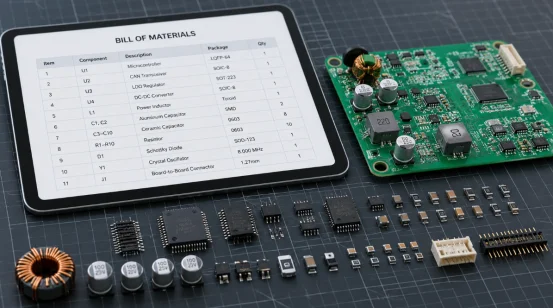
Tablet with Bill of Materials and circuit board components

A fast price means little if it changes after engineering review. The files needed for a PCBA quote must describe the board, parts, assembly work, and test scope clearly enough for real costing. For a basic PCBA quote, send Gerber files, a BOM file, order quantity, and your chosen sourcing model. Add placement data, drawings, compliance rules, and test details when they apply. These documents required for PCB assembly help the supplier prepare an accurate PCBA quote rather than a rough number built on guesses.

What Goes into a Reliable PCBA Quote?

A practical PCBA quote checklist separates RFQ essentials from production data. Gerber and BOM data support initial PCBA pricing. Placement, inspection, and programming details prevent a quote revision later. That distinction sounds small, but it saves plenty of email.

Quote Essentials

Your PCBA quotation requirements should state the assembly quantity, PCB specifications, component sourcing responsibility, and delivery schedule. Mention whether the job is a prototype PCBA, low-volume PCBA, or mass production PCBA. A useful PCB assembly quote also identifies setup cost, stencil cost, unit price, and any non-recurring engineering cost, often called NRE cost.

Which PCB Manufacturing Files Should You Send?

The PCB comes before the assembly. Your PCB fabrication files let the supplier calculate board cost, panel use, tooling, and process steps. Send one controlled revision, not a folder with three nearly identical exports.

Gerber and Drill Data

A Gerber file package normally includes copper layers, solder mask, silkscreen, paste layers, and board outline. Gerber files describe each PCB layer, while drill files define plated and non-plated holes. Include the NC drill file and a PCB fabrication drawing when the design has special notes.

The drawing should state PCB material, PCB layer count, board thickness, copper thickness, surface finish, controlled impedance, minimum trace and space, and PCB stack-up. Flag blind and buried vias, HDI PCB features, and panelization requirements. Missing details can change the PCB assembly cost after CAM review.

Bill of Materials

The Bill of Materials drives component procurement. A clean PCBA BOM needs a manufacturer part number, or MPN, for each item plus the reference designator, component description, component value, component package, and quantity per board. Add the approved manufacturer when substitutions need tight control.

Mark DNP components and DNI components plainly. Identify customer-supplied components and approved alternative components. If substitute components are allowed, write the approval rule rather than leaving a buyer to guess. BOM verification catches mismatched quantities and duplicate references. BOM optimization may find parts with better component availability or shorter component lead time, but electrical and mechanical fit still need engineering approval.

Do You Need Placement and Assembly Data for a Quote?

A simple estimate may start without placement data. Complex, double-sided, or mixed builds benefit from it early because labor and machine time become easier to price. Formal production needs a common source for location and orientation.

Pick-and-Place Data

The pick and place file, also called a centroid file or component placement file, lists each part’s X and Y coordinates, component rotation, and top or bottom side. The pick-and-place machine uses this PCB assembly data during SMT placement. Check the origin, units, and bottom-side rotation before release. A mirrored connector can ruin an otherwise tidy job.

Drawings and Special Notes

An assembly drawing shows component orientation, component polarity, labels, and no-fit positions. It also helps staff distinguish surface mount components from through-hole components during mixed technology assembly. Add a schematic diagram when engineers need circuit context for troubleshooting or test development.

State whether the board needs SMT assembly, DIP assembly, selective soldering, cleaning, conformal coating, or hand work. Programming files and firmware files should carry clear revision names. Test files can include test-point data, fixture information, and expected results.


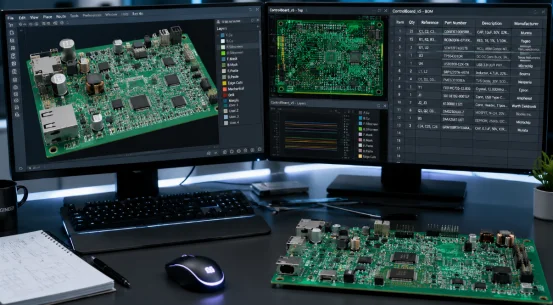
Dual monitors with PCB design software and circuit board

Which Commercial Details Affect PCBA Pricing?

Two identical boards can receive different prices when quantity, sourcing, test scope, or delivery changes. Give the supplier enough commercial detail to cost the work you actually plan to buy.

Volume and Supply Model

Order quantity and production volume affect material breaks, machine setup, and PCBA lead time. Choose turnkey PCBA or turnkey PCB assembly when one supplier buys the parts. Partial turnkey PCBA splits purchasing responsibility. Consigned PCB assembly uses customer-supplied materials, so your RFQ should list incoming quantities, packaging, and arrival dates.

An expedited PCBA service may shorten the schedule, though component shortages still set hard limits. Ask how cut tape, minimum purchase quantities, and unused parts affect component cost. One-stop PCBA service can reduce separate handoffs for PCB production, parts, assembly, and testing.

Testing, Programming, and Quality

PCBA testing requirements influence labor, equipment time, test fixture cost, and acceptance. State your quality requirements and acceptance criteria. Also note IPC-A-610 class, RoHS compliance, REACH compliance, and PCBA traceability needs.

Available checks may include SPI inspection, AOI inspection, and X-ray inspection for BGA, CSP, or QFN joints. In-circuit testing, or ICT testing, checks connectivity and component values. Functional testing, also called FCT testing, runs the board under defined conditions. You may also request firmware programming, burn-in testing, first article inspection, or a first article test. Send a test program when available and define who owns test fixture development.

How Should You Prepare a Production-Ready PCBA RFQ?

Place the current Gerber files, BOM, pick and place file, assembly drawing, and test instructions in one revision-controlled package. Add requested quantities, sourcing model, delivery target, and contact details. This short PCBA quotation process gives purchasing and engineering the same baseline.

Ask for DFM analysis before release. Design for manufacturability checks footprints, spacing, panel layout, drill limits, and assembly access. A manufacturer can then explain cost changes instead of quietly padding risk into the price. Use the final package to request a PCBA quote and archive that exact revision with the purchase order.

How Does SCSPCBA Handle PCBA Quote Data?

SCSPCBA connects online Gerber parsing and BOM recognition with PCB production, global component sourcing, SMT, DIP, testing, and box build work. Its service model covers turnkey, partial turnkey, and consigned projects from prototypes to mass production. Engineering review includes DFM feedback, BOM checks, alternative part recommendations, and manufacturing feasibility work.

On the production side, the available controls include incoming material inspection, SPI, AOI, X-ray, ICT, FCT, aging tests, and traceable shop-floor records. Support for fine-pitch placement, BGA, QFN, and 0201 components matters when a quote must reflect the real process rather than a generic placement rate. Customers can also include programming, cable harnesses, enclosure assembly, labeling, final testing, and packaging in the same project scope.

FAQ

Q1: Can You Get a PCBA Quote with Only Gerber Files?

A: You may receive a bare-board estimate, but component and assembly pricing needs a BOM and order quantity. Placement and test details make the result more reliable.

Q2: Is a Pick-and-Place File Required for a Quote?

A: Basic quotes may not require it. Production normally does, and early submission helps price double-sided or high-placement-count boards.

Q3: What Format Should a BOM File Use?

A: Excel or CSV works well. Keep one row per part and include MPN, references, quantity, package, sourcing status, and substitution rules.

Q4: Why Did the Price Change after Engineering Review?

A: Common causes include missing PCB details, obsolete parts, conflicting revisions, special soldering, test fixtures, programming work, or a revised delivery target.

Q5: What Should You Check before Sending the RFQ?

A: Confirm that Gerber, BOM, placement, and drawing revisions match. Then check quantity, sourcing responsibility, compliance, testing, and delivery. That final pass is the simplest way to submit the files needed for a PCBA quote.

Turnkey-vs-Consigned-PCBA-cover

Turnkey vs. Consigned PCBA: Which Sourcing Model Fits Your Build?

Turnkey vs. Consigned PCBA

A PCBA supplier can quote the same board under three very different material arrangements. In a full-turnkey build, the manufacturer sources the components. In a consigned build, the customer supplies them. Partial-turnkey sits between those two models. The assembly process may look similar on the factory floor, but purchasing responsibility, inventory exposure, and shortage handling change with the sourcing model.

The right choice depends on the parts you control, the time your team can spend on procurement, and the records your project needs. Price matters. Responsibility matters just as much.

What full-turnkey PCBA covers

Under a full-turnkey arrangement, one manufacturer manages the agreed PCB fabrication, component sourcing, assembly, inspection, and testing scope. The customer provides the approved manufacturing files, BOM, quantity, and project requirements. The supplier then purchases the listed components and coordinates them with production.

This model gives the buyer one commercial and technical interface for the build. It can reduce the work of placing component orders, tracking inbound shipments, checking kit completeness, and resolving shortages across several vendors. The quoted total also carries more of the material cost, so it should state which manufacturer part numbers and purchasing assumptions were used.

Full turnkey fits teams that want a single point of coordination or do not maintain an established electronics component supply chain. It also suits projects where PCB fabrication, component procurement, SMT or DIP assembly, and testing need to move under one controlled schedule. The buyer still approves the BOM, substitutions, test scope, and design changes.

How consigned PCBA changes the responsibility

In a consigned build, the customer supplies the components covered by the consignment agreement. The manufacturer receives the kit, checks it against the supplied records, and performs the agreed assembly and test work. PCB supply may be included or handled separately, depending on the quotation.

Consignment keeps purchasing control with the customer. That can make sense when a company already owns inventory, has negotiated supply agreements, or must provide a controlled component. It can also help when a long-lead device has already been secured for the project.

The customer carries more of the material risk. Parts must arrive in the correct package, quantity, and condition. A short kit can stop production. Incorrect labels, mixed date codes, damaged moisture-sensitive packaging, or missing overage may require clarification or replenishment. The quote should explain incoming verification, shortage reporting, unused material, and return handling.

Partial-turnkey PCBA handles the middle ground

Partial-turnkey assembly divides the BOM. The customer supplies selected items, while the manufacturer sources the remaining components. A common reason is control of a programmed device, allocated IC, custom connector, or existing stock. The manufacturer can then procure standard passives and other agreed parts.

This model is flexible, but the handoff must be explicit. Mark every BOM line as customer supplied or supplier sourced. State the quantities, packing information, expected arrival date, and approval rules for alternative parts. Both sides should know who closes a shortage before the production slot begins.

Turnkey-vs-Consigned-PCBA-illustration

Responsibility comparison

Item Full turnkey Partial turnkey Consigned
Component purchasing Supplier Shared by BOM line Customer
Customer inventory use Usually limited Selected parts Primary material source
Kit completeness Supplier manages sourced parts Shared responsibility Customer responsibility
Alternative proposals Supplier may propose; customer approves Depends on assigned BOM lines Usually customer controlled
Material logistics Supplier managed within scope Shared Customer sends kit to factory
Best fit Single coordination point Control of selected parts Established customer supply chain

Compare total project cost, not one unit price

A consigned assembly quote can look lower because the customer has already paid for the components. That does not make it cheaper by itself. Add the cost of component purchasing, inbound freight, customs handling, inventory, shortages, and internal labor before comparing it with a turnkey quote.

The same rule applies to partial turnkey. Separate customer-owned material from supplier-sourced material, then compare assembly, tooling, testing, packaging, and logistics on the same basis. Keep one-time charges visible. A stencil or test fixture may serve later orders, but a design revision can require changes.

Set the material rules before placing the order

A sourcing model works only when the BOM and material rules support it. For customer-supplied parts, provide a packing list with the manufacturer part number, quantity, and package identification. Mark do-not-fit positions and approved substitutions. Tell the factory whether unused parts should be returned, stored, or handled under another agreed instruction.

For supplier-sourced parts, require approval before an alternative replaces the specified item. The engineering team should review electrical function, package, footprint, ratings, lifecycle, and any project-specific compliance need. Purchasing availability alone does not approve a substitute.

Use the same revision across the Gerber data, BOM, coordinate file, assembly drawing, and test instructions. A clean release package reduces the chance that the sourcing model becomes tangled with a documentation error.

Questions to settle with the supplier

  • Which BOM lines will each party purchase?
  • How will the supplier report shortages, damaged packaging, or quantity differences?
  • Who approves alternative components, and what evidence accompanies the proposal?
  • What component overage is required for setup or process loss?
  • How will unused and customer-owned materials be identified, stored, and returned?
  • Does the quotation include PCB fabrication, assembly, inspection, testing, packaging, and freight?
  • How will a BOM or PCB revision affect purchased material and existing inventory?

Choose the model that matches your control points

Choose full turnkey when your team wants the manufacturer to coordinate PCB fabrication, component sourcing, assembly, and the agreed test scope. Choose consigned assembly when your organization needs direct control of the parts and can deliver a complete, production-ready kit. Use partial turnkey when selected components must stay under customer control while the supplier handles the rest.

SCSPCBA supports turnkey, partial-turnkey, and consigned PCBA projects. Send the current Gerber data, BOM, assembly quantity, sourcing split, and test requirements with the quote request. A clear responsibility map gives both teams a better starting point than a sourcing label alone.


How-to-Compare-PCBA-Quotes-cost-baskets

How to Compare PCBA Quotes

How-to-Compare-PCBA-Quotes-cover

Two PCBA quotes can use the same Gerber files and still cover different work. One supplier may include component sourcing, X-ray inspection, and shipping. Another may quote assembly labor against customer-supplied parts and leave testing open. The totals sit next to each other in a spreadsheet, but they are not comparable yet.

Start by matching scope. Then examine the price. A useful comparison shows what each supplier will build, who carries each responsibility, which costs can change, and what happens when the BOM or board revision moves after quotation.

Put every supplier on the same baseline

Send the same approved data package to every supplier. Record the file revision, board quantity, assembly quantity, and quotation date. If one supplier priced Revision B at 100 pieces and another priced Revision C at 500 pieces, the unit prices answer different questions.

The PCB specification also needs to match.

Check the material, layer count, finished thickness, copper thickness, surface finish, solder mask, panelization, impedance requirements, and special processes shown in the quote. Small wording differences can point to a different manufacturing route.

Use one BOM revision and the same sourcing instructions.

Mark customer-supplied parts, approved alternates, do-not-fit positions, and any components that require date code, traceability, or special handling. Give every supplier the same test scope and delivery location. Incoterms, taxes, duties, and freight treatment should be visible rather than assumed.

Break the total into six cost baskets

A single total hides too much. Ask for enough detail to place each charge in a consistent basket.

  • PCB fabrication covers the bare boards and the stated material and process requirements. Check whether panel charges, electrical testing, special finishes, or unusual drilling appear separately.
  • Components cover the BOM items sourced by the supplier. Compare manufacturer part numbers, quantities, approved substitutions, purchasing responsibility, and the treatment of minimum order quantities or pack quantities.
  • Assembly covers SMT, through-hole or DIP work, mixed-technology processing, manual operations, rework allowances if stated, and any process that sits outside the standard placement charge.
  • Tooling and fixtures cover one-time engineering work such as stencils, programming tools, test fixtures, or project-specific setup. Confirm whether these charges recur when the quantity or revision changes.
  • PCBAinspection and testing cover the agreed checks. AOI, X-ray, ICT, FCT, programming, and burn-in are different tasks. A line marked testing needs a method and acceptance scope.
  • Packaging and logistics cover packing materials, labeling, export preparation, freight, insurance, and the delivery point named in the quotation.

Do not force every supplier into an identical quotation template if their systems work differently. You only need enough detail to map their charges into these baskets and expose exclusions.

How to Compare PCBA Quotes

Separate turnkey, partial-turnkey, and consigned quotes

A full-turnkey supplier sources the components and manages the related purchasing work. Under partial-turnkey assembly, the customer supplies selected parts while the manufacturer sources the rest. In a consigned project, the customer provides the components and the factory handles the agreed manufacturing work.

Those models carry different costs and risks.

A consigned quote may show a lower invoice because the component cost sits in the buyer’s own purchase orders. It can also leave the buyer responsible for shortages, excess inventory, incoming logistics, and replacement parts. A turnkey quote moves more of that work into the supplier’s scope.

Compare total project cost, not only the supplier invoice.

Include internal purchasing time, freight between vendors, customs handling, component overages, inventory exposure, and the schedule impact of a short kit. Keep these values separate when they cannot be estimated reliably.

Read the commercial rules behind the numbers

The cheapest quoted part may be an alternative rather than the specified manufacturer part number. Ask the supplier to identify every proposed substitute and hold purchasing until the named approver accepts it. An alternative recommendation is useful. Silent substitution is a change-control problem.

Check how the quotation handles unavailable parts.

The document should explain whether the supplier will requote, ask the customer to consign the shortage, or propose an alternative. Also ask what happens to unused customer-owned parts and supplier-purchased excess material after the build.

One-time fees deserve their own lines. A stencil, ICT fixture, FCT fixture, programming adapter, or engineering setup may remain valid for repeat orders, or it may need revision when the design changes. Confirm ownership, storage, maintenance, and reuse terms before treating the charge as nonrecurring.

Version changes can affect bare boards, components, placement programs, tooling, and test instructions. Ask when the price becomes firm, how long the quote remains valid, and how an engineering change order will be reviewed. Do not assume a quoted unit price survives a new BOM or PCB revision.

One-page PCBA quote comparison checklist

Comparison item Confirm before selection
Revision and quantity Same PCB, BOM, assembly files, quantities, and build stage
PCB scope Material, layer count, thickness, copper, finish, panel, and special processes
Sourcing model Full turnkey, partial turnkey, or consigned responsibilities
BOM basis Specified MPNs, approved alternatives, shortages, and purchasing quantities
Assembly SMT, DIP or THT, mixed technology, manual work, and programming
One-time fees Stencil, fixtures, engineering setup, ownership, and reuse
Test scope AOI, X-ray, ICT, FCT, burn-in, criteria, and customer-provided items
Excess material Unused parts, minimum packs, scrap allowance, and return or storage rules
Changes Quote validity, ECO review, cancellation, and requote conditions
Delivery Packaging, labeling, freight basis, delivery point, duties, and insurance

Choose the quote with the clearest responsibility map

A good PCBA quote lets an engineer verify the build and lets a buyer explain the cost. It states the revision, manufacturing scope, sourcing model, testing, exclusions, and commercial rules in terms both teams can trace.

SCSPCBA provides one-stop support covering PCB fabrication, component sourcing, SMT and DIP assembly, inspection and testing, and Box Build services. Upload the current Gerber files, BOM, assembly quantity, and test requirements through the quotation entry, then compare the returned scope against the checklist above.

Robotic arm placing a large BGA chip onto a high-density PCBA with real-time AI defect detection overlays.

An Engineering Perspective: How AI Hardware Challenges PCBA – and How We Respond

Design for Manufacturability (DFM) is the practice of designing …

SCSPCBA Dragon Boat Festival Holiday Notice 2026 with AI quotation system available 24/7 during the holiday period.

Dragon Boat Festival Holiday Notice 2026

Design for Manufacturability (DFM) is the practice of designing …

3D printer manufacturing prototype parts for turnkey PCBA projects with free 3D printing support from SCSPCBA

Free 3D Printing Service for Turnkey PCBA Orders

Design for Manufacturability (DFM) is the practice of designing …

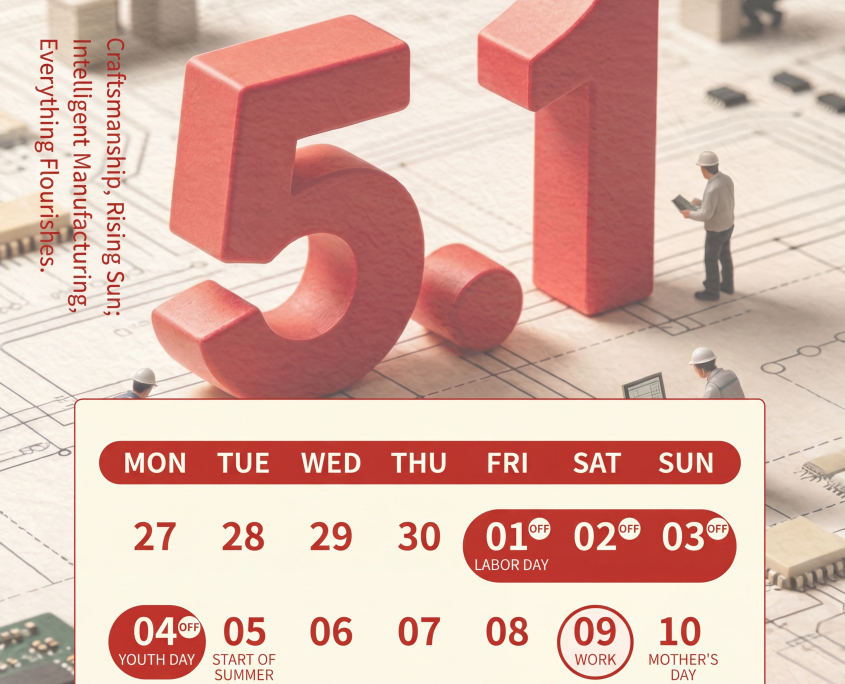
Your PCBA Projects Keep Moving Forward During the Labor Day Holiday

Your PCBA Projects Keep Moving Forward During the Labor Day Holiday

From May 1st to May 4th, our customer service team will be temporarily offline. However, our PCBA online quotation system will remain available 24/7 to ensure your projects continue without interruption.

📌 Visit our website
📌 Upload your BOM or Gerber files to receive an accurate quotation automatically
📌 No waiting required — quotes are generated instantly and available for download

🚀 Orders submitted during the holiday will be prioritized for production scheduling once we resume, helping you accelerate delivery timelines

👉 Get your quotation in advance and start production immediately after the holiday, avoiding unnecessary delays

Thank you for your trust and support.
Wishing you a relaxing and enjoyable holiday!

How to Choose a PCBA Manufacturer for OEM & ODM Projects
What Is Turnkey PCBA Manufacturing Complete Process Guide
What Does PCBA Mean PCB vs PCBA Explained for Beginners
How to Choose a One-Stop PCBA Supplier Turnkey Sourcing Guide