
PCBA Test Reports: What OEM Buyers Should Review Before Shipment
Before accepting a PCBA shipment, match the test reports to the delivered boards, review the test scope and conditions, and resolve missing results or exceptions with the agreed release authority. A report becomes actionable when the buyer can identify the tested configuration, understand the acceptance decision and retrieve the records behind it.
For AI hardware, include the firmware and operating setup used during the relevant checks. A computing board may pass its defined manufacturing tests while additional application evaluation remains scheduled. Give each planned review its own scope, evidence and responsible owner in the project agreement.

Start with the shipment you are accepting
Open the delivery list and the report together. Ask whether the order number, board identity, revision and reported quantity refer to the units proposed for shipment. Where identification is by batch or serial number, confirm how the report connects to that delivery list.
Agree the report requirements when planning PCBA testing and inspection. The project solution should state the testing scope, execution location and report deliverables. Request an example format early enough to discuss missing fields before production begins.
Manufacturing traceability may include material records, serial numbers, process parameters, firmware or configuration versions, inspection results and test data. The product and applicable quality requirements determine which records are needed and how long they are retained. Select the information needed for acceptance and later investigation.
If an order is split across shipments, ask the supplier to identify the quantity and records belonging to each release. Resolve a report covering a different board revision with the responsible engineer. Request a documented decision on its applicability before using that result to accept the current delivery.
Read the scope behind each result
Begin with the methods and items listed in the approved plan. AOI inspects visible surface conditions after placement and soldering. X-ray provides imaging of concealed joints, including those beneath BGA and QFN packages. ICT addresses board-level interconnections and component parameters, while FCT checks designed functions under simulated use conditions.
Review the report with those different purposes in mind. For a required interface check, locate the corresponding test item and result. For hidden-joint inspection, ask which joints and inspection conditions the record covers. A method name gives the reviewer a starting point for finding the relevant evidence.
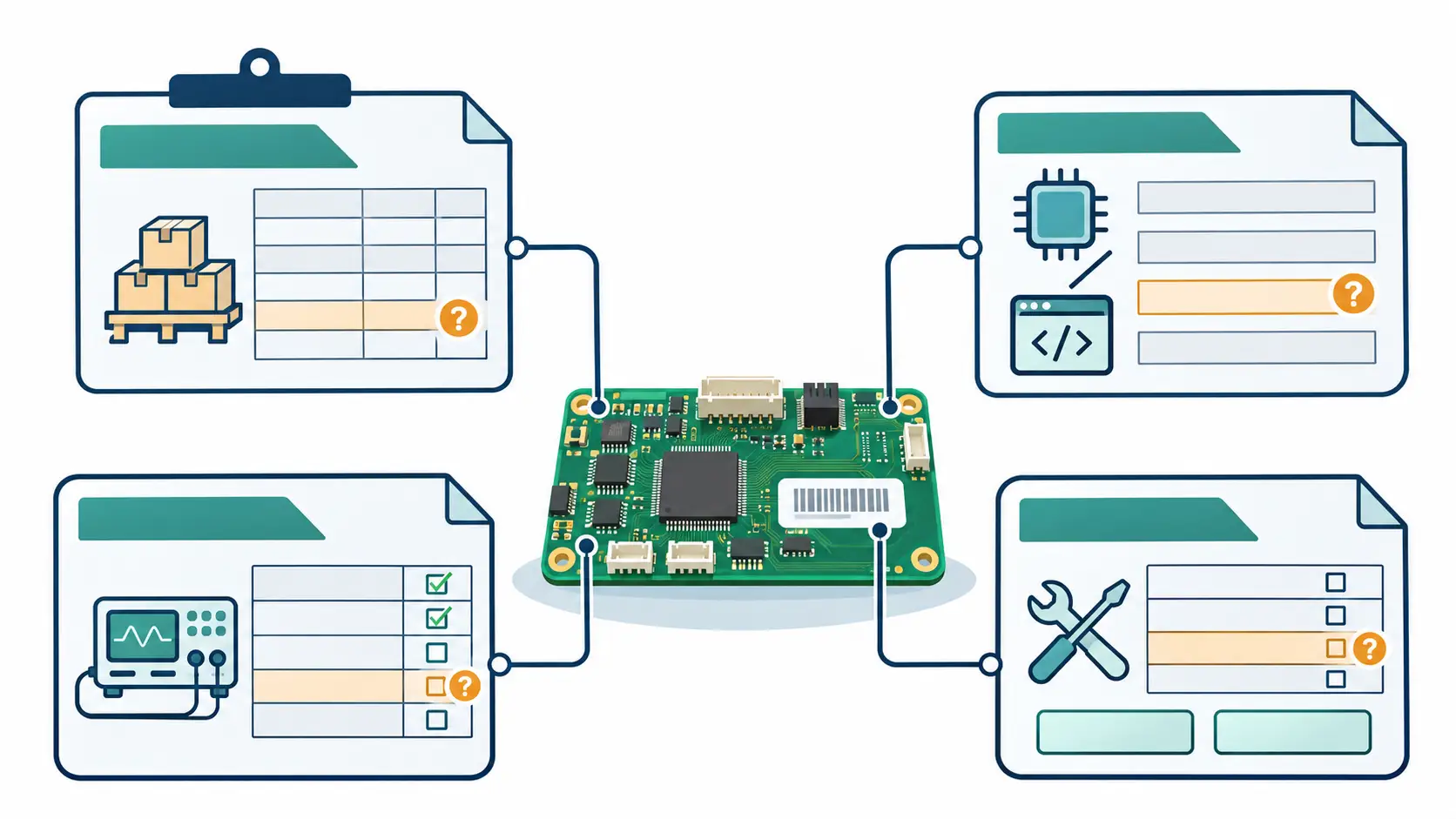
Use this proposed review table to connect the report to the acceptance question. Adapt the requested evidence to the product and agreed plan.
| Report item | Buyer review question | Follow-up when unclear |
| Unit or batch identity | Which delivered boards does it cover? | Request the shipment mapping |
| Test method and item | Which requirement was checked? | Identify the approved procedure |
| Configuration | Which hardware and software were used? | Reconcile the release identifiers |
| Conditions and limits | What defined acceptance? | Obtain the applicable criteria |
| Failures and retests | How was each exception disposed? | Review linked investigation records |
| Release approval | Who accepted the reported status? | Obtain the authorized decision |
Check whether inspection was performed on each unit or on a selected sample when that distinction matters to the plan. Ask for the selection basis and the quantity represented. Acceptance rules should be agreed for the order, including the treatment of any required activity that remains incomplete.
Check conditions, limits and procedure revisions
ICT and FCT procedures specify test items, parameters, acceptance thresholds and the steps used to obtain a result. Product specifications, applicable industry standards and customer requirements form the acceptance basis. Bring the approved criteria to the report review and locate the matching references.
For measured items, ask for the values and limits needed to assess acceptance. Confirm units and the meaning of any abbreviated result labels. If the agreed deliverable is a summary, decide which underlying records must remain retrievable and how the supplier will provide them when requested.
Review the procedure revision alongside the board revision and test configuration. Where a test limit changed during the run, ask for the authorization, effective point and decision covering earlier results. Have the test lead explain how the reported units relate to the approved version of the procedure.
Give missing information an owner and a due date in the acceptance review. For example, if a report names the test but omits the procedure revision, request the reference from the test lead and record the answer with the report. Ask the release authority whether that question holds the shipment or only a defined portion of it. When an updated report arrives, confirm what was corrected and which earlier copy it replaces. Share the accepted revision with the receiving team so its inspection starts from the same evidence used for shipment approval.
SCSPCBA provides design review and prototype verification within its engineering services. A question about applying acceptance criteria to a changed board can be raised during engineering review of the build. Supply the actual drawings, requirement and report reference so the team can assess the specific issue.
Reconcile failures, repairs and retests
Request a clear account of required tests that failed, units that were repaired and the checks performed afterward. SCSPCBA’s quality process includes secondary inspection of repaired products. Confirm the applicable reinspection scope and records for the particular order with the quality team.
When a unit has several results, follow the sequence. Ask what prompted the additional test, which action was taken and which record supports the final status. Keep the earlier observation available for review together with its disposition. The release reviewer needs enough context to understand the completed work.
If the supplier presents a pass percentage, ask how it was calculated. Identify the included quantity, handling of retests and treatment of excluded units. Agree what the figure will be used to decide. Review any outstanding failed or untested units against the actual shipment list.
For an exception accepted under a stated condition, obtain the decision from the authorized person. Identify the affected units and the requirement involved. A request for permission and an approved disposition should have distinct statuses in the review record, with an owner for any remaining action.
Review AI hardware under its actual configuration
Consider a hypothetical AI vision board tested with a specified firmware release and connected camera. During the report review, ask whether those identifiers match the acceptance setup. If the final device uses another configuration, have the responsible engineer determine the additional verification needed.
For AI application evaluation, document the chosen test set, metrics and tools. Record the conditions used to assess performance and their relationship to deployment. The team responsible for that evaluation should identify which results form part of manufacturing acceptance and which belong to a later system-level review.
Passing ICT or FCT confirms the corresponding test items. Further aging, fatigue or environmental testing depends on the mission profile and reliability specifications. Review each required result within its stated scope and record any later validation activity alongside its owner and completion condition.
Avoid leaving a configuration question until goods are in transit. If the planned setup changes, ask engineering to review the effect on the report package before release. Record the decision for the affected quantity and make it available to the team receiving the boards.
Follow one result through the records
Select a reported unit or batch and ask the supplier to retrieve its associated configuration, test result and relevant production history. Then check the link to the shipment. This proposed retrieval exercise gives the buyer a concrete way to review the connection between production and test records.
SCSPCBA integrates MES into production for material scanning, equipment data collection, production-status monitoring, serial-number binding and bidirectional traceability. Confirm the enabled fields, retrieval arrangements and delivery records for the order. Discuss the format in which your receiving or quality team needs the information.
Finish with the release decision. Record the accepted quantity, applicable revision, outstanding conditions and authorized approver. For a partial release, identify the boards that may ship and the disposition of the balance. Have the receiving team acknowledge any conditions it must apply on arrival.
To discuss test-report requirements for a PCBA order, send SCSPCBA the current manufacturing files, quantity, acceptance criteria and preferred report fields. Its AI-assisted quotation functions include Gerber recognition and intelligent BOM matching. Bring the report scope into the project review so the quotation and delivery expectations can be reconciled.
FAQ
Which fields should a PCBA test report include?
Agree the required identifiers, tested items, procedure references, conditions, acceptance criteria, results and approval information for the product. Define the link to the delivered units or batch.
How should a buyer review a retest pass?
Review the earlier failure, action taken, retest conditions and final disposition together. Confirm that the required evidence applies to the unit proposed for shipment.
When should report requirements be agreed?
Set them during project planning, alongside test scope and acceptance criteria. Review an example format before production and revisit it when an approved change affects the required evidence.