Firmware Programming for PCBA: Files, Version Control, and Production Verification
Firmware programming for PCBA needs an approved software release, an identified hardware revision, agreed installation instructions and evidence that the programmed board meets its acceptance requirements. Set these items before the build starts. An OEM buyer should be able to trace the delivered configuration to the release that engineering approved.
For an AI hardware project, extend that discussion to the software and operating configuration used during acceptance. Decide which files belong in manufacturing and which remain with the team validating the application. That decision defines what the supplier needs to install, verify and record.
Agree where programming belongs in the order
Firmware controls processor and electronic-component operation, supporting system functions and communication. Installation can occur through components supplied with firmware already installed or through programming during production. An assembly handoff may also include embedded software, drivers and calibration parameters, depending on the product scope.
Ask the supplier and design owner to select the route for the actual build. Record who provides the released files, who approves their use and who carries out installation. Bring manufacturing engineering support into that discussion while the hardware and software requirements are still being reconciled.
The purchase order or technical agreement should identify whether programming is included, where it occurs and what completion evidence is due. For components arriving already programmed, request confirmation of the supplied release and how receiving will recognize it. For installation during assembly, agree the stage at which the files become available to production.
Prepare an identifiable firmware release package
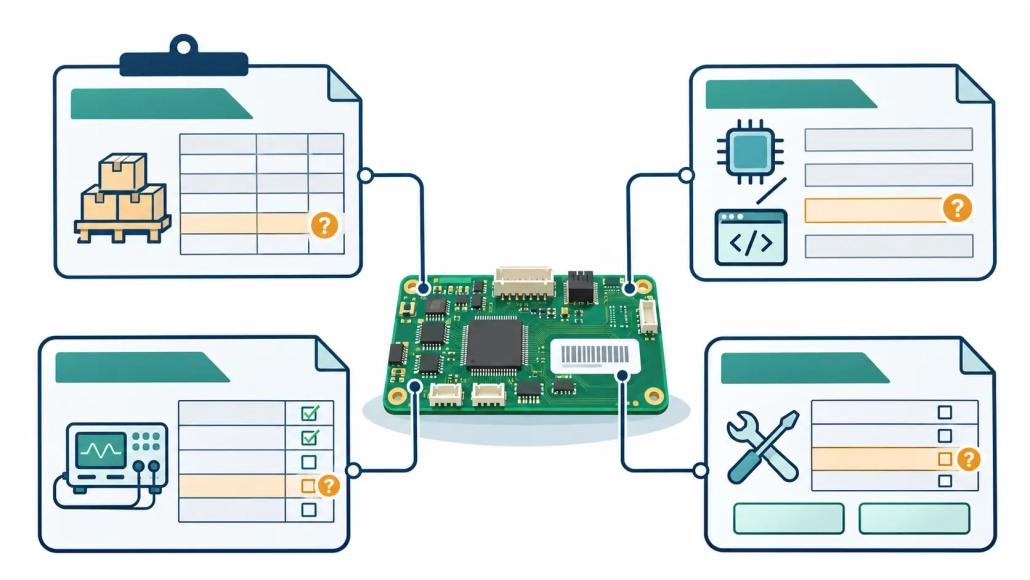
Give the product and its configuration documents unique identifiers. Before mass production, engineering should review the PCB design files, BOM and assembly drawings. Include the programming information needed for this board in the same release discussion, with references connecting the software to its intended hardware.
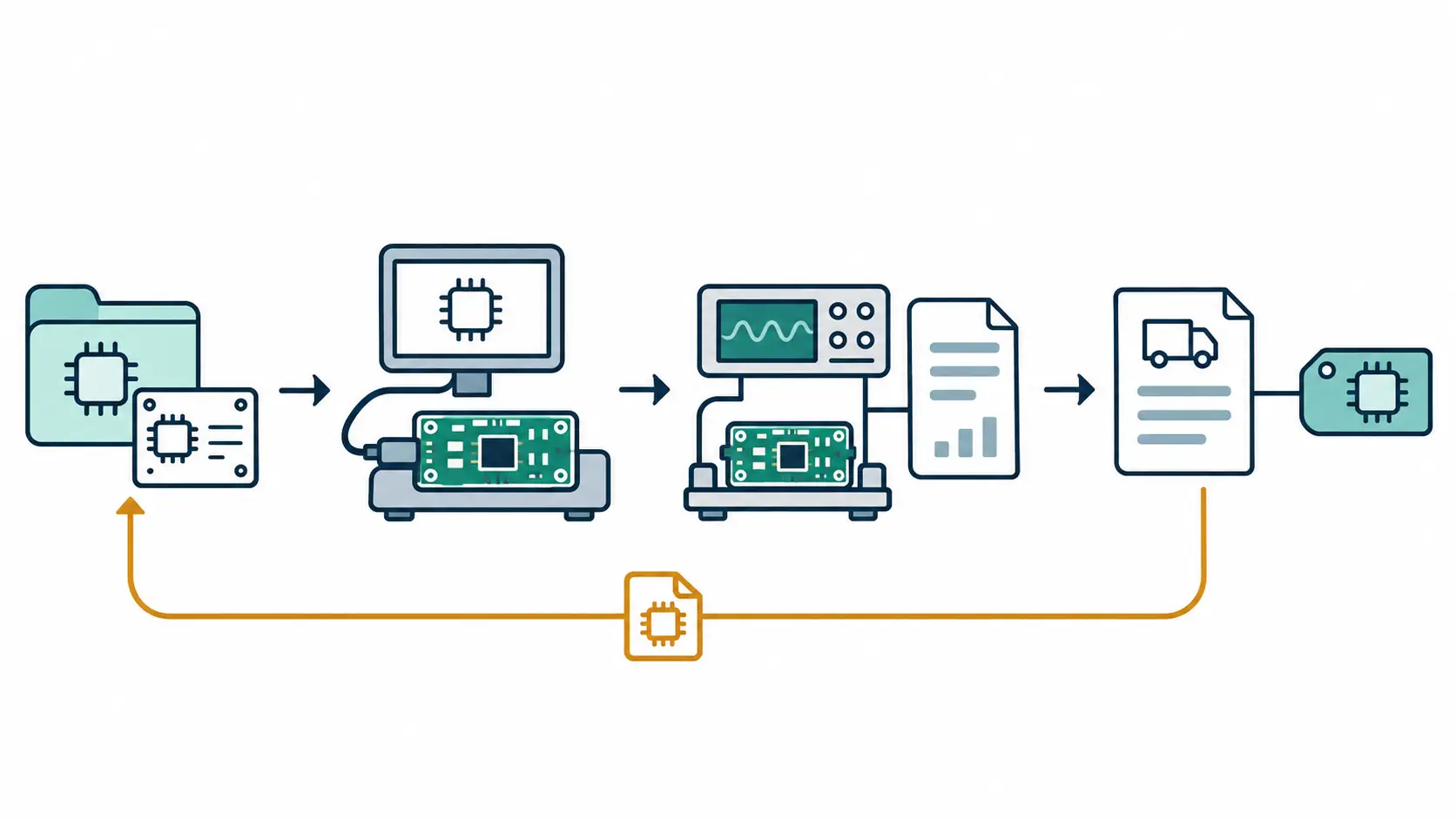
A practical package index can list the board identifier, hardware revision, firmware identifier, file names, installation instructions and approval record. Add other items when the device documentation requires them. Have engineering state the intended file type and installation sequence, especially when several files are involved.
Keep the instructions usable by the manufacturing team. Identify the starting condition of the board, the expected completion indication and the action to take if the operation stops. Where an instruction depends on a device-specific tool or setting, provide the approved reference and its applicable revision.
Before sending the package, have a colleague retrieve the files using the index alone. Can they identify the intended release, locate the installation instructions and find the approval? Resolve any ambiguity with the release owner. For a later update, ask that owner to identify which files are replaced and the build at which the replacement takes effect. Include the disposition of any earlier package already issued to the supplier. Record the supplier’s acknowledgment of the release it will use for the order.
Use the following table as a proposed handoff agenda. Assign an owner and document reference to each item before releasing the work.
| Handoff item | Information to agree | Review owner |
| Target hardware | Board identity and applicable revision | OEM engineering |
| Released software | Approved files and release identifier | Software owner |
| Installation method | Access, sequence and approved instructions | OEM and EMS engineering |
| Verification | Required checks, conditions and limits | Test leads |
| Production record | Configuration identity and required results | Quality leads |
| Exceptions | Hold, escalation and release authority | Agreed approver |
Confirm programming access and production setup
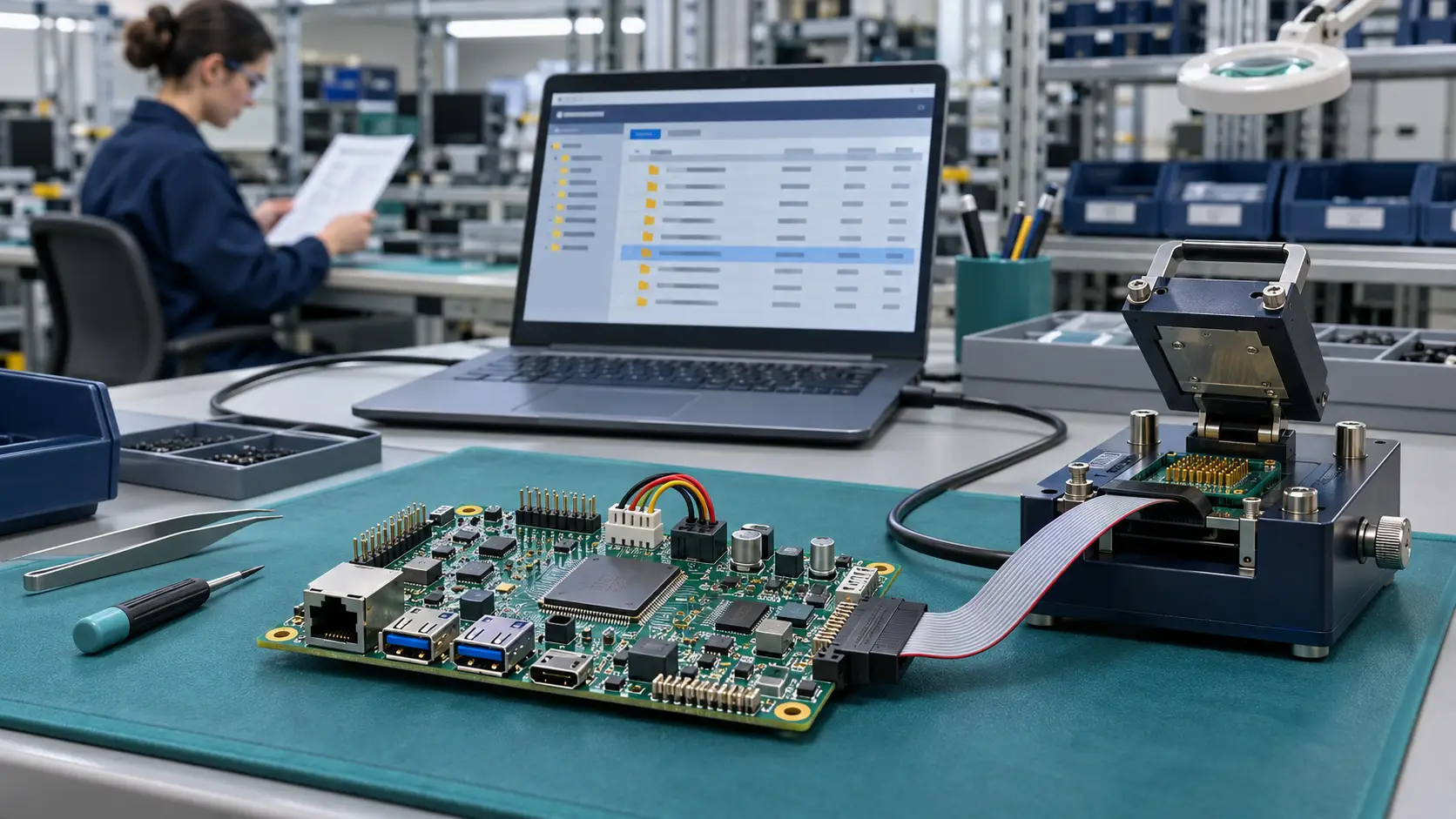
Review the physical connection and setup with the people who will perform the operation. Ask which connector or contact points are used, what equipment is required and whether a fixture needs project-specific acceptance. The applicable device information and approved instructions should settle those details.
Design for testability includes coverage evaluation and probe-accessibility verification. Apply that early review to the planned production route and identify any access question needing a design decision. If the board will later enter an enclosure, ask when the required access is available and who approves the sequence.
Resolve unit-specific information separately when the product uses it. Examples might include an assigned identifier or a calibration value. Ask engineering to define the authorized input, how it is associated with the unit and how completion is checked. Confirm the handling requirements before sharing sensitive production information.
For a pilot build, walk through the instructions using the intended hardware revision. Record questions about connections, setup and completion checks, then have their owners resolve them. Production should receive the accepted instructions and the decision on any remaining exception before the larger quantity is released.
Define verification beyond file installation
Write down how the project will confirm the installed configuration and how it will exercise the board’s intended functions. These checks may have different procedures and records. Ask the test lead to name each required result and the conditions under which it is obtained.
Functional testing simulates product-use scenarios to check whether the assembled board performs its designed functions. Match the proposed functional testing scope to the interfaces, operating modes and acceptance requirements for this product. Agree the test items, parameters, thresholds and procedure before using the results for release.
Where configuration identification depends on a readout, log or other documented method, have engineering specify what will be accepted. Include the expected identifier and the response to a mismatch. If the hardware restricts a verification method, resolve an appropriate alternative with the design authority before production.
Passing a test confirms the items covered under its stated conditions. The product mission profile and reliability specifications determine further aging, fatigue or environmental work. Put the execution location and required reports into the agreed solution, with an owner for each review.
Make the AI hardware configuration explicit
Consider a hypothetical edge AI board whose acceptance run uses a particular firmware release, connected sensor and application configuration. Ask the OEM team to identify which of those items manufacturing must provide and which arrive later during system integration. Include the agreed setup in the test instructions.
If the application evaluation uses a model or workload, identify its version and the conditions relevant to the review. Document the test set, metrics and evaluation tools selected by the responsible team. Evaluation under conditions similar to deployment needs its own recorded criteria and results.
A proposed change to firmware or configuration should trigger a review of the acceptance setup. Ask which existing results still apply and which checks need repeating. The approval should identify the affected build and the evidence required to release it. Keep that decision accessible to both software and manufacturing owners.
Control updates and interrupted programming
Configuration change management includes proposing and evaluating a change, incorporating approved changes and verifying implementation. For production firmware, use a change record that identifies the old release, proposed release, reason, approver and effective build. Engineering should decide how the change affects work already completed.
Give interrupted or failed operations a defined route. Agree how the unit is identified, who investigates and what authorizes another programming attempt. Where reprogramming is permitted, record the applicable instructions and required verification. Ask the design authority to resolve any restrictions tied to the particular device or release.
For repeat orders, confirm the approved configuration again during order review. Reference the accepted release and any changes since the previous build. Keep historical configuration information available alongside current documents, with the status of proposed changes and unresolved discrepancies.
Manufacturing traceability may include firmware or configuration versions, inspection findings and test data linked to material or unit records. Define the fields and retention period for the product. Connecting configuration and test records helps frame the retrieval questions to settle before delivery.
Put the release decision into the handoff
Before shipment, have the agreed reviewer confirm the installed release, required verification results, accepted quantity and disposition of exceptions. If the order contains more than one approved configuration, request a delivery record showing which units belong to each. Give the receiving team the identifiers it needs to check the shipment.
SCSPCBA supports engineering review, prototype verification and NPI, with AI computing among its application areas. Its quotation functions include AI Gerber recognition, intelligent BOM matching and automatic price calculation. Discuss programming instructions and acceptance responsibilities during the engineering review that follows the quotation inputs.
To request a PCBA programming scope review, send SCSPCBA the board revision, BOM, proposed firmware package, quantity and verification requirements. Ask the team to confirm the work included, information still needed and deliverables expected with the build.
FAQ
What should an OEM provide for PCBA programming?
Provide the intended hardware identity, approved firmware files, release identifier and installation instructions. Agree any additional inputs and the verification procedure with the engineering team.
Can firmware arrive already installed in a component?
Yes. Pre-programmed processors or memory devices are a possible installation route. Confirm the supplied release and its acceptance requirements for the order.
What happens when firmware changes during production?
Have the designated owner approve the change, identify the affected work and decide the required verification. Keep the release decision and implementation evidence with the production records.