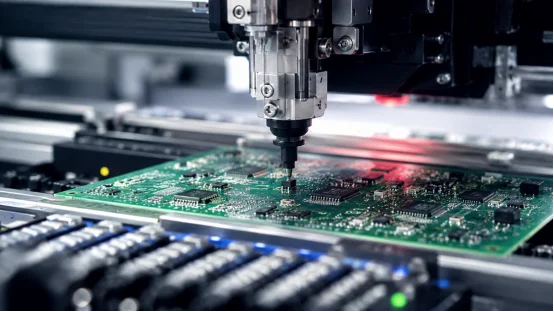
How SMT Assembly Works in PCBA Manufacturing: Full Guide
A plain PCB will not work alone. You must place the parts, solder them tightly, and test everything. This is where SMT assembly steps into the PCBA manufacturing process. Basically, how SMT assembly works involves spreading paste, putting parts in the right spot, baking them, and checking for mistakes.
A modern SMT assembly line easily handles tiny 01005 and 0201 parts. It also works fine with BGA, CSP, and QFN packages. The SMT manufacturing process is really fast and repeats well. However, moving fast alone won’t make a solid, reliable board.
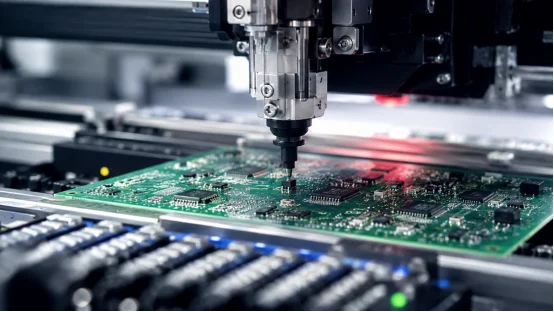
What Is SMT Assembly in PCBA Manufacturing?
Surface mount technology assembly drops parts directly onto PCB pads. You do not push wire leads into deep holes. This SMT process in PCB assembly is great for crowded boards. It also helps robots build things automatically. The bigger PCB assembly process might also add pushing pins through holes, coding chips, and testing the final item.
SMT, SMD, PCB, and PCBA Explained
An SMD is just the part itself. SMT is the way you stick it on. A PCB is a blank board with nothing on it. A PCBA is the completely finished board. So, PCB fabrication and PCBA manufacturing actually mean two different jobs.
SMT vs THT
Picking between SMT vs THT depends on part size, power flow, and physical pushing. In a surface mount vs through-hole comparison, SMT packs more parts into a small space. It also puts them down much faster. Through-hole assembly holds big connectors, heavy transformers, and power parts much tighter. Lots of everyday gadgets use both methods to stay strong.
What Happens Before the SMT Assembly Process Starts?
Most bad mistakes start before you even turn on the machines. You need clear files and right pad sizes. You also need your parts ready and pointing the correct way. Getting this right saves a lot of time compared to fixing broken boards later.
Production Files and Engineering Review
Your file pack usually holds Gerber files, a BOM, and a pick-and-place list. It also has build drawings and test notes. The coordinate file tells the robot exactly where PCB component placement should happen. An SMT DFM review checks the pads, marks, spacing, and stencil holes. PCBA design for manufacturability makes sure cameras and test probes can easily reach important spots. BOM verification checks the part numbers, types, total counts, and backup choices.
Material Preparation
The first check looks at the PCB finish. Workers look at the component model, wrapping, and BOM matching. Parts that hate water might need safe storage or a trip to the oven. Solder paste must warm up to room temperature. Workers check the parts feeders, and strict anti-static (ESD) rules always apply.
How Does the SMT Assembly Process Work?
The normal path goes like this. You print the solder paste, then check the paste. Next, you place parts and bake the board. After that, you run an AOI inspection, and sometimes an X-ray inspection. Finally, you do electrical and functional testing. Each stop catches a different kind of error.
Step 1: Solder Paste Printing
A metal stencil sits flat over the PCB. A wiper pushes paste right through the holes onto the pads. The stencil thickness and hole shape matter a lot. Paste health and pushing pressure also control the paste drop. Bad solder paste printing causes open gaps. It can also bridge pads together or make parts stand up wrongly.
Step 2: Solder Paste Inspection
A 3D solder paste inspection machine looks at the paste. It measures the height, size, and amount. It also checks for bad shifts and bridging risks before any parts go on. Finding a bad print right now is cheap. You just wash the board off and try again. Because of this, SPI and AOI inspection do two very different jobs.
Step 3: SMT Pick and Place Process
In the SMT pick and place process, tape feeders feed the parts. Little nozzles pick them up. Smart cameras look at the part’s shape and turn it the right way. Board marks fix any tiny position errors. Super-fast machines drop down the simple parts. Meanwhile, flexible machines place the complex ICs and plugs.
Step 4: SMT Reflow Soldering Process
The SMT reflow soldering process runs the board into a long oven. The oven zones preheat, soak, reflow, and cool the board down. During the reflow soldering process, the flux wakes up. The solder melts smoothly, and then the joints get hard. The heat setting must match the board’s weight and part limits. Too little heat makes weak, cold joints. Too much heat can fry the parts or bend the PCB.
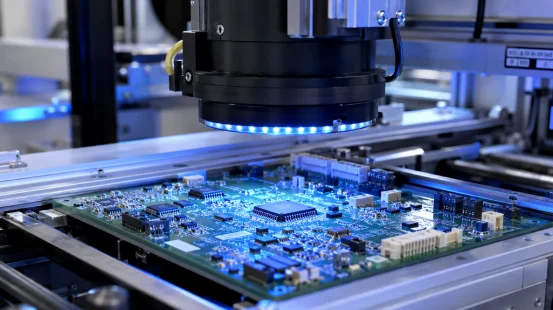
Step 5: AOI and BGA X-Ray Inspection
After baking, AOI inspection searches for missing parts. It looks for bad spots, wrong directions, short circuits, and loose metal balls. BGA X-ray inspection looks straight through the chips. It finds bad ball lines, air bubbles, missing solder, and hidden shorts under BGA, CSP, or QFN packages. Good BGA assembly inspection is super important. A board might look perfect on the outside but still have broken joints hidden inside.
Step 6: First Article and Final Testing
SMT first article inspection compares the very first board to the BOM. It checks the drawings and rules. A boss must pass this first article inspection before the factory makes huge batches. PCB assembly testing includes ICT, flying probe checks, and coding the chips. It also involves functional circuit testing or heat checks. Electrical and functional testing proves the board actually does what you want.
How Is SMT Quality Controlled?
SMT quality control is like a row of locked gates. It shouldn’t just be one final look at the end. PCBA quality control starts with the raw parts. It keeps going through the printing, placing, baking, testing, and fixing stages.
Inspection, Traceability, and Standards
SPI looks at the paste. AOI spots visible errors. X-ray inspection finds hidden faults. ICT catches broken lines and bad parts. Functional testing acts like a real user. MES traceability ties a board’s serial number to its exact parts, machines, tests, and repair logs. Rules usually follow IPC-A-610, ISO 9001, IATF 16949, ISO 13485, and RoHS requirements. Your test plan should fit your product risk level. A cheap toy board and a car brake board need very different testing steps.
When Do You Need Double-Sided or Mixed Technology Assembly?
Not every PCBA takes a simple path. Crowded spaces, unique parts, and heavy physical stress might add a second trip through the oven. Sometimes, you have to add a through-hole stage.
Double-Sided SMT Assembly
For double-sided SMT assembly, the first side gets paste, parts, and baked. Next, workers flip the board over. The second side goes through the exact same steps. You really have to watch the part weight here. Heating things twice can be risky.
Mixed Technology Assembly
Mixed technology assembly mixes SMT with older through-hole pieces. A normal path finishes the SMT assembly first. Then, workers push in big parts for wave or selective soldering. This works great for boards packed with tiny ICs alongside big plugs or heavy power parts.
What Should You Look for in an SMT Assembly Manufacturer?
A good SMT assembly manufacturer will check your data first. They manage parts safely and place tiny items perfectly. They set up steady heat profiles and share their test reports. Ask them about their smallest part sizes and placement accuracy. Also, ask about BGA capability, tracking, and test tools. See if their SMT assembly services can grow from a few test boards to big orders easily.
Turnkey PCBA assembly groups the bare board making, part buying, putting together, testing, and packing all in one place. It helps a lot when you want a single team to handle the whole job.
Why Does SCSPCBA Fit Complex PCBA Projects?
SCSPCBA links PCB fabrication, part buying, SMT and DIP assembly, and testing. They even handle box build work in one chain. Their documented skills include 01005 and 0201 placement. They boast ±0.025 mm placement accuracy. They handle 0.3 mm and above BGA pitch easily. You also get double-sided reflow and selective wave soldering. Quality checks use 3D SPI, AOI, X-ray, ICT, FCT, aging tests, and MES traceability.
This setup really helps when a test project turns into full repeat production. It is great for boards mixing tiny chips with huge plugs. Their file checks and BOM help solve early worries. You know your design will work and the parts are easily found.
FAQ
Q1: What is the SMT assembly process?
A: It covers printing solder paste, SPI, placing parts, and reflow soldering. You also use AOI, optional X-rays, and electrical testing to build a surface-mount PCBA.
Q2: What files are required for SMT assembly?
A: You generally hand over Gerber files, a BOM, pick-and-place lists, assembly drawings, and your test rules.
Q3: Why is BGA X-ray inspection required?
A: BGA joints hide deep under the chip. Regular cameras cannot see open gaps, shorts, bubbles, or crooked balls there.
Q4: Can SMT and through-hole components be used together?
A: Yes, they can. Mixed technology assembly uses SMT for the small bits and through-hole styles for parts needing a strong grip.
Q5: How do you choose an SMT assembly manufacturer?
A: Check how they review files and place parts. Look at their test machines, tracking, and if they can easily scale up from a test batch to huge orders.





Leave a Reply
Want to join the discussion?Feel free to contribute!