PCBA Component Substitution: What to Approve Before Replacing a BOM Part
A proposed replacement for a PCB assembly component should remain a proposal until the responsible engineering team approves its use for the intended build. Review the original and proposed parts, the circuit and assembly requirements, the necessary verification and the documents that will authorize production. Availability and price belong in the decision, but neither establishes technical equivalence.
This matters for AI hardware projects too. Use the actual circuit, configuration and verification requirements to evaluate a change. “Suitable for AI” is not a complete acceptance specification for a memory device, power component, connector or other BOM item.
Separate sourcing from engineering approval
BOM procurement review can include alternative-material confirmation, lifecycle management and lead-time risk assessment. SCSPCBA provides BOM procurement, original component sourcing, alternative component recommendations and BOM optimization. These services create a useful starting point for discussing a shortage or a proposed change.
Keep the sourcing request precise. When discussing BOM procurement and component alternatives, distinguish a request to locate the specified part from a request to evaluate a different manufacturer part number. State whether alternatives may be proposed, and identify who can authorize their use.
A purchasing reply such as “available from stock” should answer an availability question. Treat technical review and approval as separate recorded decisions. If an existing approved-alternatives list is relevant, identify its revision and the conditions under which it applies to this order.
Define the proposed change at BOM-line level
Begin with the released BOM. A BOM records component models, packages and quantities; incomplete parameters or missing alternatives can create questions during preparation. Before PCBA mass production, engineering review should also cover the PCB design files and assembly drawings.
For a substitution request, identify the original part, the proposed manufacturer and full part number, affected reference designators and the build revision. Include the reason for the request and the quantity or order concerned. Attach the manufacturer’s relevant documentation rather than relying on an abbreviated purchasing description.
Make the requested decision explicit. Is engineering being asked to approve this batch, add an alternate to a controlled list, or review a change that also affects the layout? Keep those requests distinct. Record unresolved differences so the reviewer can respond to the actual proposal instead of a broad question about whether two components are “similar.”
Review the circuit and physical interface together
Use the product requirements and manufacturer documentation to prepare the comparison. Ask engineering to identify which electrical characteristics matter in this circuit, and which limits and operating conditions should govern the assessment. A matching headline rating should not be the whole review.
Bring the package and assembly drawing into the same discussion. Confirm the relevant pin assignments, land pattern, orientation and mechanical fit against the proposed part. If a difference remains, identify whether it calls for another component choice, a drawing change or additional evaluation.
DFM review considers pad design, component spacing and access for testing. A replacement proposal should therefore be considered alongside the intended assembly and verification route. Use design review and manufacturing support to discuss the affected requirements before releasing a revised package.
For an AI computing board, include the design team’s actual power, interface, thermal and configuration requirements where relevant to the part being changed. Avoid copying a generic AI-board checklist into every substitution request. The relevant comparison for a connector will differ from the comparison for a programmable or power-management device.
Agree what must be verified
Ask the responsible engineer to define the evidence needed for acceptance. The proposed verification may involve document review, a sample build, measurements or functional checks, depending on the change. State which requirements each activity is intended to address and who will judge the result.
Keep the manufacturing and application questions distinct. An acceptable assembly result does not by itself settle whether a replacement behaves as required in the intended product configuration. For an AI application, record the relevant configuration and evaluation conditions instead of describing a successful startup as complete application validation.
Test scope, execution location and required reports should be specified in the project arrangement. Passing ICT or FCT establishes that the corresponding tested items meet their requirements. Whether further aging, fatigue or environmental testing is needed depends on the product’s mission profile and reliability specifications.
If a limited trial is proposed, document what the trial is allowed to establish. Identify the sample configuration, acceptance conditions and remaining questions. Avoid extending a narrow result to every order or operating condition without an engineering decision supporting that scope.
Record the approval and its effective build
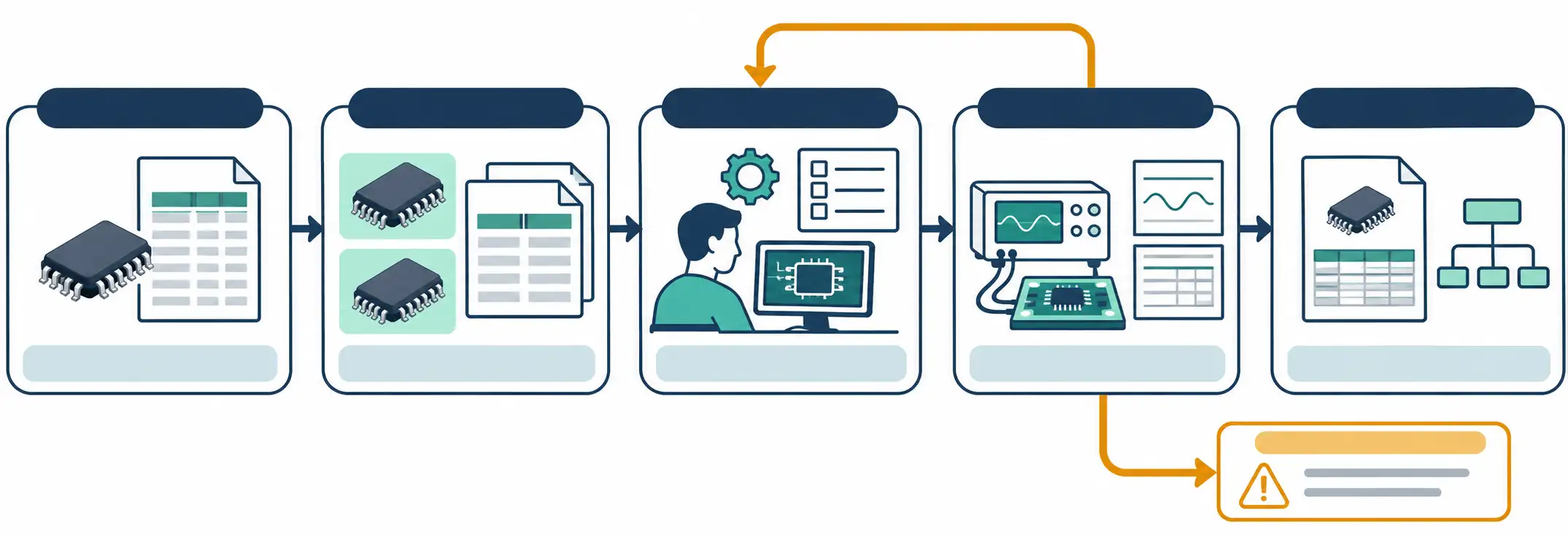
A controlled change process includes a proposal, justification, evaluation, incorporation of approved changes and verification that the changes were implemented. Apply that sequence to the substitution record: preserve what was proposed, what engineering accepted and what production is instructed to use.
Name the approval owner and identify the authorized part and document revision. State when the change takes effect, such as an identified order or build, and whether the authorization is temporary or intended for later repeat orders. Confirm any conditions attached to the decision.
Also ask what happens to material already purchased, kitted or assembled. Keep the answer tied to the affected quantities and order rather than assuming the same instruction applies everywhere. Where a disposition remains open, show its owner and next action before production proceeds with that material.
Preserve the rejected options and the reason for the final decision where useful to the project. For a temporary authorization, specify what closes it and which part should be used afterward. If different teams hold different copies of the BOM, resolve that discrepancy before issuing the change. A practical approval message should let a reader identify the permitted action without reconstructing a long email conversation. Use the table below as a meeting checklist, then transfer the decisions into the project’s controlled documents rather than treating the completed checklist as the entire release package.
| Approval item | Question to close |
| Identity | Which original and replacement part numbers are being compared? |
| Technical scope | Which circuit, package and assembly requirements were reviewed? |
| Verification | What evidence and acceptance conditions apply? |
| Authority | Who approves use of the replacement? |
| Effectivity | Which revision, order and quantity does approval cover? |
| Existing material | What instruction applies to purchased or assembled items? |
| Repeat orders | Must the alternative be reviewed again before reuse? |
Keep the purchasing and production records aligned
Give the product and its configuration documents clear identifiers. Configuration records should distinguish current and historical documents, proposed changes and the disposition of discrepancies. A proposed alternative should remain distinguishable from the part authorized for the build.
Review the BOM, assembly information and applicable test instructions together after approval. Request confirmation that the released package incorporates the decision. If an earlier quotation used the original part, ask purchasing and engineering to confirm the scope and assumptions of the revised quotation.
Manufacturing traceability may include material records, serial numbers, process parameters, configuration versions and test results. Decide which records this order needs and how the approved substitution will be identified in them. Connecting the change to the agreed material and configuration records gives later reviewers a more specific reference than an isolated approval email.
Treat intelligent BOM matching as a proposal input
SCSPCBA lists intelligent BOM matching, AI Gerber recognition and automatic price calculation among its online quotation functions. These functions belong in the preparation of an inquiry; keep the acceptance of a changed component as an explicit engineering decision.
When a matching result suggests a different part, send the original specification and proposed alternative through the same review process. Ask which differences were identified and which remain unresolved. Do not let a populated quotation line stand in for documented authorization to change the build.
Compare the complete proposal as well as its component price. Component costs vary with sourcing, scarcity, package requirements, procurement quantity and market conditions. Early design-stage problems generally have lower modification costs than defects discovered after mass production begins, but that does not justify promising a fixed saving from any particular replacement.
To review a shortage or alternative, send SCSPCBA your BOM and substitution questions. Include the current revision, original and proposed part numbers, intended quantity and required verification, and request a preliminary engineering and sourcing discussion.
FAQ
Is the same package enough to approve a substitute?
No. Have engineering compare the relevant electrical, pin, physical, assembly and verification requirements for the actual circuit. Package similarity alone should not serve as the approval record.
Can purchasing authorize an alternative?
Use the authority agreed for the project. Identify who can approve the technical change and who can commit to its commercial consequences before issuing instructions.
Does an AI BOM match mean a part is approved?
Treat the matching result as an input to review. Keep the proposed part, engineering decision and released BOM distinguishable.
Can an approval be reused on the next order?
Check its recorded scope and conditions. Confirm whether it covers the next revision and order, or whether renewed review is required.