What to Check Before Choosing a PCB Assembly Supplier
Before choosing a PCB assembly supplier, check project fit, quotation assumptions, engineering review, component sourcing, test coverage, and production traceability. Ask for a written scope for your actual board. For an AI hardware project, include the intended operating workload and acceptance tests in that discussion. If the supplier offers AI quotation, examine how the generated price moves through engineering review and order approval.
Use the first quotation as the start of a technical conversation. Send each shortlisted supplier the same revision of your manufacturing files, then compare the answers against the checks below. Keep unresolved items visible until someone owns the decision.
Match the supplier to your project
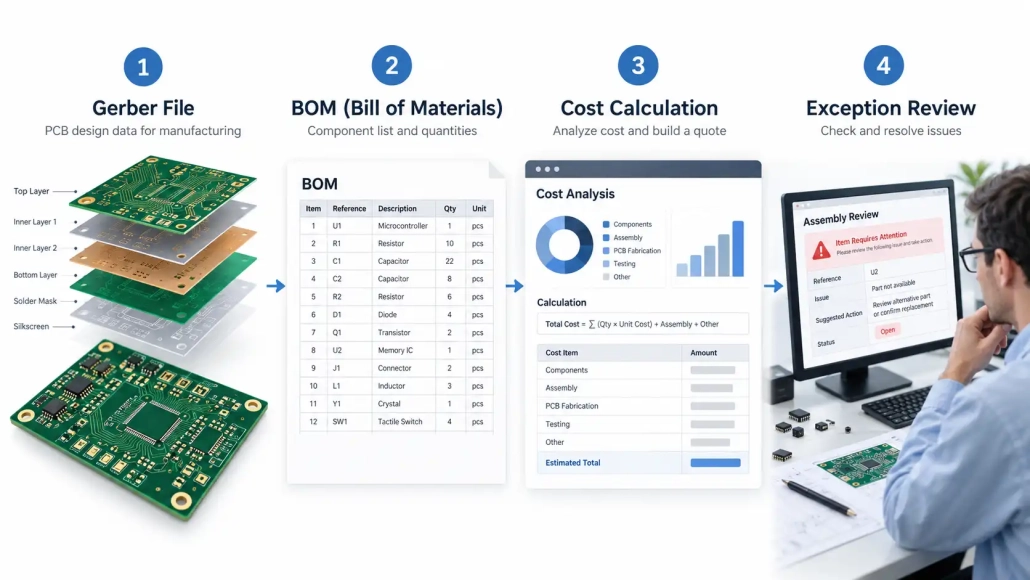
Start by defining what you are buying. Under a turnkey PCBA model, one provider may coordinate component procurement, PCB fabrication, assembly, testing, and delivery. The customer supplies Gerber files, the BOM, coordinate files, and testing requirements.
Choose whether you want turnkey, consigned, or partial turnkey procurement. Identify who supplies each material group and who approves changes. Separate the prototype quantity from the expected production quantity, and ask the supplier to respond to both stages.
For an edge AI device or another AI computing project, prepare a short acceptance brief. List the processor and memory configuration, interfaces, firmware version, intended workload, and operating limits your design team requires. Ask which checks belong at board level and which belong in the completed system. Treat this as your project specification rather than assuming an AI label defines the manufacturing scope.
SCSPCBA supports SMT, DIP, BGA, and mixed technology assembly, with prototype, low volume, and mass production options. Its PCBA application areas include AI computing.
Examine the AI quotation workflow
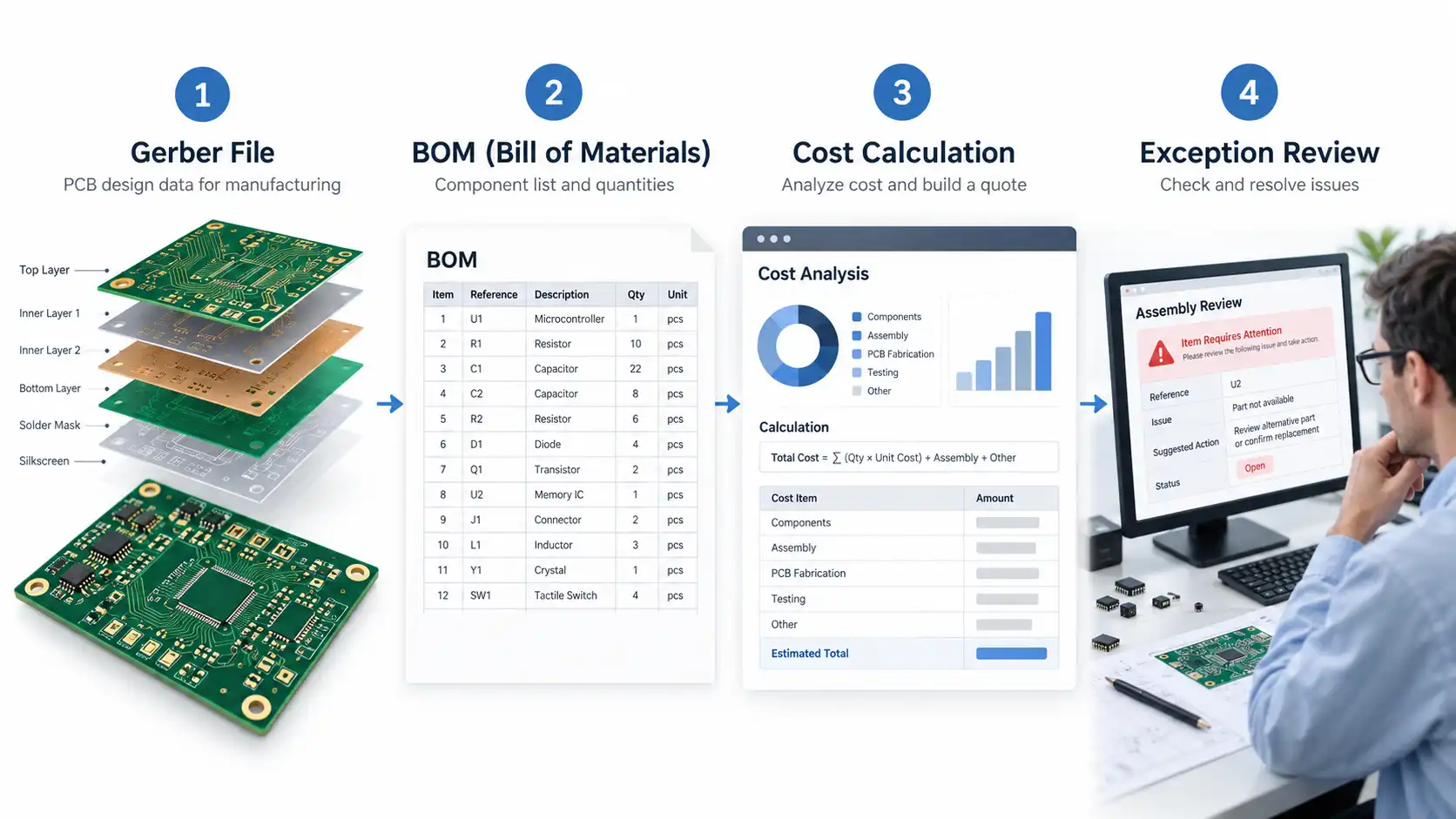
An AI powered PCB quotation deserves a practical trial. Upload a representative, approved file set and ask the supplier to walk through the result with you. Record the file revision, quantity, procurement scope, included testing, and items still awaiting engineering confirmation.
SCSPCBA’s AI quotation functions include Gerber recognition, intelligent BOM matching, automatic price calculation, online order management, and real time production progress tracking.
During your review, ask how unmatched BOM lines are handled, how proposed alternatives are presented, and who approves the final build configuration. Request a named engineering contact for exceptions. Keep component substitutions and manufacturing changes subject to your written approval process.
Try the workflow with an ordinary build and a file set containing an exception your team has already identified. Ask the supplier to explain how that exception appears in the response. Review what happens when you revise the quantity or BOM, and ask how the approved quotation is linked to the order. Evaluate the workflow against your own review needs.
Compare the scope behind each price. PCBA costing includes the bare board, components, processing, inspection and protection, management and loss costs, and profit. Inspection and special process charges depend on the product requirements.
Ask for separate entries for tooling, test fixtures, programming, special inspection, packaging, and delivery where applicable. Also ask when the quotation expires and which events require repricing. Keep the AI quotation result and the final approved order together so your team can see what changed.
Require a board specific engineering review
DFM considers manufacturing process limitations during design. A useful review checks pad design, component spacing, and whether the layout supports the required testing. DFT addresses test coverage and probe accessibility.
Request the proposed manufacturer’s process capability table and configure the design rules around that capability. Review the PCB design files, BOM, and assembly drawings before mass production.
For the assembly discussion, mark the packages and areas you want reviewed, including bottom terminated devices, connectors, and any mixed technology stages. Ask for comments on your files, an issue owner, and an agreed disposition for each finding. Request a clear release point before production begins.
Use the DFM and assembly optimization discussion to resolve manufacturing questions while the design is still under review. Ask which changes need your design team’s approval and whether a small verification build should follow. Keep the agreed files and the supplier’s responses in the same revision record.
Check BOM control and material approval
BOM procurement review covers alternative material confirmation, component lifecycle management, and lead time risk assessment. Long lead time materials need preparation planning and inventory monitoring.
Request a BOM response with manufacturer part numbers, availability, proposed alternatives, and unresolved lines. For each exception, record the decision maker and required approval date. If you supply selected components yourself, agree how incoming quantities and discrepancies will be reported.
Read the component sourcing and BOM management scope alongside the quotation. Ask the supplier to identify the purchasing responsibility, sourcing documentation, and approval route for an unavailable part. For AI hardware, give your engineering team explicit approval responsibility for changes to processors, memory, power devices, or other design controlled components.
Ask for a delivery plan with separate milestones for file approval, material readiness, assembly, testing, and shipment. Request the conditions behind the proposed schedule and a route for reporting delays. Compare those milestones across suppliers using the same starting assumptions.
Match inspection and testing to the board
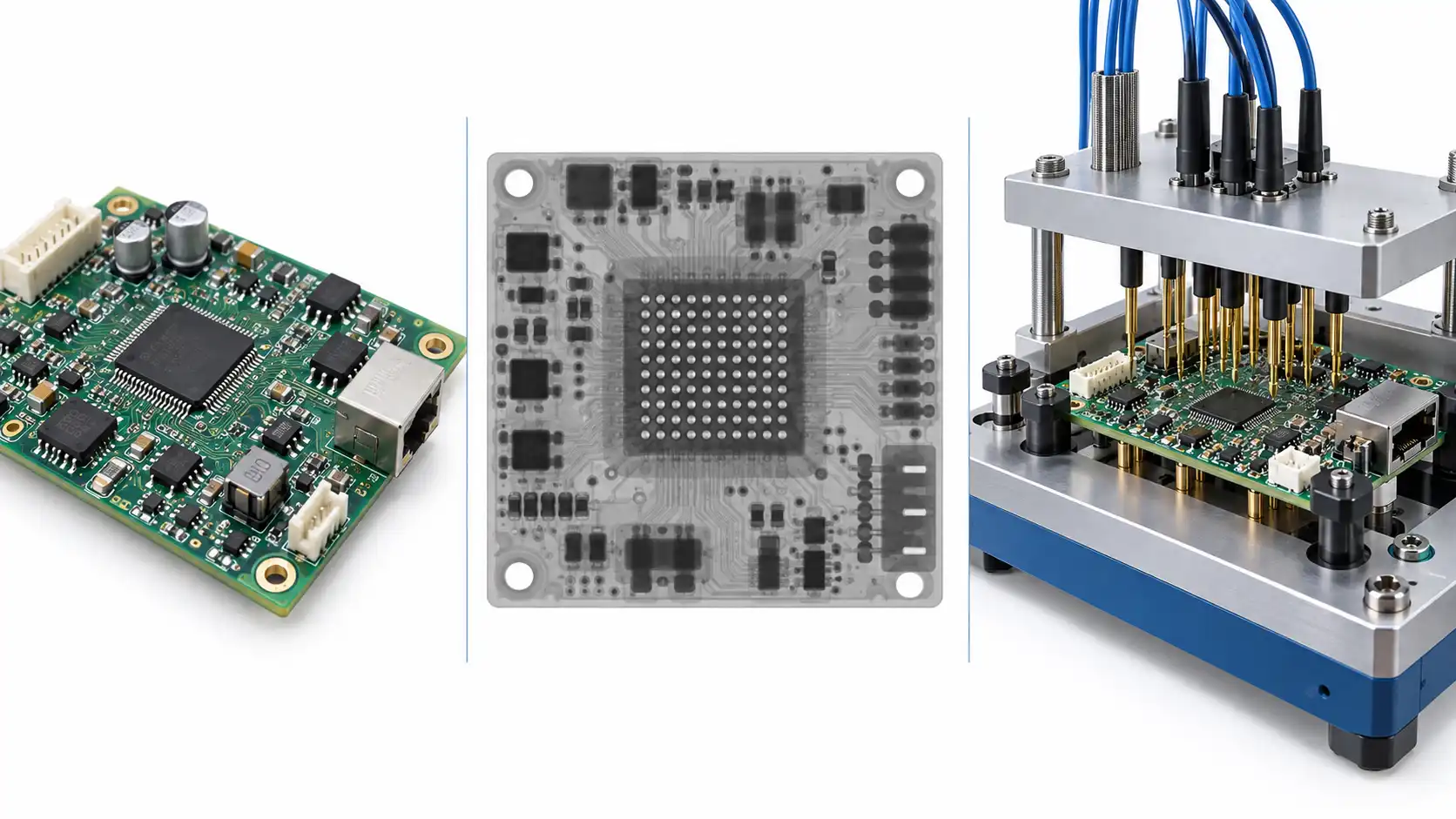
Ask for a test plan that names the method, coverage, acceptance criteria, and report you will receive. PCBA testing should follow the applicable product specifications, customer requirements, and industry standards.
| Method | What it checks | What to clarify |
| SPI | Solder paste printing quality | Which printing checks are included |
| AOI | Visible placement and soldering defects | Coverage and any areas requiring another method |
| X-ray | Hidden joints such as those beneath BGA and QFN devices | Inspection scope and how ambiguous findings are resolved |
| ICT | Board interconnections and component parameters | Test access and the faults included |
| FCT | Whether the board performs its designed functions | Inputs, workload, limits, and recorded outputs |
AOI cannot directly observe solder joints hidden beneath bottom terminated components. X-ray can reveal features such as voids, bridging, and abnormal solder volume; some connection or interface conditions require additional viewing angles or other methods.
Review the inspection and functional testing plan against your board’s actual acceptance criteria. For an AI application, propose checks for the required firmware, interfaces, intended workload, and defined operating limits. Ask the supplier to identify what it can execute and what remains with your system validation team.
Passing ICT and FCT establishes compliance with the items those tests cover. Additional aging, fatigue, or environmental testing depends on the product mission profile and reliability specification.
Review traceability and the move into production
NPI includes design, process, compatibility, and production verification, followed by data feedback. Its outputs can include process parameter standards, inspection standards, work instructions, and quality control plans that form the mass production baseline.
Manufacturing traceability may include serial numbers, material records, process parameters, firmware or configuration versions, inspection results, and test data. The required scope and retention period depend on the product and quality system requirements.
Request a sample traceability record and follow one board through it. Ask how the approved BOM, firmware, inspection result, and any rework are linked. Agree what records you receive, how long they remain available, and who investigates a returned board.
Use a pilot build as a purchasing checkpoint. Review the actual issue list, approved changes, test results, and remaining actions before releasing the next batch. Set a clear rule for approving changes after the pilot so the production baseline stays visible to both teams.
Before the pilot, agree who will review the first article, which documents authorize the next stage, and what happens if a result falls outside the agreed limits. Ask for the production release decision in writing. Keep open engineering actions separate from accepted deviations, and name the person responsible for closing each one before the next order.
Prepare the RFQ and make the decision
Send one controlled RFQ package containing the Gerber files, BOM, coordinate files, assembly drawings, test requirements, order quantities, and requested delivery milestones. Include any requirements for programming, packaging, record retention, and design confidentiality. Ask each supplier to flag exclusions in its response.
Shortlist the supplier whose written response you can review against that package. Before ordering, close the remaining questions on engineering ownership, material substitutions, test coverage, schedule assumptions, payment terms, and the process for reporting a manufacturing problem. Use the same checklist again after the pilot build.
Discuss your PCB assembly requirements with SCSPCBA, including the AI quotation workflow, engineering review, and test scope for your board. Share your RFQ package and request a project specific fit check before placing the order.
FAQ
What files should I prepare for a PCB assembly quotation
For turnkey PCBA, prepare Gerber files, the BOM, coordinate files, and testing requirements. Include the assembly drawings and identify the revision your supplier should evaluate.
How should I evaluate an AI PCB assembly quotation
Review the generated price with the supplier. Ask about unmatched materials, exclusions, approval of alternatives, and the engineering release process. Request a written scope for your particular order.
Is AOI enough for a board with BGA components
AOI cannot directly inspect hidden BGA solder joints. X-ray provides another inspection method, with its scope and any additional confirmation determined by the defects being investigated.
What should I ask about testing an AI hardware board
Give the supplier your intended workload and acceptance criteria. Ask which board functions it will test, what results it will record, and which checks remain part of your completed system validation.