How to Audit a PCBA Manufacturer in China Remotely
Choosing a PCBA manufacturer in China without visiting the factory can be challenging. A supplier may show impressive production equipment, quality certificates, and competitive quotations, but those details alone do not prove how your boards will be manufactured, inspected, or tested.
A remote PCBA factory audit helps overseas buyers examine manufacturing capabilities, component sourcing, quality control, and traceability before placing an order. The key is to request verifiable evidence rather than relying entirely on brochures or prepared presentations.
This guide explains how to conduct a remote audit of a PCBA manufacturer in China, what documents to request, which production processes to inspect, and how to recognize potential supplier risks before committing to volume production.
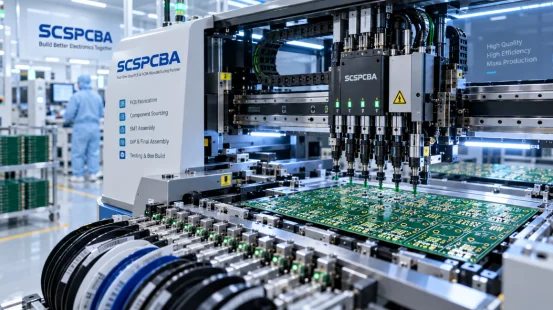
Why Should You Audit a PCBA Factory Before Ordering?
A successful prototype does not necessarily mean a factory can maintain the same quality across repeated production batches.
Problems may appear when components become unavailable, engineering revisions are introduced, production volumes increase, or inspection procedures are not consistently followed.
For overseas buyers, these risks can be difficult to identify through email communication alone.
A remote factory audit provides an opportunity to verify three important areas:
- Actual manufacturing capability: Can the factory manufacture assemblies with your component sizes, package types, and production requirements?
- Process consistency: Are materials, production parameters, inspections, and engineering changes properly controlled?
- Accountability: Can the supplier identify what happened to a particular board or production lot when a quality issue occurs?
Remote auditing cannot replace every physical inspection or product qualification test. However, it can reveal important process weaknesses and help buyers decide whether a supplier deserves further evaluation.
Step 1: Verify the Manufacturer’s Identity and Production Facilities
Before discussing equipment specifications, confirm who will actually manufacture your PCBA.
Some suppliers operate their own SMT production lines, while others outsource certain manufacturing stages. Outsourcing is not automatically a problem, but buyers should understand which company controls each operation.
Confirm Company Registration and Factory Location
Request the manufacturer’s registered company name, business registration information, factory address, and relevant quality management certificates.
Compare these details with the supplier’s quotation, official website, and other business documents.
For certifications such as ISO 9001 or ISO 13485, verify the certificate number, validity, covered location, and scope of activities through the issuing certification body or an appropriate verification database.
For automotive projects, determine whether the relevant manufacturing site holds applicable IATF 16949 certification.
A certificate belonging to another legal entity or production location should not automatically be treated as evidence that your proposed manufacturing site is covered.
Identify In-House and Outsourced Operations
Ask the supplier to identify which production processes are performed at the proposed facility.
For example:
| Manufacturing Activity | What Buyers Should Confirm |
|---|---|
| PCB fabrication | Manufacturing location and quality responsibility |
| Component procurement | Approved sourcing channels and incoming inspection |
| SMT assembly | Actual placement and soldering capabilities |
| Through-hole assembly | Available insertion and soldering processes |
| AOI and X-ray inspection | Equipment availability and inspection responsibility |
| ICT and functional testing | Test location, fixtures, and reporting |
| Box-build assembly | Integration, programming, and final inspection scope |
This information helps you determine whether the supplier operates the manufacturing processes directly or manages them through qualified production partners.
Step 2: Request a Pre-Audit Document Package
A remote PCBA factory audit becomes more effective when buyers review basic documentation before arranging a video meeting.
Instead of asking for every internal document, request a focused package covering the manufacturing processes relevant to your project.
Essential Documents to Request
A practical pre-audit package may include:
- Quality certificates: Current certificates showing relevant activities and production locations.
- Manufacturing process flow: The sequence from incoming materials to assembly, inspection, testing, and shipment.
- Equipment list: SMT placement machines, solder-paste inspection systems, reflow ovens, AOI equipment, X-ray inspection equipment, and testing facilities.
- Sample inspection records: Redacted examples of incoming inspection, first article inspection, and outgoing quality checks.
- Material control procedures: How components are received, identified, stored, and released to production.
- Engineering change procedures: How BOM revisions, alternative components, and production instructions are approved.
- Traceability examples: Records showing how a completed assembly can be connected to its manufacturing and test history.
Confidential customer information should be removed from shared examples. A legitimate audit does not require unrestricted access to another customer’s design files.
Look for Consistency Across Documents
Individual documents may appear convincing, but inconsistencies deserve follow-up.
For example, the equipment list might indicate X-ray inspection capabilities while the process flow shows no X-ray verification for assemblies with hidden solder joints.
Similarly, a supplier may claim serial-number traceability but only provide records organized by production date.
Use these differences as questions for the live audit rather than making an immediate judgment.
Step 3: Conduct a Live Video Audit of the SMT Production Line
A prerecorded factory introduction can help buyers understand the facility layout. However, a live video audit allows you to ask questions and examine specific production activities.
Arrange the session with a production or quality engineer who understands the processes being demonstrated.
What Should You Examine During the Video Tour?
Begin with the receiving and material storage areas before moving into production.
During the SMT line walkthrough, request views of the following operations where access and confidentiality rules permit:
Material preparation and identification
Check whether component reels, PCB lots, and production orders have readable identification. Ask how operators prevent materials from being issued against an incorrect BOM revision.
Solder-paste printing and inspection
Observe how solder paste is prepared and inspected. If 3D SPI is used, ask the engineer to explain which measurements trigger warnings or rejection.
Component placement
Ask how placement programs are selected, verified, and linked to the current production order. Confirm the factory’s demonstrated ability to handle the smallest components and most demanding packages in your design.
Reflow soldering
Review how reflow profiles are established, approved, and controlled for different assemblies. Ask whether profiles are reviewed after significant changes to board construction or component requirements.
Inspection and testing
Confirm where AOI, X-ray, ICT, and functional testing occur. Not every board requires every method, so the supplier should explain the inspection plan appropriate to your product.
A useful question during the session is:
“Can you show how the current production order is linked to its approved BOM revision and inspection requirements?”
The response can reveal more about daily process control than a general overview of expensive machines.
Step 4: Check Component Sourcing and Material Traceability
Component sourcing is a major area of risk in PCBA manufacturing, particularly when a design contains long-lead, obsolete, or difficult-to-source components.
A supplier may provide attractive component pricing without clearly explaining procurement channels or substitution procedures.
Verify Procurement and Incoming Inspection
Ask the factory to explain how components move from purchasing to warehouse release.
Review a redacted receiving record and check whether it includes the manufacturer part number, supplier information, relevant lot or date codes, received quantity, and inspection result.
For moisture-sensitive devices, ask how floor-life exposure, dry packaging, storage conditions, and baking requirements are managed where applicable.
If the supplier recommends an alternative component, request the technical justification and approval procedure.
A proposed replacement should not be used in production without authorization under the agreed change-control process.
Perform a Sample Traceability Check
Instead of accepting a general statement about supply chain traceability, request a practical demonstration.
Select an example production lot or completed board and ask the quality engineer to retrieve its available records.
Depending on the product’s traceability requirements, these may include:
- PCB manufacturing or receiving lot
- Critical component lots
- Production order and approved revision
- Assembly line and manufacturing date
- Inspection results
- Functional test results
- Rework or repair history, if applicable
The purpose is not to demand that every low-risk passive component be individually serialized. It is to verify that the factory can retrieve the level of traceability your product requires.
For products with strict quality or regulatory requirements, this verification becomes particularly important.
Step 5: Verify Quality Control Through Actual Inspection Records
Manufacturing equipment supports quality control, but the presence of inspection machines does not prove that procedures are consistently followed.
During a remote audit, ask the supplier to demonstrate how inspection results are recorded, reviewed, and used to make production decisions.
Review SPI, AOI, and X-ray Evidence
Each inspection method has a different purpose.
Solder Paste Inspection (SPI) checks the solder-paste printing process. Review an example result and ask which paste measurements are monitored.
Automated Optical Inspection (AOI) checks visible assembly defects, such as missing components, polarity errors, placement offsets, and visible solder problems.
X-ray inspection can evaluate hidden solder connections beneath devices such as BGA packages. Ask what defects the factory checks and how acceptance decisions are made.
For assemblies involving fine-pitch ICs or high-density packages, request examples relevant to similar component types.
Inspection images should be accompanied by an explanation of the acceptance criteria. A screenshot without context offers limited evidence.
Examine ICT and Functional Testing Procedures
Visual inspection alone cannot verify every electrical or functional requirement.
In-circuit testing (ICT) can detect selected electrical faults, while functional circuit testing (FCT) evaluates defined product functions under a controlled test procedure.
Ask the manufacturer to explain:
- Which circuit functions are covered
- Which test limits determine pass or fail
- How test fixtures and software revisions are controlled
- How failed boards are identified and segregated
- Whether repaired boards undergo appropriate retesting
- How test results are connected to production records
A credible test report should distinguish completed checks from untested characteristics.
For a higher-risk product, consider requesting a test coverage summary identifying important limitations and remaining verification responsibilities.
Step 6: Test Engineering Change and Quality Problem Handling
A reliable PCBA manufacturing process must manage more than normal production.
Component shortages, design revisions, assembly defects, and failed functional tests are common situations in electronics manufacturing.
The important question is how the supplier handles them without losing control of the approved product configuration.
Ask About a Component Substitution Scenario
Present a realistic situation:
“A critical IC becomes unavailable after the production order has been confirmed. What happens next?”
Ask the engineering team to describe the steps from identifying a possible alternative to approving its use.
The explanation should clarify who evaluates the electrical and mechanical compatibility, who authorizes the change, and how the revised BOM is released to production.
Review a Quality Corrective Action Example
Request a redacted example of a previous manufacturing defect and its corrective action.
Look for a record that explains:
- The detected problem
- The affected production quantity or lot
- Immediate containment actions
- Root-cause investigation
- Corrective actions
- Verification of effectiveness
If the factory performs rework, confirm how repaired assemblies are identified, reinspected, and retested.
An isolated mistake does not automatically indicate an unreliable manufacturer. Repeated problems without documented investigation or correction are a more serious concern.
Step 7: Recognize Warning Signs During a Remote PCBA Factory Audit
Remote supplier verification depends partly on whether the manufacturer provides consistent and technically meaningful responses.
The following situations deserve further investigation.
| Warning Sign | Potential Concern |
|---|---|
| Certificates do not match the proposed factory location | Unclear certification coverage |
| Supplier cannot explain the manufacturing boundary | Undisclosed subcontracting or unclear responsibility |
| Equipment claims lack supporting process evidence | Unverified production capability |
| Material substitutions are made without documented approval | Configuration and reliability risk |
| Inspection reports lack acceptance criteria | Inconsistent quality decisions |
| Production records cannot be connected to identifiable lots | Weak traceability |
| Repeated quality failures have no corrective action records | Inadequate problem management |
| Audit questions receive contradictory answers | Weak internal coordination or documentation |
A supplier may have reasonable confidentiality or security restrictions that prevent live filming in particular areas.
Such restrictions are not automatically evidence of poor quality. Ask whether redacted records, controlled video demonstrations, or a qualified third-party inspection can provide equivalent evidence.
The objective is to identify unresolved manufacturing risks, not to penalize a factory for protecting customer information.
Step 8: Use a Remote PCBA Factory Audit Checklist
A structured checklist makes it easier to compare manufacturers objectively.
Use the following questions as a starting point, then adjust the criteria according to your product’s complexity and reliability requirements.
| Audit Area | Key Verification Question |
|---|---|
| Business identity | Does the legal entity match the proposed manufacturing operation? |
| Factory location | Has the actual production facility been verified? |
| Manufacturing scope | Are in-house and outsourced processes clearly identified? |
| Certifications | Are applicable certificates valid and site-specific? |
| SMT capability | Can the line handle the required components and board design? |
| Material sourcing | Are purchasing channels and incoming records controlled? |
| Component substitutions | Are changes approved before production? |
| Process control | Are work instructions and production revisions controlled? |
| Quality inspection | Are inspection methods linked to product risks? |
| Functional testing | Are test limits, coverage, and results documented? |
| Traceability | Can production and test records be retrieved for a selected lot? |
| Corrective actions | Can the factory demonstrate how defects are investigated? |
How Should You Score the Audit Results?
Consider rating each area according to three possible outcomes:
- Verified: The supplier provides satisfactory supporting evidence.
- Pending: The supplier’s explanation is plausible, but further evidence is required.
- Not verified: The supplier cannot provide adequate evidence or the requirements are not met.
Keep documentary references beside each conclusion.
Critical issues, such as unauthorized component substitution or missing mandatory certification, should be treated as approval blockers rather than offset by strong scores in unrelated areas.
What Should You Do After the Remote Factory Audit?
After the audit, prepare a short report separating confirmed capabilities, open questions, and issues requiring corrective action.
Assign an owner and response deadline to each unresolved issue.
For example, a supplier may demonstrate suitable SMT assembly equipment but still need to provide evidence of functional test coverage for your particular board.
Once major concerns have been resolved, consider a controlled pilot build before releasing a large production order.
The pilot should use the agreed design revision, approved BOM, production instructions, inspection requirements, and functional tests.
Compare the actual manufacturing results with the evidence presented during the remote audit.
A pilot build provides product-specific information that a factory tour alone cannot establish.
For more general guidance on evaluating commercial manufacturing arrangements, see How to Choose a One-Stop PCBA Supplier.
How Can SCSPCBA Support Your PCBA Manufacturing Evaluation?
SCSPCBA provides PCB fabrication, component sourcing, SMT and through-hole assembly, testing, and box-build services for OEM and ODM electronics projects.
Its published one-stop PCBA service information describes manufacturing capabilities covering prototype development, component procurement, assembly, and quality inspection, including SPI, AOI, X-ray, ICT, and functional testing.
For buyers evaluating a manufacturing project, these capabilities provide a useful starting point for discussing the required production processes and quality verification.
You can share your project requirements with the SCSPCBA team and request information about the relevant manufacturing site, available inspection methods, documentation, and options for remote technical review.
For a meaningful assessment, provide your Gerber files, BOM, assembly drawings, anticipated production volume, and testing requirements under appropriate confidentiality arrangements.
This allows the engineering team to evaluate the project’s specific needs rather than relying on general equipment specifications.
FAQ
1. Can I Audit a PCBA Manufacturer in China Without Visiting the Factory?
Yes. Buyers can conduct an initial assessment using company verification, certificate checks, document reviews, live video demonstrations, and production-record samples.
For higher-risk products, a physical audit or independent third-party inspection may still be necessary.
2. What Documents Should I Request for a Remote PCBA Factory Audit?
Start with business registration details, applicable quality certificates, a manufacturing process flow, an equipment list, redacted inspection records, material-control procedures, and a sample traceability record.
Additional documentation depends on the product and industry requirements.
3. How Can I Check Whether a PCBA Factory Really Has SMT Manufacturing Capabilities?
Request a live view of the relevant production equipment, review current work instructions and process controls, and ask for redacted manufacturing records from a comparable assembly.
Confirm that the capability belongs to the production facility proposed for your order.
4. What If the Manufacturer Cannot Provide a Live Video Tour?
Ask for an explanation and consider alternative evidence, such as controlled video demonstrations, inspection records, equipment information, or a third-party audit.
A lack of live access alone does not prove unreliability, but critical manufacturing capabilities should still be verified before approval.
5. Is a Successful PCBA Prototype Enough to Approve a Supplier?
No. A prototype provides useful information about design and assembly feasibility, but it does not establish long-term process consistency.
Pilot production, documented inspection, test coverage, traceability, and change control are also important when qualifying a supplier for repeat orders.