How to Reduce PCBA Cost Without Reducing Quality
A cheap quote can become an expensive production run after a hard-to-find IC triggers a rush buy, a poor stencil aperture causes solder bridges, or missing test coverage sends failures into the field.
The practical answer to how to reduce PCBA cost through quality controls starts with total cost: board fabrication, components, setup, fixtures, assembly, inspection, rework, freight, and field returns. You gain the largest savings before the first batch reaches the line.
Where Does PCBA Cost Really Come From?
PCB assembly cost grows through dozens of small choices. Board complexity raises fabrication expense. Every unique component adds purchasing work and feeder setup. Fine-pitch packages need tighter process control. Manual soldering adds touch time.
A rushed schedule narrows sourcing options and may add premium freight. One low unit price can hide these charges, so compare total landed cost at the build quantity you actually need.
Separate One-Time and Recurring Charges
Ask suppliers to identify engineering review, stencil, programming, test-fixture, setup, and non-recurring charges. Then separate them from recurring material and assembly costs. This matters for prototypes and high-mix, low-volume work, where setup can account for a large share of each board. Combining unrelated revisions in one quote can blur the picture. Keep each revision, batch size, and test plan clear.
How Can Board Design Lower Manufacturing Cost?
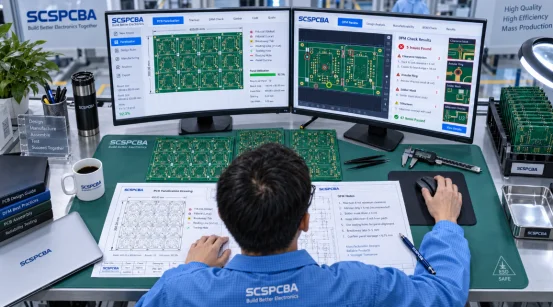
Early design for manufacturability catches cost before it becomes copper, solder, and rework. Give the assembler Gerber data, drill files, stack-up, fabrication notes, centroid data, assembly drawings, and a clean BOM.
A brief engineering review may reveal a pad mismatch or inaccessible test point. That small detail is far cheaper on a screen than on 500 finished boards.
Use the Simplest Proven PCB Structure
Choose the layer count, material, copper weight, impedance control, and via type that the circuit needs. Blind vias, buried vias, microvias, via-in-pad, tight tolerances, high-Tg laminates, and special finishes add process steps. Keep them where signal integrity, thermal load, density, or reliability calls for them. A revised stack-up may lower PCBA manufacturing cost while preserving the electrical design.
Panelize for Assembly and Handling
Good panelization fits the fabricator’s working panel, gives the SMT line stable rails and fiducials, and leaves room for depaneling. Poor panel use creates scrap. Weak board support can also cause printing or placement trouble. Confirm panel size, rail width, tooling holes, fiducials, breakaway method, and component clearance with the assembler before release.
How Does the BOM Support Cost Control?
The BOM often carries the largest share of product cost and the greatest schedule risk. Effective component sourcing starts with exact manufacturer part numbers, quantities, package details, approved alternates, and lifecycle status. A vague line such as 10 kΩ resistor leaves room for a wrong package, tolerance, or power rating.
Standardize Parts and Approve Alternates Early
Reuse common resistor and capacitor values across the design when electrical limits allow. Standard packages reduce feeder changes and inventory lines.
For costly or allocation-prone semiconductors, approve form-fit-function alternates during design review. Engineering must validate electrical ratings, footprint, firmware impact, thermal behavior, and compliance before purchasing uses a substitute. This is BOM cost reduction with a controlled record.
Match the Buying Model to Your Team
Turnkey purchasing gives one party responsibility for PCB, parts, assembly, and test. Consigned assembly gives you direct material control but adds incoming logistics and shortage handling.
A partial-turnkey model can suit projects with customer-controlled ICs and supplier-purchased passives. Compare handling effort, excess stock, minimum order quantities, traceability, and lead time alongside price.
Which Production Choices Reduce Assembly Expense?
SMT assembly cost responds to setup time, placement speed, soldering method, inspection, and yield. Stable files and realistic forecasts let the factory prepare feeders, stencils, fixtures, and test resources before the build. Late engineering changes restart part of that work and may strand purchased material.
Reduce Manual Touches and Changeovers
Use machine-placeable packages and consistent component orientation where the layout permits. Group product variants around a shared parts set. Replace hand-wired connections with suitable board connectors when the mechanical design supports the change. These choices reduce PCB assembly cost through shorter cycle time and fewer handling opportunities.
Tiny passives can save board area, though they may demand slower placement and tighter inspection. Smaller is not automatically cheaper.
Choose a Sensible Batch Size
A very small lot spreads setup and fixture charges across few boards. A very large lot can lock cash into inventory before the design is stable. Build enough prototypes to close design risks, run a pilot batch to confirm the process window, then release volume against demand. This staged approach supports PCBA cost reduction and limits obsolete stock after an engineering change.
Which Quality Controls Protect the Savings?
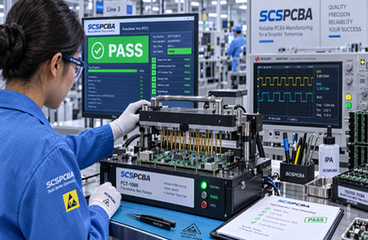
Inspection belongs in the cost plan because early detection costs less than late repair. A practical PCBA testing route follows the process: incoming quality control checks boards and parts; 3D SPI measures solder-paste volume and offset; AOI finds missing parts, polarity errors, bridges, and visible solder faults; X-ray examines hidden BGA, CSP, and QFN joints; ICT checks opens, shorts, and component values; FCT checks product behavior.
Match Test Coverage to Product Risk
Every board does not need every test. Package type, circuit function, production volume, field environment, and failure consequence should set the coverage. A simple control board may use SPI, AOI, and FCT. A dense BGA assembly may add X-ray.
Automotive, medical, industrial, and other high-reliability products may require stronger traceability, burn-in, environmental testing, or sector-specific records. Cutting a redundant test can save money. Cutting the only control for a hidden defect transfers cost to rework or the customer.
How Can Supplier Collaboration Keep Cost Predictable?
Share forecasts, approved alternates, acceptance criteria, test limits, and revision changes early. Ask for a quote that identifies material, fabrication, assembly, tooling, testing, and freight. Review first-pass yield, defect data, rework records, and corrective actions after each build. Numbers make the next cost discussion useful.
SCSPCBA links DFM and DFT review, BOM matching and alternate-part recommendations, SMT/DIP assembly, and tailored inspection within its turnkey PCBA assembly workflow. Gerber and BOM parsing supports faster quote review, while IQC, SPI, AOI, X-ray, ICT/FCT, and MES records connect material identity to production results. For a cost-sensitive project, that connection helps engineering find a pad, part, or process issue before the same defect repeats across a larger batch. It also gives purchasing a clearer basis for comparing recurring cost, tooling, testing, and supply risk.
To reduce PCBA cost, start with the files and decisions that shape yield. Use a manufacturable board, a controlled BOM, automation-friendly assembly, staged volumes, and test coverage tied to real failure modes. The resulting cost-effective PCB assembly plan protects product performance and keeps spending visible.
FAQ
Q1: What Usually Drives PCB Assembly Cost the Most?
A: Components often form the largest recurring cost. Board complexity, setup, manual work, test fixtures, inspection, rework, and freight can also change the final amount.
Q2: Can a DFM Review Reduce PCBA Cost?
A: Yes. It can find pad, spacing, panel, stack-up, stencil, and test-access issues before tooling or production begins.
Q3: Do Smaller Components Always Cost Less to Assemble?
A: No. Very small or fine-pitch packages may need tighter printing, slower placement, X-ray inspection, and more process control.
Q4: How Do You Reduce PCB Assembly Cost on a Small Batch?
A: Freeze the revision, standardize parts, combine compatible demand, keep test requirements clear, and separate one-time setup charges from recurring costs.
Q5: When Does Turnkey PCBA Assembly Make Financial Sense?
A: It fits teams that value one accountable workflow for PCB fabrication, component purchasing, assembly, testing, and delivery. Compare its full project cost with the labor, logistics, excess stock, and shortage risk of consigned material.






Leave a Reply
Want to join the discussion?Feel free to contribute!