OEM PCBA Manufacturing Checklist: What to Confirm Before Mass Production
You’ve chosen the manufacturer. Before signing for this OEM PCBA order, work through the build revision and materials, then the first article, test coverage, acceptance rules, and delivery responsibilities. Give every open issue a decision and an owner. These checks start after supplier selection and lead to approval of a particular batch.
On an AI hardware project, bring the acceptance firmware and operating setup into that release record. They need to stay identifiable while the files develop. A working sample is useful, but the batch release must say which configuration production will actually build and test.
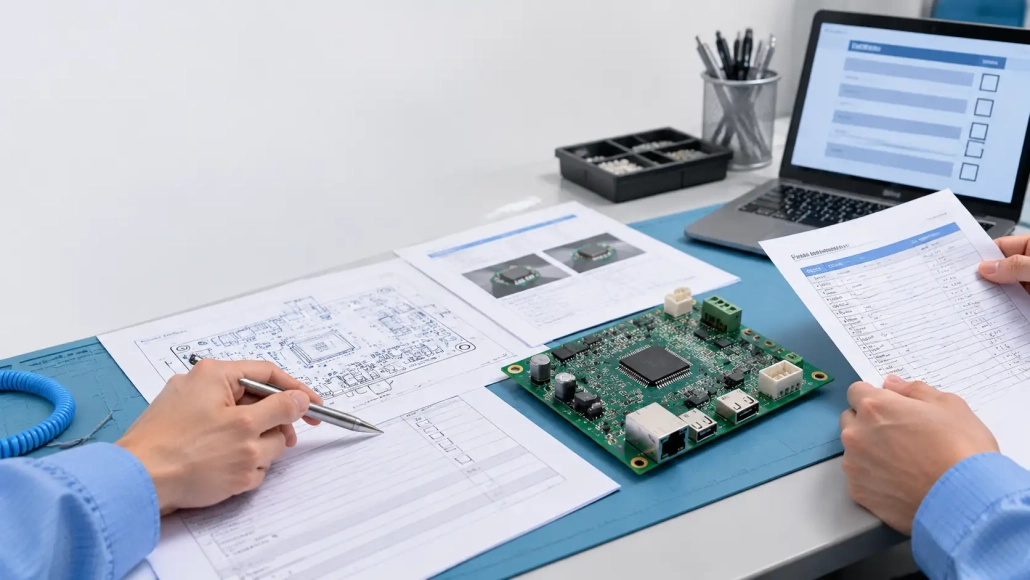
Establish one approved manufacturing package
For engineering review before volume production, begin with the board design files, BOM, and assembly drawings. NPI adds the instructions for doing the work and inspecting it, the equipment parameters, and the applicable quality plans. The handover contains a trial report showing the rectification list closed.
Use the manufacturing engineering review to put the release files in one index. Show the revision and approval for each file, with the person responsible beside it. If someone opens a different drawing during the review, stop and settle which revision the order uses. Resolve a BOM disagreement before starting the operation it affects.
For a board that needs programming, index the files and setup instructions. On a proposed edge AI device, specify the firmware release and acceptance setup. Have manufacturing acknowledge the package it will use, and save that acknowledgment.
Freeze the BOM and define how changes are approved
Keep the frozen drawings with the engineering change notice records in the handover. Process parameters and the inspection standards, work instructions, and quality plans from NPI become the baseline used for mass production. A departure outside the specified range is dealt with through the quality process.
Who will sign off a changed part, firmware file, or test limit? Settle that alongside approvals for board revisions and assembly instructions. Record the reason, affected revision, decision, and effective point of each proposed change. Give work already on the line a disposition too.
For example, an engineering team may propose a memory replacement after the pilot build. Ask it to identify the changed part and decide which acceptance checks must be repeated. Keep the substitution pending until the designated approver has accepted it. This is a suggested release practice, to be agreed for the project.
Confirm material readiness against the released BOM
For procurement, review the alternatives alongside component lifecycle and lead-time risks. Long-lead parts call for material preparation and inventory monitoring. Bring the material approvals and accepted tooling set into the production handover with the rest of the manufacturing documents.
Work through BOM sourcing and material control against the released list. Which parts are ready, in transit, or awaiting approval? Keep unresolved items beside the proposed build date, and have their owners explain the consequence for this order.
At SCSPCBA, BOM procurement is supported by original component sourcing, alternative recommendations, and supply chain management. The receiving checks compare parts with the BOM and examine the model, appearance, and packaging. Key materials also undergo sampling inspection.
With consigned parts, agree the receiving details and the person to call about a mismatch. Suppose a supplied reel disagrees with the approved list. Get its disposition in writing before authorizing that part of assembly, and leave the decision with the order. Production needs access to the answer when the material is issued.
Close first-article and pilot findings
FAI checks whether the first assembly meets the design requirements before mass production begins. Preparation of the placement program uses the BOM and coordinate files. Printing, placement, reflow, and inspection settings are established through process verification to define the production window.
The production-verification review follows the full route, looking at staffing and material circulation as well as inspection points. It also examines response to abnormalities and capture of production data. First-article confirmation is considered together with the controls that follow it through the run.
Review the actual pilot revision and results. For each open action, have the approver choose between a hold and proceeding under a stated condition. Record the decision and what will close it. Production needs an instruction it can act on.
Compare the planned batch to the pilot. Has a material, process, fixture, or firmware changed? Ask engineering which pilot findings still apply, and review the answer before signing. An action that remains open needs a disposition at release, even if the sample itself worked.
Agree test coverage and acceptance before the batch starts
Agree what will be tested, where, and what reports will be delivered. Use the applicable standards, product specifications, and customer requirements for the acceptance rules. In the board design, design for testability considers how the intended coverage and probe access can be provided.
AOI checks what is visible on the assembly. X-ray reaches hidden connections beneath packages such as BGA and QFN. ICT examines interconnections and component parameters; FCT exercises the defined board functions. A pass covers the items tested. The mission profile and reliability requirements determine whether further testing is needed.
Take the testing and inspection requirements and make a coverage matrix the test leads can review together. Put the method next to each critical function, then add the fixture or software revision, conditions, pass limit, recorded result, and response to failure. Where a check belongs to later OEM system testing, leave that handoff explicit.
For an AI application, offer engineering the interfaces and workload conditions you want exercised, and get the plan approved. Use the same discussion to settle reinspection after repair and approval of exceptions. Secondary inspection of repaired products forms part of SCSPCBA’s quality process.
Record the release decision and batch responsibilities
Use this table as the release meeting agenda and enter the names and document references in the project’s controlled record. Keep a missing decision on the open list until its owner resolves it. The suggested owners are starting points for agreement between the teams.
| Release item | Confirm before approval | Suggested owner |
| Build revision | BOM, drawings, programming and instructions reconciled | OEM engineering |
| Changes | Substitutions and deviations approved for this build | Design authority |
| Materials | Availability and incoming discrepancies resolved | Procurement / EMS |
| Pilot findings | First article reviewed; actions closed or disposition agreed | Engineering / quality |
| Test plan | Coverage, limits, fixtures and reports agreed | OEM / EMS test leads |
| Shipment | Lot identity, outgoing records and release authority agreed | Quality / logistics |
The traceability record can hold a board’s material history and process parameters alongside its firmware or configuration version, inspection findings, and test data. Its scope and retention depend on the product requirements. SCSPCBA’s MES connects serial numbers with material scanning, equipment data, and production status for tracing between materials and finished assemblies.
Work through the shipment with the person signing the lot release. Settle the accompanying records, identification, packaging, and accepted quantity, plus a contact and procedure for discrepancies. Reopen that agreement if the order is later split across deliveries.
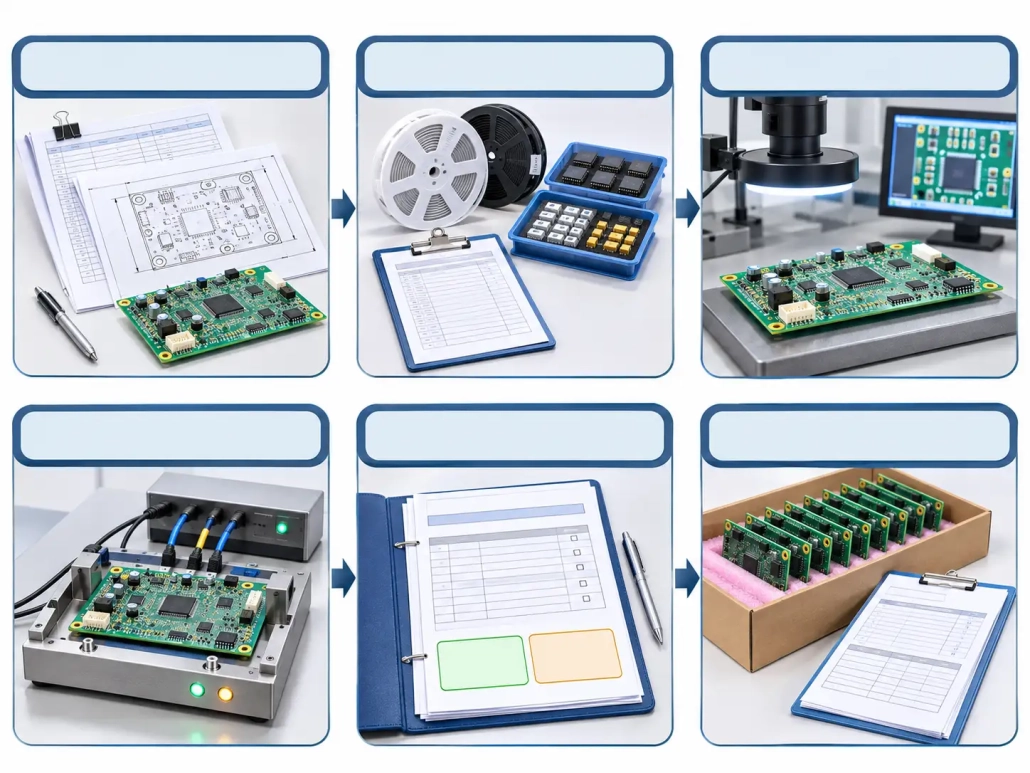
Make a hold decision specific enough to act on
Make a hold readable to the person planning the next operation. If a fixture is still awaiting acceptance, record who accepts it and the checks they need to see. Say whether material preparation can continue while that is pending. Attach the owner and due date to the same release record.
Sometimes the proposed decision is to allow only part of the build while an issue remains open. If that is approved, spell out the quantity or operation allowed, where work must stop, and who can authorize the next step. Put those limits in the instruction the manufacturing team receives.
Read the open-item list again at the release meeting. A closure should point to results for the current revision, available for the approver to examine. The decision can then be recorded for this batch with any conditions still attached to it.
Reconcile the quotation with the released build
SCSPCBA’s AI quotation tools include online PCB and PCBA quotes, intelligent BOM matching, AI Gerber recognition, automatic price calculation, order management, and production progress tracking. Engineering support includes DFM analysis, design review, manufacturing optimization, and prototype verification.
Lay the quotation beside the release package before the order is authorized. Start with the BOM and quantity, then work through inspection, programming, testing, and documentation. Put differences back to the project team to resolve. Keep a record of engineering acceptance as well as commercial confirmation; each needs its own approval.
Send SCSPCBA the controlled design files, BOM, quantities, pilot findings, and test requirements for a one-stop PCBA production review. Use the response to agree the manufacturing scope and identify the decisions to close before the batch is released.
FAQ
Is a successful prototype enough to release mass production?
Review production verification and the manufacturing baseline before release. The first article, process instructions, inspection and test requirements, and trial findings belong in that decision.
Who should approve an alternative component?
Agree the designated technical approver before the build. Record the proposed part, affected revision, verification decision, and approval before releasing that substitution to production.
What records should accompany a delivered batch?
Agree this in the order. Identify the required lot or board identity, inspection and functional results, configuration information, and any approved exceptions, together with the shipment-release authority.