Why Small-Batch PCBA Costs More Per Unit
Small-batch PCBA generally costs more per unit because setup, line changes, engineering preparation, and other batch expenses are spread across fewer boards. Component purchasing and the required inspection or testing add further costs. The useful question is which charges will repeat and which can be reused when the design moves into another build.
For an AI hardware prototype, keep the approved design and test scope visible while comparing prices. AI quotation can help you examine a proposed order, but the calculation still needs complete files and confirmed assumptions. A lower number is only useful when you know what it includes.
Start with the scope behind the unit price
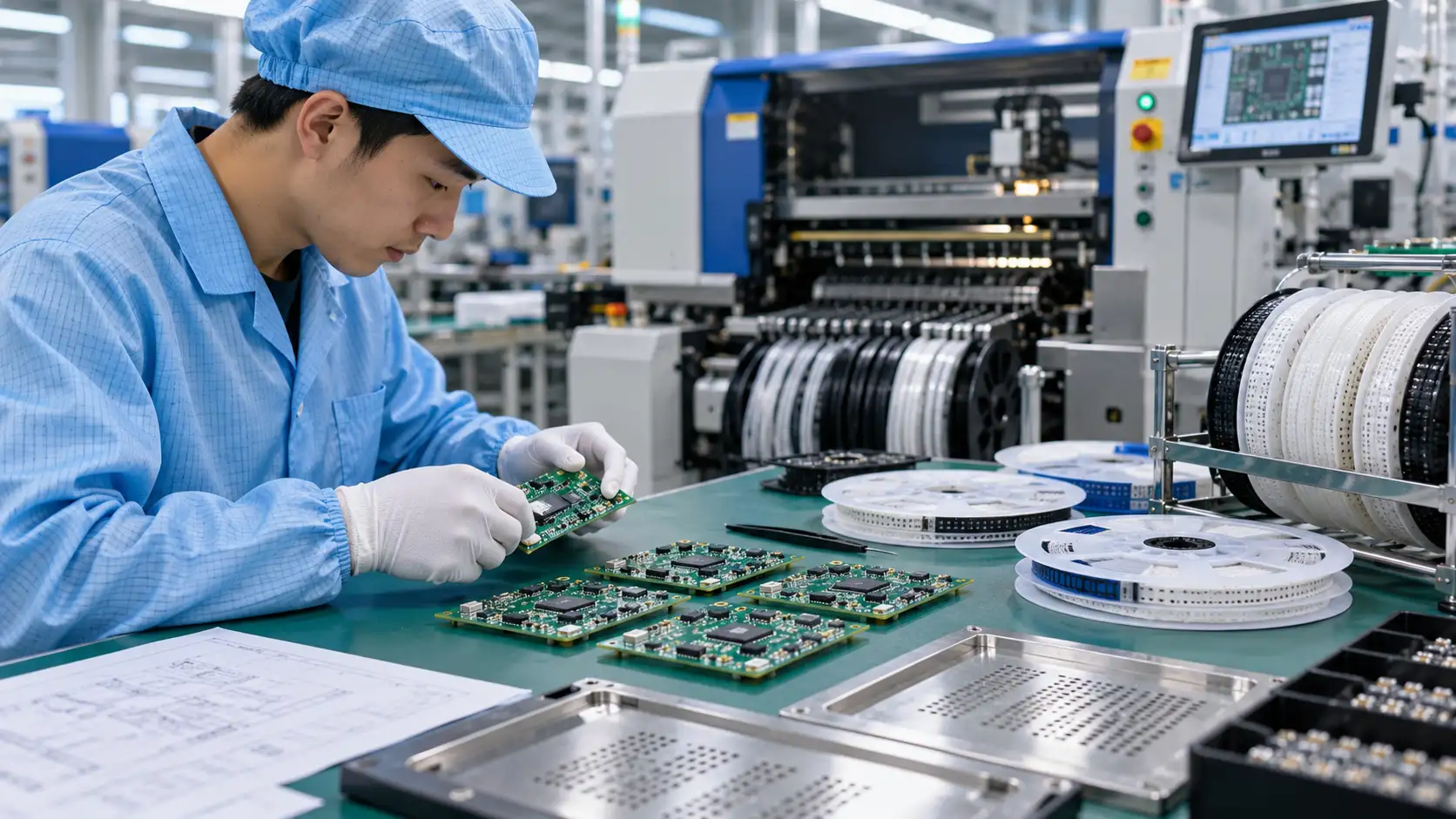
A turnkey PCBA quotation may cover component procurement, PCB fabrication, assembly, testing, and logistics. The customer supplies the Gerber files, BOM, coordinate files, and testing requirements. Confirm these boundaries before comparing one supplier or quantity with another.
PCBA cost can include bare-board materials, components, processing, inspection and protection, management and losses, and profit. Bare-board cost is affected by layer count, material, copper thickness, surface finish, hole density, circuit accuracy, and order volume.
Separate the quotation into batch charges and charges calculated per board. Ask whether engineering preparation, tooling, setup, programming, packaging, and freight are included or listed separately. Request the conditions under which each item would be charged again. This makes the first run and a later repeat order easier to discuss on the same basis.
Fewer boards carry each batch expense
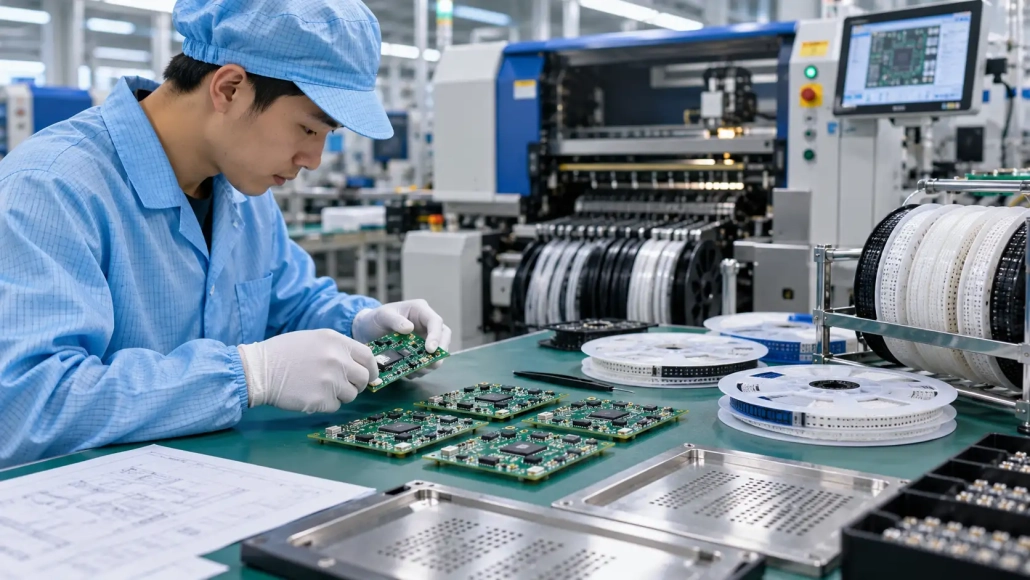
Processing costs can include SMT placement, precision-component work, manual insertion, wave soldering, equipment depreciation, utilities, and losses from line changes or equipment adjustment. Small-volume orders generally have higher processing prices per board because of their changeover costs.
A simple allocation explains part of the difference. Divide a batch charge by the number of boards it serves, then add the cost assigned to each board. Use the calculation as a question for the supplier, since a real quote may contain different cost groups and quantity-dependent rates.
Hypothetical example only. Assume a shared batch charge of $300 and an additional $20 per board. These invented figures illustrate arithmetic; they are not SCSPCBA prices, a market benchmark, or a quotation for any design.
| Order quantity | Batch charge per board | Illustrative total per board |
| 10 boards | $30 | $50 |
| 50 boards | $6 | $26 |
| 100 boards | $3 | $23 |
The example holds the $20 rate constant to isolate allocation. It does not predict the full saving from a larger order. Ask whether the supplier has changed component prices, fabrication costs, test methods, or other assumptions between quantity options. Keep those changes separate from the shared-charge calculation.
Review purchased material as well as fitted material
Component cost depends on sourcing, scarcity, procurement volume, package requirements, and market-price changes. BOM review also includes alternative-material confirmation, lifecycle management, and lead-time risk. Long-lead-time materials require preparation planning and inventory monitoring.
During component sourcing and BOM review, ask how much material must be purchased to assemble the requested quantity. For each affected line, request the fitted quantity, purchasing quantity, allowance, and unused balance. Confirm ownership and storage arrangements for anything left after the run.
For example, if a procurement option requires more parts than your first order consumes, ask whether the unused quantity is included in the current invoice or reserved for a later release. Treat that as a project-specific commercial question. Do not assume an online unit price includes every purchasing obligation.
For an AI prototype, identify any processor, memory, power, or interface parts that your engineers want held to an exact specification. Request approval before substitutions. Ask for separate explanations of availability, cost, and qualification requirements rather than accepting an alternative solely because it produces a lower BOM total.
Engineering preparation belongs in the comparison
DFM considers manufacturing-process limitations during design. A manufacturer may review submitted Gerber and manufacturing files and provide feedback. Problems found during design verification generally have lower modification costs; defects discovered after mass production starts may increase rework cost.
Use a DFM and assembly review to resolve file discrepancies before releasing the order. Ask which issues need your approval and whether the proposed correction changes the supplied design. Request confirmation of the final manufacturing revision. For repeat work, identify what can be reused and what must be checked again after a revision.
Keep the assembly scope explicit. A quote should identify the work requested for your actual component mix, including any manual insertion, special handling, or additional operations that apply. Ask whether customer-supplied material changes receiving responsibilities or the quoted work. Avoid comparing a complete build with an assembly-only figure.
Provide a clear release package. Include current files, approved part numbers, assembly requirements, programming instructions where needed, and the test specification. Identify any unresolved item as an open question. Ask the supplier to show its effect on price or release timing before you approve the order.
Choose testing around the purpose of the run
Inspection and special-process charges can include SPI, AOI, X-ray, ICT, functional testing, aging, cleaning, or protective processes as required by the product. The solution should specify the test scope, execution location, and report-delivery requirements.
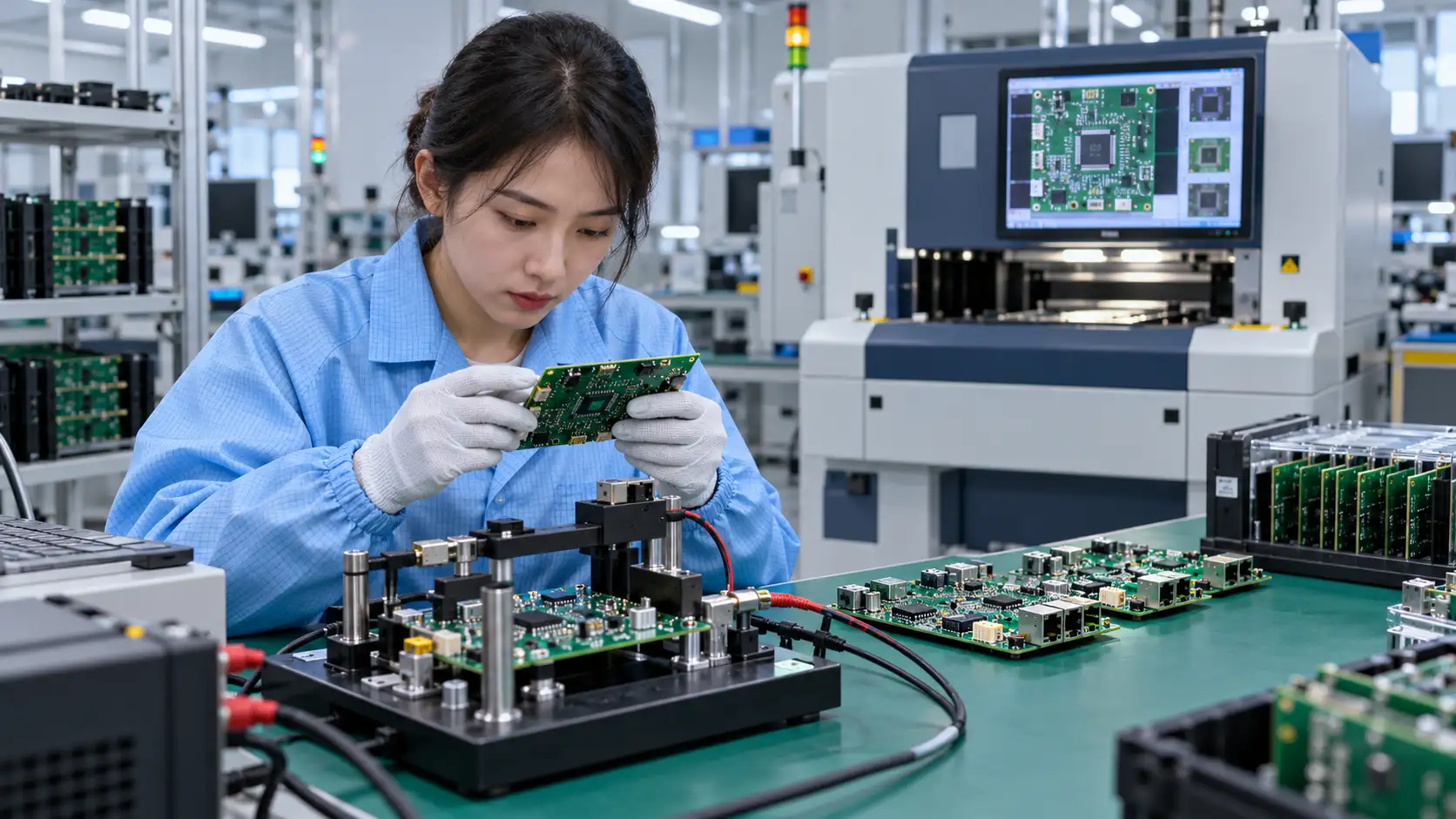
AOI checks visible surface defects. Hidden solder joints beneath BGA and QFN packages may need X-ray or other suitable methods. Functional testing checks whether the finished board performs its designed functions in defined use scenarios.
Ask how inspection and functional testing will be carried out for the small batch. If a fixture or test program is proposed, request its separate cost, ownership, maintenance arrangement, and reuse conditions. If another method is proposed, ask what it covers and which acceptance requirements still need verification.
For AI hardware, define the prototype question before reducing the test scope. Specify the firmware, interfaces, and workload conditions needed for your engineering decision. Keep excluded checks visible in the quotation. Let the engineering team approve a narrower plan rather than silently removing a cost line and assuming the same acceptance coverage.
Use AI quotation to compare controlled scenarios
SCSPCBA offers AI Gerber recognition, intelligent BOM matching, automatic price calculation, and online order management. Its PCBA scope includes prototype, low-volume, and mass-production assembly, with AI computing among its application areas.
Prepare quantity scenarios using the same design release, approved parts, process requirements, and tests. Record the files and assumptions used for each request. Ask which cost items changed with quantity, which are batch charges, and which remain provisional pending engineering or procurement review.
Compare the first build with an unchanged repeat build as a separate exercise. Ask about reuse of preparation work, tooling, and test assets. For a revised design, request confirmation of what must be repeated. Do not treat automatic price calculation as confirmation that every design change or purchasing exception has already been approved.
Save the accepted quotation with its scope and exclusions, then use it when reviewing the invoice and planning the next request. Ask for a fresh confirmation when the design, approved materials, quantity, or delivery requirements change. Keep preliminary calculations distinguishable from the price and scope actually accepted for production.
Reduce avoidable cost without losing the build objective
PCBA costs may be optimized through design changes, material standardization, capacity utilization, and reduced hidden losses while retaining necessary process and quality requirements. Material standardization can reduce part categories and inventory premiums. Suitable panelization can improve material utilization and reduce allocated processing cost per board.
Ask engineering to review common passive parts, the proposed panel arrangement, and any special process whose need is unclear. Preserve the released electrical, mechanical, and acceptance requirements during that review. Request a documented explanation of each proposed saving and the approval needed to implement it.
Choose the quantity around the next decision your team needs to make. Compare total spending, unused material, and the cost of any approved repeat work alongside unit price. A larger order should have a stated purpose in the development plan, with any design or demand uncertainty discussed before procurement is authorized.
Before approving a larger batch, write down how the additional boards will be used and whether the current revision is ready for that commitment. Include the proposed payment for unused materials in the comparison. Resolve any difference between the order quantity, purchasing quantity, and required delivered quantity with the supplier.
Send SCSPCBA your manufacturing files, BOM, required quantities, and test scope. Request a small-batch PCBA cost review to clarify AI quotation assumptions, batch charges, material purchasing, and the work that may be reusable on a later order.
Frequently asked questions
Does small-batch PCBA always cost more per board?
It generally does because of batch-cost allocation and purchasing conditions. Confirm the actual design, materials, and test scope before drawing a conclusion from two quoted unit prices.
Will ordering more always reduce total spending?
No. In the hypothetical example, the unit price falls while total spending rises. Compare the total order amount and your need for the additional boards before increasing quantity.
Can AI quotation remove setup costs?
Do not assume that it does. Ask which setup or preparation charges are included and when they apply again. Confirm exceptions with the supplier before releasing the order.