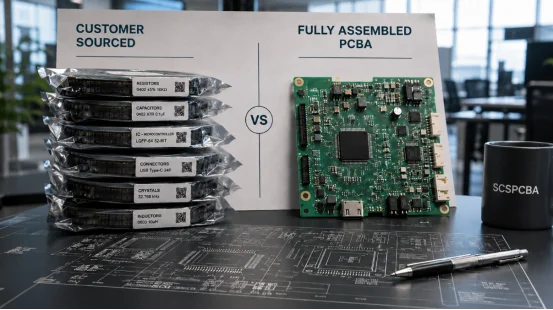
Turnkey vs. Consigned PCB Assembly: Reduce Procurement Risk
A low assembly price can look attractive until one reel is missing, a customer-owned IC arrives without a part label, or both parties order the same components. Choosing between turnkey vs consigned PCB assembly is mainly about assigning responsibility before purchasing begins.
The three common PCBA sourcing models are turnkey, consigned, and partial turnkey PCBA. Your best choice depends on the inventory you already own, the parts you need to control, and the amount of sourcing work your team can handle.
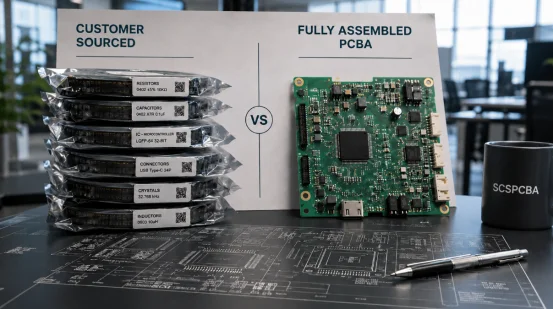
What Is the Difference Between Turnkey and Consigned PCB Assembly?
The key difference is simple. Who buys the components? That decision affects inventory ownership, incoming material checks, shortage handling, shipping, and day-to-day communication.
Turnkey PCB Assembly
With turnkey PCB assembly, you provide the manufacturing package and project requirements. The supplier handles component sourcing, PCB fabrication, assembly, inspection, testing, and any other agreed services.
This model gives you one main contact for the build. It often suits small engineering teams, new product projects, and buyers who do not want to coordinate a bare-board supplier, several component vendors, and an assembly factory separately.
Your quote package should still be complete. Gerber files, a BOM, pick-and-place data, assembly drawings, quantities, and test instructions help the supplier price the actual work. Missing data still causes questions, even in a full turnkey project.
Consigned PCB Assembly
In consigned PCB assembly, you purchase and ship the designated parts to the assembly provider. You keep direct control over approved manufacturers, specified part numbers, programmed devices, and customer-owned stock.
That control comes with extra work. You need to confirm that all customer-supplied components match the BOM revision, arrive in usable packaging, and cover the required build quantity. One missing connector can hold up an otherwise complete SMT kit. It happens more often than buyers expect.
Partial Turnkey PCBA
Partial turnkey PCBA divides purchasing responsibility. You supply selected parts, while the assembly provider purchases the remaining BOM lines.
This model works well when you already own critical ICs or must control a few specified components. The provider can source standard resistors, capacitors, and other agreed parts. You retain control where it matters without managing every line on the BOM.
How Do the Three Sourcing Models Divide Responsibility?
A responsibility table makes turnkey vs consigned PCB assembly easier to compare. Still, the final quotation and approved BOM should define the actual arrangement. Labels alone are not enough.
| Responsibility | Turnkey | Partial Turnkey | Consigned |
|---|---|---|---|
| Component purchasing | Assembly provider | Shared by BOM line | Customer |
| Inventory control | Provider for sourced parts | Shared | Customer |
| Supplied-material list | Usually not needed | Required for supplied parts | Required |
| Shortage response | Provider for sourced parts | Assigned by BOM line | Customer |
| Material shipping | Provider | Shared | Customer |
| Main communication load | More centralized | Moderate | Higher |
Turnkey PCB assembly usually creates a more centralized workflow. Consigned PCB assembly gives you closer material control, but your team must track purchasing, shipment status, shortages, and unused stock.
Incoming inspection does not erase those responsibility boundaries. A factory may check the component model, appearance, package condition, and BOM match when material arrives. That check cannot correct an outdated BOM or identify an unmarked bag of loose parts.
Which PCBA Sourcing Model Fits Your Project?
Each option solves a different purchasing problem. Start with your actual stock and internal workload, then look at control requirements.
Choose Turnkey When You Want One Main Contact
Turnkey suits projects where you want the supplier to coordinate PCB production, BOM procurement, assembly, and agreed testing. It can reduce separate handoffs and the emails that come with them.
It is also practical when your team has strong product engineering skills but limited time for component purchasing. You still approve the technical requirements. The supplier manages the agreed sourcing tasks through a one-stop PCBA service.
Choose Consigned When You Control the Full Kit
Choose consigned work when you already own the required inventory or have purchasing rules that require direct control over every part. Your team should be ready to manage packing, shipment timing, replenishment, and material records.
Consignment can also suit programmed components or project-specific parts that cannot be purchased as ordinary BOM items. Before shipping, check whether reels, trays, tubes, or cut tape meet the assembly provider’s handling requirements.
Choose Partial Turnkey When Only Some Parts Need Control
Partial turnkey PCBA often fits the middle ground. You might supply an allocated processor and a programmed memory device while the supplier purchases common passive parts.
The split must be exact. Mark every purchasable BOM line as Customer or PCBA Provider. Do not leave blank cells and hope the buyer knows what they mean.
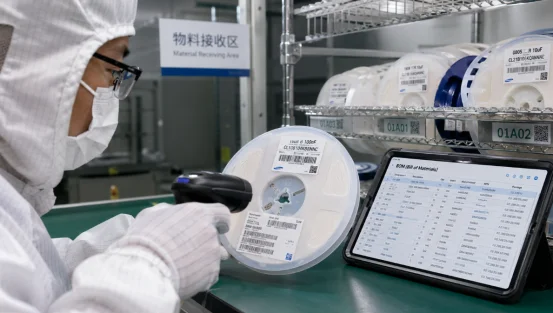
What Should a Supplied-by-Customer List Include?
A highlighted BOM row is easy to miss. A separate supplied-by-customer field gives purchasing, receiving, and production teams the same information.
For each customer-supplied component, include:
- BOM line and reference designators
- Manufacturer and exact MPN
- Description, value, package, and quantity per board
- Build quantity and total quantity shipped
- Reel, tray, tube, or cut-tape format
- Programming status and firmware revision, when applicable
- Special handling requirements
- Planned shipping date and tracking number
- Owner for shortages and alternative approvals
- Instructions for unused material
The packing list should repeat the project reference, MPN, quantity, package type, and carton number. If five boxes arrive, identify what is inside each box. Receiving staff should not have to open every carton to find one reel.
How Can Partial Turnkey Prevent Duplicate Purchasing?
Shared procurement works only when each BOM line has one purchasing owner. This is the working rule behind partial turnkey PCBA.
Freeze the BOM revision used for quotation. Assign each line to the customer or the PCBA provider. Mark DNP and DNI parts separately, record approved alternatives, and confirm shipment timing before purchase orders are released.
Keep one exception list for shortages, damaged material, substitutions, and quantity changes. A short shared list may look almost too basic, but it prevents two buyers from ordering the same expensive IC while neither buys the missing connector.
What Should You Confirm Before Requesting a Quote?
Before requesting pricing, confirm the sourcing model, assembly quantity, material ownership, testing scope, and response process for shortages. For consigned or hybrid projects, attach the supplied-material schedule and packing requirements.
Revision control matters too. Gerber files, the BOM, placement data, assembly drawings, and programming instructions should describe the same build. The SCSPCBA website supports online Gerber and BOM submission, but clean source data still decides how accurately a project can be reviewed.
How Can One Manufacturing Workflow Reduce Sourcing Gaps?
A sourcing model works better when receiving checks and production records follow the same responsibility plan. SCSPCBA supports turnkey, consigned, and partial-turnkey projects within its PCB, PCBA, and EMS service scope.
Its process can connect BOM procurement, PCB fabrication, SMT and DIP assembly, testing, and box build work. Incoming materials may pass component-model verification, visual checks, packaging-integrity inspection, BOM comparison, and sampling checks for key materials. This is relevant to customer-supplied components because receiving discrepancies can be recorded before those parts enter production.
You can submit Gerber data, the current BOM, quantities, sourcing allocation, and applicable test requirements through the One-Stop PCBA Service. The quotation should then state which party owns each purchasing and material task.
FAQ
Q1: What is the main difference between turnkey and consigned PCB assembly?
A: Turnkey PCB assembly places agreed component purchasing with the assembly provider. Consigned PCB assembly requires you to supply the designated materials and manage their readiness.
Q2: What is partial turnkey PCBA?
A: Partial turnkey PCBA means you supply selected BOM items while the assembly provider sources the rest.
Q3: Which model works when you already own critical components?
A: Consigned or partial-turnkey assembly may fit. The choice depends on whether you want to supply the full kit or only selected parts.
Q4: Who handles shortages in a partial-turnkey project?
A: The party assigned to purchase the affected BOM line should lead the response. Record this assignment before purchasing starts.
Q5: How do you avoid buying the same component twice?
A: Use one controlled BOM revision, assign one purchasing owner to every line, and confirm the allocation before either party releases orders.






Leave a Reply
Want to join the discussion?Feel free to contribute!