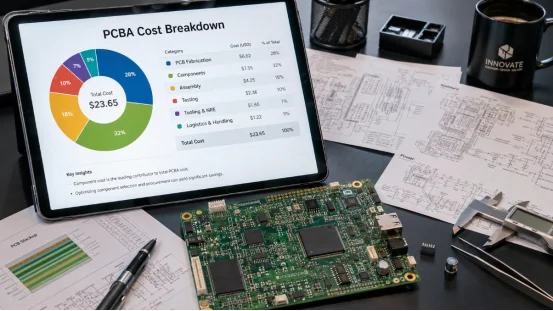
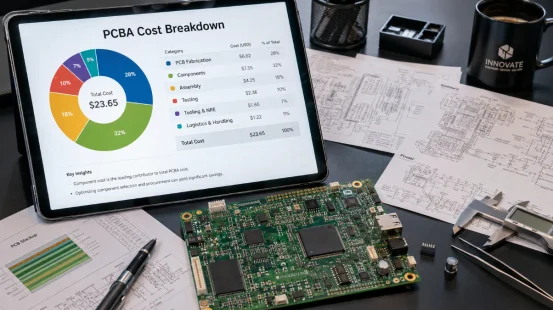
PCBA Cost Breakdown: How to Compare PCB Assembly Quotes
You may receive three quotes for the same board and see three very different totals. That does not mean one supplier is expensive or another is a bargain. A fair PCB assembly quote comparison starts by checking whether each supplier priced the same revision, quantity, materials, sourcing duty, test scope, and delivery point.
To compare PCBA quotes well, compare responsibility before price. A low number loses its appeal when test fixtures, substitute approvals, freight, or unused component stock appear later.
Why Do PCBA Quotes Vary?
The main reason why PCBA quotes vary is simple: suppliers may price different versions of the same job. One may include bare boards, parts, assembly, and functional testing. Another may include placement only. The totals look comparable, but they are not.
Different Technical Assumptions
Check the PCB material, layer count, finished thickness, copper weight, surface finish, impedance requirements, via structure, panel format, and electrical test. A change from standard FR-4 to high-Tg or high-frequency material can alter fabrication work. Double-sided assembly, BGA packages, fine-pitch parts, selective soldering, and mixed SMT/THT production also change the process route.
Different BOM and Service Scope
Every supplier needs the same BOM revision, manufacturer part numbers, quantities, reference designators, and approved alternatives. BOM and supply chain management also covers lifecycle checks, shortage risks, incoming inspection, and traceability. A tiny resistor reel can hold up a whole build. It sounds minor, but it happens.
How Should You Normalize Quotes Before Comparing Them?
Before asking how to compare PCBA quotes, set one RFQ baseline. Without it, even a detailed spreadsheet can mislead you.
Match the Files, Quantity, and Revision
Send every supplier the same Gerber files, NC drill data, BOM, pick-and-place file, assembly drawing, test instructions, firmware requirements, and packaging notes. State both revisions on the RFQ. Use the same prototype, pilot, or production quantity, plus the same shipment schedule.
Match the Test and Delivery Basis
Define whether the quote includes SPI, AOI, X-ray, ICT, FCT, burn-in, programming, and final inspection. “Testing included” is too vague. Confirm test coverage, fixture ownership, pass criteria, report format, and failed-board handling. Apply the same rule to the ship-to address, packaging, Incoterm, and freight.
What Should a PCBA Cost Breakdown Include?
A useful PCBA cost breakdown separates each cost basket so you can spot exclusions and compare like with like. It should show which fees repeat.
Compare Six Cost Baskets
Review PCB fabrication, components, assembly, NRE and tooling, testing, and packaging or logistics. PCB assembly cost can rise with placement count, unique part count, board sides, hand soldering, through-hole work, fine-pitch packages, and special cleaning or coating.
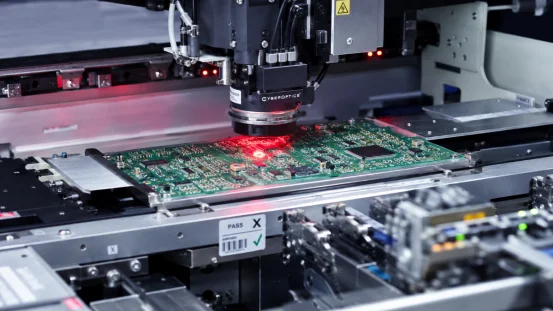
Testing deserves its own line. AOI checks placement, polarity, and visible solder defects. X-ray examines hidden joints under BGA and QFN packages. ICT checks electrical connectivity and component values, while FCT powers the assembly and checks real functions. Ask which testing and inspection steps are included. Do not assume all four are standard.
Separate One-Time and Recurring Fees
NRE may cover engineering review, machine programming, an SMT stencil, test software, and ICT or FCT fixtures. Ask whether each charge is one-time, who owns the tooling, and whether it can support repeat orders. Calculate first-build and repeat-order cost separately. That is the practical value of a PCB assembly cost breakdown.
How Do Sourcing Models Change the Comparison?
A turnkey PCB assembly quote carries more supplier responsibility than a consigned assembly quote. Comparing only the totals hides the buyer-side work.
Full Turnkey, Partial Turnkey, and Consigned
In full turnkey, the supplier can handle PCB fabrication, component sourcing, assembly, inspection, testing, and packaging. Partial turnkey splits component responsibility. In consigned production, you provide most or all materials.
A full turnkey vs partial turnkey vs consigned PCBA comparison should include purchasing time, inbound freight, kitting, shortage replacement, inventory control, and excess stock. To compare turnkey and consigned PCB assembly quotes fairly, add those buyer-side costs to the consigned option.
Check Material and Change Rules
Ask who approves substitute parts, who owns unused materials, and what happens when a component becomes unavailable. Written approval should come before an alternative part is purchased or fitted. Confirm what triggers a requote, such as a BOM revision, PCB change, new test method, quantity, or delivery point.
Which Hidden Costs and Risks Need a Second Look?
Hidden costs in PCBA quotes usually come from missing definitions rather than secret fees. A quote can be honest and still be incomplete.
Review Exclusions and Risk Signals
Look again when the quote has no revision, one combined total, only “testing,” or blank freight and material terms. Also check rework, retest, scrap, programming, moisture-sensitive packaging, export cartons, and fixture maintenance.
Lead time needs a start point. Does the clock begin after the purchase order, payment, final file approval, DFM closure, component availability, or receipt of consigned materials? That one sentence can change a launch plan.
How Can You Use a PCBA Quotation Checklist?
A PCBA quote comparison checklist turns a stack of PDFs into a decision record. It helps purchasing and engineering review the same facts.
Your PCBA quotation checklist should cover the quoted revision, quantity, PCB specifications, BOM responsibility, approved alternatives, assembly process, NRE, fixtures, test scope, packaging, Incoterm, lead-time start point, excess materials, and change-control terms. Keep the checklist with the approved RFQ and final as-built BOM.
What Does a Quote-Ready Manufacturing Partner Add?
Once the quote basis is clean, supplier capability becomes easier to judge. A suitable partner should connect fabrication, sourcing, assembly, inspection, and final delivery without blurring the cost boundaries.
SCSPCBA supports a one-stop PCBA service covering PCB fabrication, BOM and component sourcing, SMT, DIP and mixed assembly, plus AOI, X-ray, ICT, FCT, aging tests, packaging, and box build work. Its documented process also includes DFM review, incoming inspection, first-article checks, and material traceability.
These capabilities help separate costs for board fabrication, procurement, assembly, testing, and final integration. You still need a clear RFQ, of course. The process works best when you provide the exact files, quantity, test requirements, and delivery location before you request a PCBA quote.
FAQ
Q1: What Is Included in a PCBA Quote?
A: It may include PCB fabrication, components, assembly, NRE, tooling, testing, packaging, and logistics. Confirm every included and excluded item.
Q2: Why Is the Lowest PCB Assembly Cost Not Always Best?
A: A lower total may exclude testing, fixtures, freight, sourcing work, or material risk. Compare the complete scope.
Q3: What Is the Best Way to Compare PCBA Quotes?
A: Use the same revision, quantity, specifications, BOM, test plan, sourcing model, and delivery basis for every supplier.
Q4: What Are Common Hidden Costs in PCBA Quotes?
A: Common items include NRE, stencils, fixtures, programming, component overage, rework, retesting, packaging, and freight.
Q5: What Should a PCBA Quotation Checklist Include?
A: Include technical inputs, sourcing responsibility, assembly steps, test coverage, one-time fees, logistics, material ownership, and change-control rules.






Leave a Reply
Want to join the discussion?Feel free to contribute!