What Files Do You Need for an Accurate PCBA Quote?
A fast price means little if it changes after engineering review. The files needed for a PCBA quote must describe the board, parts, assembly work, and test scope clearly enough for real costing. For a basic PCBA quote, send Gerber files, a BOM file, order quantity, and your chosen sourcing model. Add placement data, drawings, compliance rules, and test details when they apply. These documents required for PCB assembly help the supplier prepare an accurate PCBA quote rather than a rough number built on guesses.
What Goes into a Reliable PCBA Quote?
A practical PCBA quote checklist separates RFQ essentials from production data. Gerber and BOM data support initial PCBA pricing. Placement, inspection, and programming details prevent a quote revision later. That distinction sounds small, but it saves plenty of email.
Quote Essentials
Your PCBA quotation requirements should state the assembly quantity, PCB specifications, component sourcing responsibility, and delivery schedule. Mention whether the job is a prototype PCBA, low-volume PCBA, or mass production PCBA. A useful PCB assembly quote also identifies setup cost, stencil cost, unit price, and any non-recurring engineering cost, often called NRE cost.
Which PCB Manufacturing Files Should You Send?
The PCB comes before the assembly. Your PCB fabrication files let the supplier calculate board cost, panel use, tooling, and process steps. Send one controlled revision, not a folder with three nearly identical exports.
Gerber and Drill Data
A Gerber file package normally includes copper layers, solder mask, silkscreen, paste layers, and board outline. Gerber files describe each PCB layer, while drill files define plated and non-plated holes. Include the NC drill file and a PCB fabrication drawing when the design has special notes.
The drawing should state PCB material, PCB layer count, board thickness, copper thickness, surface finish, controlled impedance, minimum trace and space, and PCB stack-up. Flag blind and buried vias, HDI PCB features, and panelization requirements. Missing details can change the PCB assembly cost after CAM review.
Bill of Materials
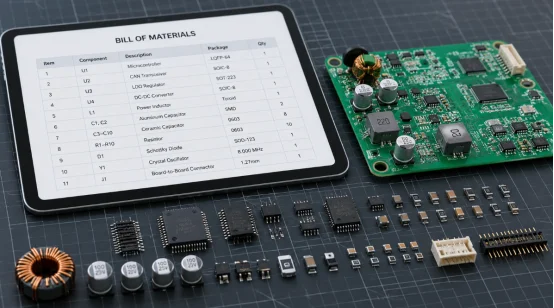
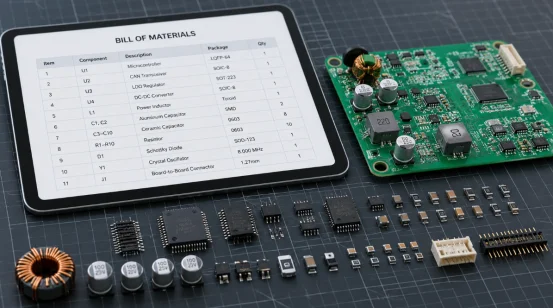
The Bill of Materials drives component procurement. A clean PCBA BOM needs a manufacturer part number, or MPN, for each item plus the reference designator, component description, component value, component package, and quantity per board. Add the approved manufacturer when substitutions need tight control.
Mark DNP components and DNI components plainly. Identify customer-supplied components and approved alternative components. If substitute components are allowed, write the approval rule rather than leaving a buyer to guess. BOM verification catches mismatched quantities and duplicate references. BOM optimization may find parts with better component availability or shorter component lead time, but electrical and mechanical fit still need engineering approval.
Do You Need Placement and Assembly Data for a Quote?
A simple estimate may start without placement data. Complex, double-sided, or mixed builds benefit from it early because labor and machine time become easier to price. Formal production needs a common source for location and orientation.
Pick-and-Place Data
The pick and place file, also called a centroid file or component placement file, lists each part’s X and Y coordinates, component rotation, and top or bottom side. The pick-and-place machine uses this PCB assembly data during SMT placement. Check the origin, units, and bottom-side rotation before release. A mirrored connector can ruin an otherwise tidy job.
Drawings and Special Notes
An assembly drawing shows component orientation, component polarity, labels, and no-fit positions. It also helps staff distinguish surface mount components from through-hole components during mixed technology assembly. Add a schematic diagram when engineers need circuit context for troubleshooting or test development.
State whether the board needs SMT assembly, DIP assembly, selective soldering, cleaning, conformal coating, or hand work. Programming files and firmware files should carry clear revision names. Test files can include test-point data, fixture information, and expected results.
Which Commercial Details Affect PCBA Pricing?
Two identical boards can receive different prices when quantity, sourcing, test scope, or delivery changes. Give the supplier enough commercial detail to cost the work you actually plan to buy.
Volume and Supply Model
Order quantity and production volume affect material breaks, machine setup, and PCBA lead time. Choose turnkey PCBA or turnkey PCB assembly when one supplier buys the parts. Partial turnkey PCBA splits purchasing responsibility. Consigned PCB assembly uses customer-supplied materials, so your RFQ should list incoming quantities, packaging, and arrival dates.
An expedited PCBA service may shorten the schedule, though component shortages still set hard limits. Ask how cut tape, minimum purchase quantities, and unused parts affect component cost. One-stop PCBA service can reduce separate handoffs for PCB production, parts, assembly, and testing.
Testing, Programming, and Quality
PCBA testing requirements influence labor, equipment time, test fixture cost, and acceptance. State your quality requirements and acceptance criteria. Also note IPC-A-610 class, RoHS compliance, REACH compliance, and PCBA traceability needs.
Available checks may include SPI inspection, AOI inspection, and X-ray inspection for BGA, CSP, or QFN joints. In-circuit testing, or ICT testing, checks connectivity and component values. Functional testing, also called FCT testing, runs the board under defined conditions. You may also request firmware programming, burn-in testing, first article inspection, or a first article test. Send a test program when available and define who owns test fixture development.
How Should You Prepare a Production-Ready PCBA RFQ?
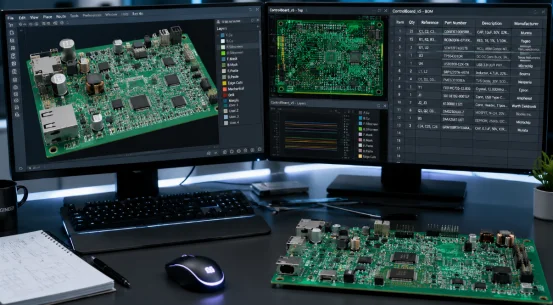
Place the current Gerber files, BOM, pick and place file, assembly drawing, and test instructions in one revision-controlled package. Add requested quantities, sourcing model, delivery target, and contact details. This short PCBA quotation process gives purchasing and engineering the same baseline.
Ask for DFM analysis before release. Design for manufacturability checks footprints, spacing, panel layout, drill limits, and assembly access. A manufacturer can then explain cost changes instead of quietly padding risk into the price. Use the final package to request a PCBA quote and archive that exact revision with the purchase order.
How Does SCSPCBA Handle PCBA Quote Data?
SCSPCBA connects online Gerber parsing and BOM recognition with PCB production, global component sourcing, SMT, DIP, testing, and box build work. Its service model covers turnkey, partial turnkey, and consigned projects from prototypes to mass production. Engineering review includes DFM feedback, BOM checks, alternative part recommendations, and manufacturing feasibility work.
On the production side, the available controls include incoming material inspection, SPI, AOI, X-ray, ICT, FCT, aging tests, and traceable shop-floor records. Support for fine-pitch placement, BGA, QFN, and 0201 components matters when a quote must reflect the real process rather than a generic placement rate. Customers can also include programming, cable harnesses, enclosure assembly, labeling, final testing, and packaging in the same project scope.
FAQ
Q1: Can You Get a PCBA Quote with Only Gerber Files?
A: You may receive a bare-board estimate, but component and assembly pricing needs a BOM and order quantity. Placement and test details make the result more reliable.
Q2: Is a Pick-and-Place File Required for a Quote?
A: Basic quotes may not require it. Production normally does, and early submission helps price double-sided or high-placement-count boards.
Q3: What Format Should a BOM File Use?
A: Excel or CSV works well. Keep one row per part and include MPN, references, quantity, package, sourcing status, and substitution rules.
Q4: Why Did the Price Change after Engineering Review?
A: Common causes include missing PCB details, obsolete parts, conflicting revisions, special soldering, test fixtures, programming work, or a revised delivery target.
Q5: What Should You Check before Sending the RFQ?
A: Confirm that Gerber, BOM, placement, and drawing revisions match. Then check quantity, sourcing responsibility, compliance, testing, and delivery. That final pass is the simplest way to submit the files needed for a PCBA quote.






Leave a Reply
Want to join the discussion?Feel free to contribute!