PCB vs PCBA: Key Differences in Design, Assembly & Cost
You may have a finished PCB layout, a clean set of Gerber files, and a quote that looks surprisingly low. Then someone asks for the BOM file and assembly data. That is where PCB vs PCBA starts to matter. A printed circuit board is the bare platform. A printed circuit board assembly carries mounted parts and can perform the job you designed it to do. The difference between PCB and PCBA affects your files, budget, lead time, testing plan, and choice of supplier.
What Is a PCB?
A PCB holds electronic components. It routes signals via copper traces. Before assembly, it lacks mounted resistors, capacitors, ICs, or connectors. You might order PCB fabrication. Then, your crew can source parts elsewhere.
Structure, Materials, and Design
A standard FR-4 PCB uses a nonconductive substrate. It has copper layers, pads, vias, solder mask, and silkscreen. Designs might need a multilayer PCB, HDI PCB, or flexible PCB. Others use a rigid-flex PCB, aluminum PCB, or high-frequency PCB. Material, board thickness, layer count, and copper weight alter PCB cost. Minimum trace spacing, surface finish, and PCB stack-up matter too.
The design bundle contains schematic design, PCB layout, Gerber files, and drill data. A fabricator uses these to build boards. Next, they run bare board electrical testing. Currently, the board offers mechanical support. It gives electrical paths too. Yet, it mostly cannot operate the device.
What Is a PCBA?
A PCBA is a PCB after component sourcing, component placement, soldering, inspection, and testing. The full term is printed circuit board assembly. This functional PCB assembly may manage power, read a sensor, drive a motor, or process data, depending on your circuit.
Assembly Files and Production Data
PCBA manufacturing needs more than Gerber files. You normally submit a Bill of Materials, often called a BOM file, plus a pick and place file or Centroid file. An assembly drawing identifies polarity, reference designators, special handling, and parts that should not be fitted. Firmware and test instructions may also be required.
Small file mistakes can become expensive physical mistakes. A reversed diode in an assembly drawing or an outdated part number in the BOM may stop an entire lot, even when the bare boards are perfect.
Main Assembly Methods
SMT assembly uses surface mount technology to place surface mount components onto solder paste before reflow soldering. Through-hole assembly places through-hole components into drilled holes. DIP assembly may use manual or automatic insertion followed by wave soldering. Selective soldering suits mixed technology assembly when only certain joints need focused heat.
Fine-pitch packages need tighter process control. Production equipment may place 0201 parts and handle BGA or QFN packages, while SPI inspection checks solder paste before placement. For projects that need sourcing, assembly, and testing from one supplier,PCB assembly services can reduce handoffs.
What Is the Difference between PCB and PCBA?
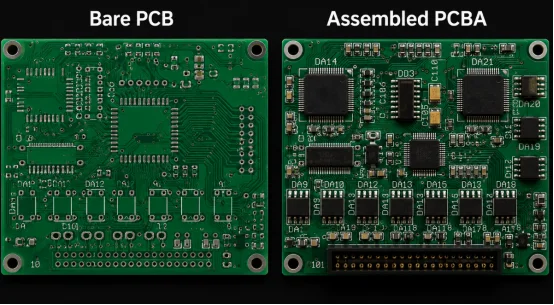
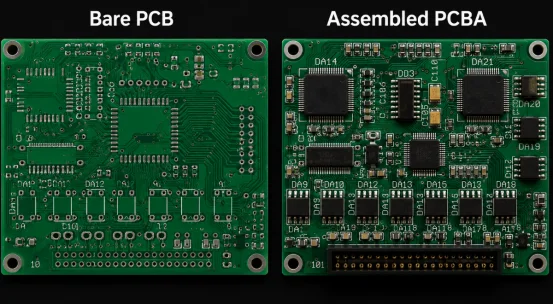
The simplest PCB vs PCBA comparison is production stage and function. A bare PCB vs assembled PCB photo makes that obvious, though the commercial differences go much further.
Design, Assembly, and Function
PCB design defines the physical board, copper connections, materials, and manufacturing limits. The PCB manufacturing process turns that data into a bare board through imaging, etching, drilling, plating, solder mask application, and finishing. The PCB assembly process adds parts through SMT assembly, through-hole assembly, or both.
A PCB carries the circuit pattern. A PCBA contains the working circuit. That distinction also changes what you buy. A PCB manufacturer delivers fabricated boards. A PCBA manufacturer manages parts, soldering, inspection, and the agreed test scope.
Cost and Lead Time
PCB cost depends heavily on board area, layer count, materials, copper weight, hole size, and finish. PCBA cost includes the board plus component cost, procurement work, stencil preparation, machine setup, soldering, inspection, testing, and possible rework. For many products, parts cost more than the bare board.
PCB assembly cost also changes with placement count, fine-pitch packages, double-sided assembly, test fixtures, and order volume. A PCB prototype or PCBA prototype may have a higher unit price because setup work is spread across fewer boards. Low-volume PCB assembly offers flexibility for design checks. Mass production PCB assembly rewards stable files and repeatable testing. A useful PCB assembly quote should state what testing and sourcing work it includes.
How Are PCB and PCBA Quality Checked?
PCB and PCBA inspections look for different failure modes. A bare board test finds opens and shorts in the copper network. PCBA quality control must also catch placement, solder, component, and functional faults.
Inspection and Testing Stages
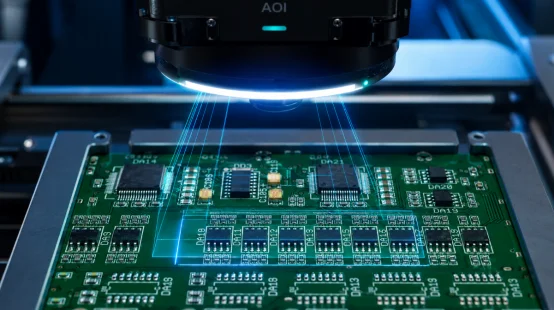
Solder paste inspection measures paste position and volume. SPI inspection can catch bridging risk before components enter the reflow oven. Automated optical inspection, commonly called AOI inspection, checks missing parts, polarity, alignment, and visible solder joints. X-ray inspection examines hidden joints under BGA, CSP, and QFN packages.
In-circuit testing, or ICT testing, checks connectivity, component values, and circuit integrity. Functional testing, also called FCT testing, runs the assembly under defined operating conditions. Burn-in testing can expose early failures under controlled load and temperature. These tests do different jobs, so your test plan should follow product risk rather than habit.
Which Service Fits Your Project?
Choose PCB fabrication when you only need bare boards. Choose consigned PCB assembly when you supply the parts. Partial turnkey PCB assembly splits purchasing responsibility, while turnkey PCBA places PCB production, procurement, assembly, and testing with one supplier. A one-stop PCB assembly arrangement may also include programming, cable harness installation, enclosure assembly, final functional testing, and packaging.
Send complete files early and request DFM analysis and DFA analysis. Design for manufacturability checks whether the bare board can be produced reliably. Design for assembly reviews spacing, footprints, polarity, panel layout, tooling holes, and soldering access. Good feedback here is cheaper than sorting faulty boards after production.
How Can SCSPCBA Support PCB and PCBA Projects?
The difference between a solid PCB and a reliable PCBA is often process control. SCSPCBA links PCB manufacturing with global component sourcing. It handles SMT and DIP production, testing, and box build tasks within one chain.
Its capacity spans prototypes to mass production. This includes multilayer, HDI, high-frequency, and flexible boards. They also build rigid-flex, aluminum, and heavy-copper boards.
Assembly support covers fine-pitch parts, BGA, QFN, and 0201 components. It features mixed processes, plus turnkey and consigned models.
Quality checks start at material and BOM verification. Next, teams use SPI, AOI, X-ray, ICT, and FCT. Aging tests and traceable records follow. Engineering brings design review, DFM feedback, prototype verification, BOM alternatives, and product integration. This helps when you need working hardware, not just bare boards.
FAQ
Q1: Can a PCB Work without Components?
A plain PCB guides power during tests. However, it won’t do its real job yet. You must attach electronic components first.
Q2: Is a Motherboard a PCB or a PCBA?
A complete motherboard acts as a PCBA. This happens because it holds ICs, sockets, capacitors, and connectors. Those parts sit directly on the PCB.
Q3: What Files Are Needed for PCBA Manufacturing?
You generally require Gerber files and a BOM file. A pick and place file plus an assembly drawing are vital too. Just include firmware or test specs if necessary.
Q4: Why Is PCBA More Expensive than PCB?
PCBA covers the blank board plus all electronic components. It also involves sourcing, assembly, soldering, testing, and rework risks. Tricky packages or small runs push costs up.
Q5: What Is the Main Difference between PCB Fabrication and PCB Assembly?
PCB fabrication creates the blank board. In contrast, PCB assembly solders parts to it. Afterward, teams inspect the final setup.






Leave a Reply
Want to join the discussion?Feel free to contribute!