How to Compare PCBA Quotes
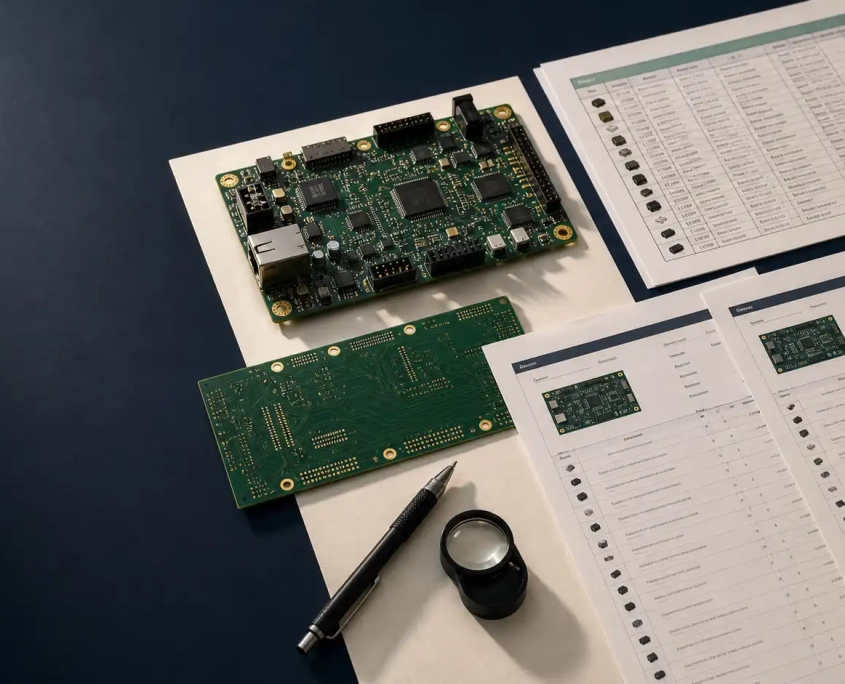
Two PCBA quotes can use the same Gerber files and still cover different work. One supplier may include component sourcing, X-ray inspection, and shipping. Another may quote assembly labor against customer-supplied parts and leave testing open. The totals sit next to each other in a spreadsheet, but they are not comparable yet.
Start by matching scope. Then examine the price. A useful comparison shows what each supplier will build, who carries each responsibility, which costs can change, and what happens when the BOM or board revision moves after quotation.
Put every supplier on the same baseline
Send the same approved data package to every supplier. Record the file revision, board quantity, assembly quantity, and quotation date. If one supplier priced Revision B at 100 pieces and another priced Revision C at 500 pieces, the unit prices answer different questions.
The PCB specification also needs to match.
Check the material, layer count, finished thickness, copper thickness, surface finish, solder mask, panelization, impedance requirements, and special processes shown in the quote. Small wording differences can point to a different manufacturing route.
Use one BOM revision and the same sourcing instructions.
Mark customer-supplied parts, approved alternates, do-not-fit positions, and any components that require date code, traceability, or special handling. Give every supplier the same test scope and delivery location. Incoterms, taxes, duties, and freight treatment should be visible rather than assumed.
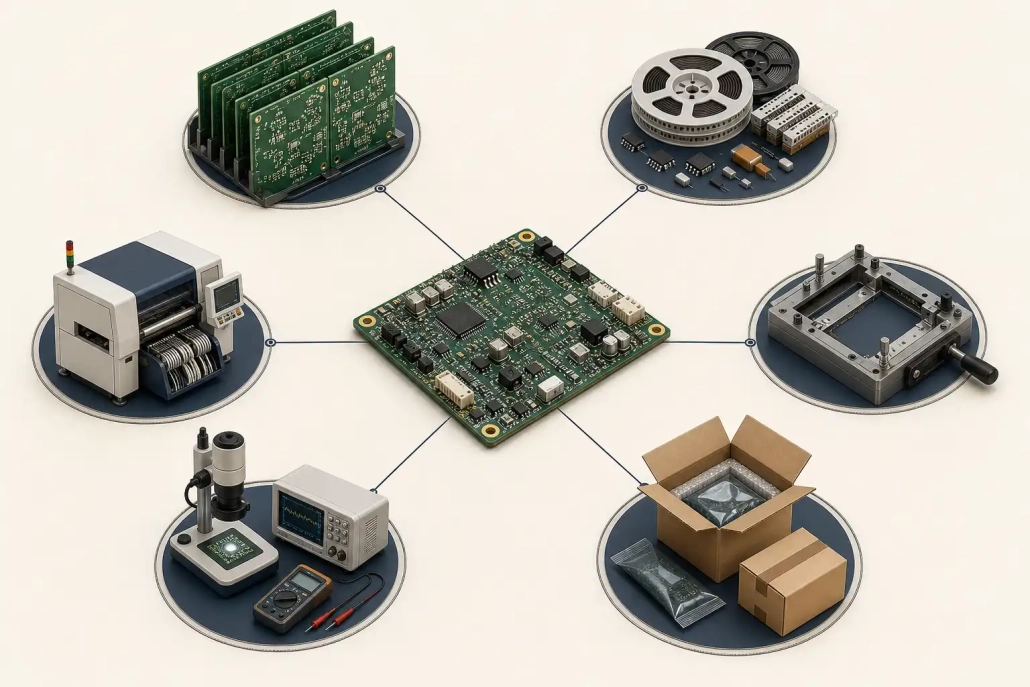
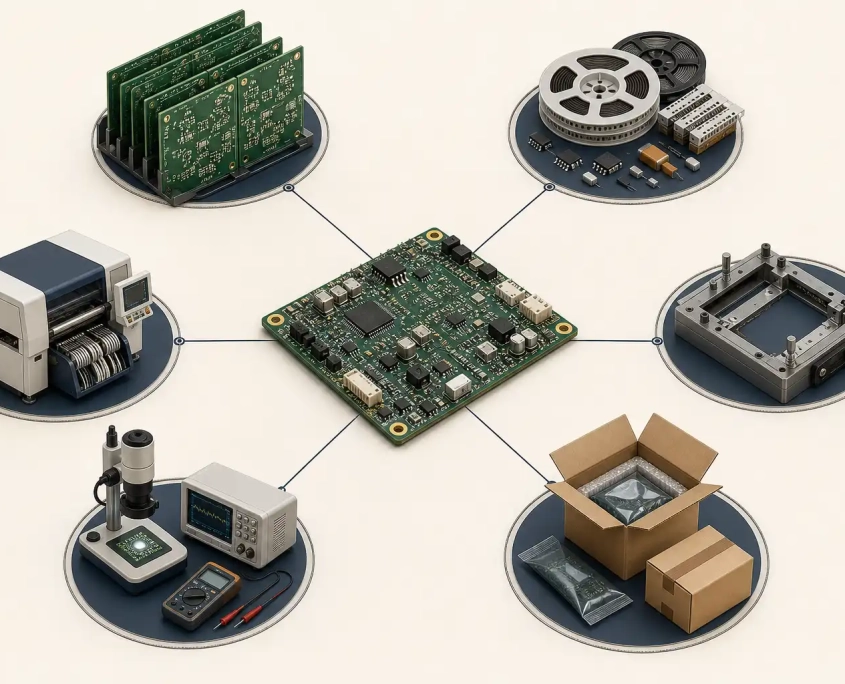
Break the total into six cost baskets
A single total hides too much. Ask for enough detail to place each charge in a consistent basket.
- PCB fabrication covers the bare boards and the stated material and process requirements. Check whether panel charges, electrical testing, special finishes, or unusual drilling appear separately.
- Components cover the BOM items sourced by the supplier. Compare manufacturer part numbers, quantities, approved substitutions, purchasing responsibility, and the treatment of minimum order quantities or pack quantities.
- Assembly covers SMT, through-hole or DIP work, mixed-technology processing, manual operations, rework allowances if stated, and any process that sits outside the standard placement charge.
- Tooling and fixtures cover one-time engineering work such as stencils, programming tools, test fixtures, or project-specific setup. Confirm whether these charges recur when the quantity or revision changes.
- PCBAinspection and testing cover the agreed checks. AOI, X-ray, ICT, FCT, programming, and burn-in are different tasks. A line marked testing needs a method and acceptance scope.
- Packaging and logistics cover packing materials, labeling, export preparation, freight, insurance, and the delivery point named in the quotation.
Do not force every supplier into an identical quotation template if their systems work differently. You only need enough detail to map their charges into these baskets and expose exclusions.
Separate turnkey, partial-turnkey, and consigned quotes
A full-turnkey supplier sources the components and manages the related purchasing work. Under partial-turnkey assembly, the customer supplies selected parts while the manufacturer sources the rest. In a consigned project, the customer provides the components and the factory handles the agreed manufacturing work.
Those models carry different costs and risks.
A consigned quote may show a lower invoice because the component cost sits in the buyer’s own purchase orders. It can also leave the buyer responsible for shortages, excess inventory, incoming logistics, and replacement parts. A turnkey quote moves more of that work into the supplier’s scope.
Compare total project cost, not only the supplier invoice.
Include internal purchasing time, freight between vendors, customs handling, component overages, inventory exposure, and the schedule impact of a short kit. Keep these values separate when they cannot be estimated reliably.
Read the commercial rules behind the numbers
The cheapest quoted part may be an alternative rather than the specified manufacturer part number. Ask the supplier to identify every proposed substitute and hold purchasing until the named approver accepts it. An alternative recommendation is useful. Silent substitution is a change-control problem.
Check how the quotation handles unavailable parts.
The document should explain whether the supplier will requote, ask the customer to consign the shortage, or propose an alternative. Also ask what happens to unused customer-owned parts and supplier-purchased excess material after the build.
One-time fees deserve their own lines. A stencil, ICT fixture, FCT fixture, programming adapter, or engineering setup may remain valid for repeat orders, or it may need revision when the design changes. Confirm ownership, storage, maintenance, and reuse terms before treating the charge as nonrecurring.
Version changes can affect bare boards, components, placement programs, tooling, and test instructions. Ask when the price becomes firm, how long the quote remains valid, and how an engineering change order will be reviewed. Do not assume a quoted unit price survives a new BOM or PCB revision.
One-page PCBA quote comparison checklist
| Comparison item | Confirm before selection |
| Revision and quantity | Same PCB, BOM, assembly files, quantities, and build stage |
| PCB scope | Material, layer count, thickness, copper, finish, panel, and special processes |
| Sourcing model | Full turnkey, partial turnkey, or consigned responsibilities |
| BOM basis | Specified MPNs, approved alternatives, shortages, and purchasing quantities |
| Assembly | SMT, DIP or THT, mixed technology, manual work, and programming |
| One-time fees | Stencil, fixtures, engineering setup, ownership, and reuse |
| Test scope | AOI, X-ray, ICT, FCT, burn-in, criteria, and customer-provided items |
| Excess material | Unused parts, minimum packs, scrap allowance, and return or storage rules |
| Changes | Quote validity, ECO review, cancellation, and requote conditions |
| Delivery | Packaging, labeling, freight basis, delivery point, duties, and insurance |
Choose the quote with the clearest responsibility map
A good PCBA quote lets an engineer verify the build and lets a buyer explain the cost. It states the revision, manufacturing scope, sourcing model, testing, exclusions, and commercial rules in terms both teams can trace.
SCSPCBA provides one-stop support covering PCB fabrication, component sourcing, SMT and DIP assembly, inspection and testing, and Box Build services. Upload the current Gerber files, BOM, assembly quantity, and test requirements through the quotation entry, then compare the returned scope against the checklist above.






Leave a Reply
Want to join the discussion?Feel free to contribute!